7 minutes ago
Israel considers response to Iran as US demands restraint
Periskopi(2 years ago)
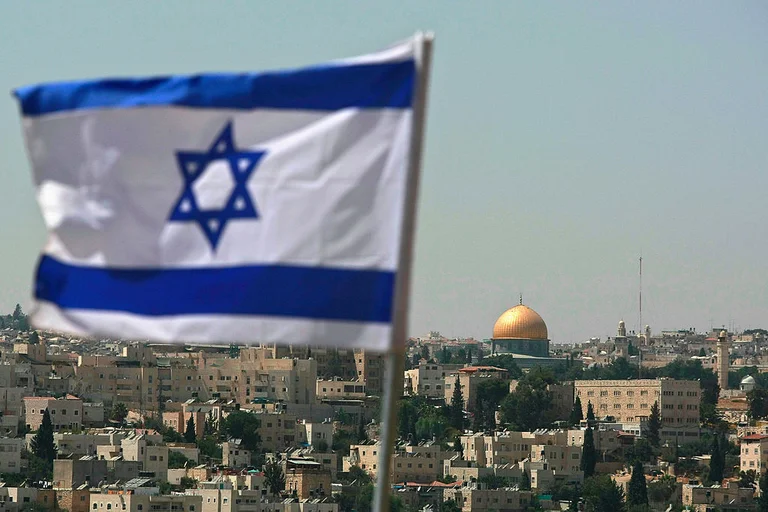
(2 years ago)Israel is considering how it would track weekend attacks with fears and rockets from Iran, while the United States and their allies have called on Prime Minister Benjamin Netanyahu's government not to escalate the situation by jeopardising a broader conflict in the region. As the correspondent of the Voice [...] announces
On Tuesday, Israel indicated what it said is a ballistic missile that was intercepted on Saturday, one of hundreds of missiles and drones issued by Iran, the first direct attack on Israel by Iranian soil.
Iran has declared that the actions came in response to an alleged Israeli attack on its consulate in Syria early in the month. Israel has pledged to retaliate.
“Iran will face the consequences of his actions. We will respond to this attack properly”, said Herzegovina Halev, chief of Israeli armed forces
Israel announced non-serious damage after intercepting more than 300 rockets and fearing Iranians with the help of the United States and regional allies. This gives the impression that Iran's attacks could have been designed in such a way to minimize victims.
Analysts say Israel's response will likely target objects within Iran, but without killing civilians.
“The objective of the attack should not be symbolic, but, on the other hand, in the political sense, of wine in embarrassing positions of the regime and create the idea that it needs to escalate the situation. So this maneuver is very, very carefully calculated, but it's very easy for something to go wrong”, says Jonathan Rynhold of “Bar-Ilan” University, Israel.
Israel can also choose to perform undercover operations, targeting Iranian officials, or launch cyber attacks, as the computer virus Stuxnet in 2010.
“They created a virus and then injected it into the computer system of Iranian nuclear complexes, causing centrifuges to get out of control, causing damage to millions of dollars and weakening Iran's” nuclear capacities, says Gregory Hatcher of the White Knight Labs Company.
Whatever Israeli Prime Minister Benjamin Natanyah's decision, President Joe Biden has told him that the United States is not part of Israeli response, as well as has called for reducing tensions.
We don't want to see war with Iran. We don't want to see the expansion of the conflict, said John Kirby, spokesman of the National Security Council.
But that does not mean that there will be no consequences.
My expectations are that we will impose additional sanctions on Iran in the days ahead of”, said Janet Yelen, US Treasury Secretary.
Prime Minister Netanyahu faces domestic pressure and international condemnation due to the situation in Gaza. Some accuse him of deliberately escalating the situation with Iran, including Ayman Safadi, Jordanian Foreign Minister, an ally country of the United States that helped protect Israel from Tehran's attacks.
“It is no secret that Israeli prime minister's policies are aimed at expanding the conflict with the aim of reducing increased pressure on it at the global level as a result of the killings, war and destruction it is committing at Gaza”, he said.
Other leaders have joined calls for restraint.
It remains unclear whether Prime Minister Netanyah will consider them.
He always wanted to attack Iran, especially Iranian nuclear targets. He can view this as the last chance to defeat all Israeli allies, Hezbollah, Iran and others”, Barbara Slavin from the Stimson Centre said.
On Tuesday, Prime Minister Netanyahu vowed to protect Israel against Iran and related groups.