18 minutes ago
ICG report: Kosovo is winning the battle for control of the North, must attract specials from Serb majority regions
Periskopi(2 years ago)
(2 years ago)The nongovernmental organisation “International Crisis Group”, which has a mission to prevent conflicts in the world, in the newest report dedicated to Kosovo, has addressed the situation in the north, the report with Serbia in general, offering recommendations for resolving the conflict between the two countries. The ICG north of Kosovo calls it rebellious territory, stressing that Kosovo [...]
The nongovernmental organisation “International Crisis Group”, which has a mission to prevent conflicts in the world, in the newest report dedicated to Kosovo, has addressed the situation in the north, the report with Serbia in general, offering recommendations for resolving the conflict between the two countries. The ICG north of Kosovo calls it rebel territory, stressing that Kosovo is gaining control over it, but is losing the possibility of normalisation with Serbia. This article also mentions the stalled Association, which would do good to Kosovo Serbs and Pristina HINA points out to the ICG.
Kosovo must withdraw its special police units from Serb majority regions, the ICG estimates, writes Express.
Part of the report:
Executive Roundup
Kosovo is winning the battle for its rebel north, with Serb majority, while hopes of normalisation between Pristina and Belgrade are disappearing. The remaining Serbian institutions on Kosovo's territory, which survived the 1999 war and Kosovo's independence in 2008, are being disbanded as a result of Serbia-backed paramilitary operation in September 2023. While limited and violent resistance remains possible, northern Kosovo, which was hoping for autonomy or union with Serbia, is willingly submitting to Pristina's authority. These are difficult days for the Serb minority, whose future is vital for the approach between Belgrade and Pristina. To remain a community capable of self-government, they need continued access to Serbian institutions, especially in education and health care, plus financial support. They also need a sense of security, which can only come with the return of Serbs to the Kosovo police force, from which they resigned in November 2022. Pristina must withdraw its special police from the north, and Belgrade should help further prevent paramilitary activities.
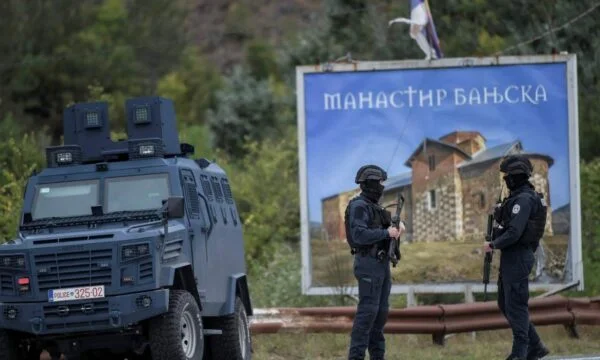
In 2021, Pristina began applying its authority in northern Kosovo with a large militarized special police force that faced a hostile local population. Its measures sparked a boycott and massive resignation by Serbs, so police and public officials in this Serb-run area are now almost all Albanians. Several rounds of barricades imposed by locals mobilised the population, many of whom are armed; Serbia also infiltrated several hundred troops to strengthen resistance in two cases in 2022. Serbian police and rebels often exchanged gunfire. In May 2023, an angry Serbian mob trying to attack a special police unit clashed with NATO peacekeepers dividing the two groups, leaving many injured on both sides. Months later, in September, police clashed with a paramilitary group armed with military-level weapons; an officer was killed by a mine broken out from a distance, while three Serbs died in exchange for fire.
International discontent and the group's amateur appearance broke the northern resistance to government authority. Pristina took advantage, moving quickly to cement its authority over the north. In December 2023, it reached an agreement with Serbia on mutual recognition of the plates. In January 2024, the government banned the import and use of the Serbian dinar, cutting off funding Serbia's remaining institutions together with pensions and other benefits. In February, it began raiding and closing Serbian government offices in villages in southern Kosovo and confiscating dinars found in Serbian post offices. Pristina ignored US and European requirements to suspend these measures until a applicable solution could be negotiated.
In fact, a reasonable solution is already on the table. In December 2022, the EU, which has been mediating the Belgrade-Pristina dispute since 2011, proposed a broad normalisation agreement with which Serbia would not formally recognise Kosovo's independence, but would act as if it had done so. In exchange, Kosovo would give its Serb minority a self-government unit that includes its ten Serb majority municipalities (as it had promised a decade earlier but has not yet done). The agreement was a compromise that gave all sides what they most urgently needed. Brussels is said to have insulted Belgrade and Pristina to accept it blindly, but neither could it be forced to sign it nor agree with important details about how it would be put into effect. It remains unmet and can be preceded by events.
An apple of contention is the planned Serbian autonomous unit, which Kosovo calls Asociation, and community Serbs, of Serb majority municipalities, various names reflecting disagreements about its scope and competencies. The two sides agreed to create it in a landmark 2013 agreement to balance the main Serbian concessions to Pristina. Since then, disagreements over entity competencies and Kosovo's (Kosovo Albanian) internal opposition to autonomy kept it on the board. Serbia loved it as a state in one state, modeled after Bosnia's Republika Srpska, which was unrealistic for a rural region of almost 50,000 people. Kosovo demanded otherwise, a minimal body with a simple co-ordination role for its member municipalities.
The other obstacle is de facto recognition of Kosovo by Serbia. The EU agreement is unclear on this issue, but France, Germany and Italy expressed it in later statements and Serbia flatly rejects the request. De facto recognition means treating Kosovo as an independent state without a formal declaration and without consent for states and other international bodies as the UN to recognise and accept as a member. Serbia is ready to deal with Kosovo for one, but determined to keep its status an open issue.
There is little hope that the EU dialogue can overcome these obstacles, and the Belgrade-Pristina relationship will likely remain frozen. In this context, both parties and foreign actors who want calm in the Western Balkans must first turn their attention to easing the short-term risk of violence and then towards attainable goals that could foster political stability by failing to progress in the normalisation agreement.
The main priority is deilitarization. Kosovo must withdraw its special police units from Serb majority regions, and, until it does so, it must dislocate them with measures and only in co-ordination with NATO KFOR peacekeepers, who the northerns see as more reliable in view of their commitment to neutrality. To boost Pristina's sense of security, KFOR must help Kosovo control its border, prevent further smuggling of heavy arms and find warehouses brought earlier. For its part, Serbia should stop supporting paramilitary activity and prosecute those involved in the Kosovo police murder in the measure under its jurisdiction. In the absence of a comprehensive political solution, the burden will be on the EU, the US and NATO to maintain peace and avoid escalation until conditions for a negotiated agreement are ripe. This would mean pressure like Pristina to withdraw special police and Belgrade from taking the above-mentioned steps, keeping and, if necessary, strengthening NATO's peacekeeping presence.
Another priority is ensuring the needs of Kosovo's Serb minority by or without a formal framework for autonomy. Northerns depend on schools, universities and health care facilities operated by Serbia. Most of the population work directly or indirectly paid by Belgrade, and many receive social insurance, all in Serbian dinars, through a network of post offices and banks that Pristina wants to close. Ethnic discrimination and linguistic barriers hinder all Kosovo Serbs, except for some of them from the regular labour market. If they lose access to Serbian jobs and benefits, many will emigrate. The EU and the US must ask Kosovo to ensure that these key Serbian services will remain in place. They should also continue to pressure Pristina to end the ban on imports of food and medicine from Serbia, as well as on using the Serbian dinar. For all these points, Kosovo must follow the EU and US leadership.
Finally, the Serb minority needs a voice. He has lost confidence in its political representatives, who have been appointed by the ruling Serbian Progressive Party in Serbia and have received their marks from its leaders. Many fear Pristina and feel betrayed by Belgrade, while feeling ignored by Brussels and Washington. The EU called on Kosovo to establish stable democratic institutions participating for its Serb minority, to no avail. Instead, Pristina is moving slowly to new elections in northern municipalities. New elections must be held no later than the summer of 2024.
Even though Brussels and Washington follow these goals, however, they should continue to investigate with Pristina whether it can embrace the terms of the EU normalisation agreement, including the establishment of a Serb community/Asciation. This agreement would be good for northern Serbs, but also for Pristina: moving towards northern autonomy will certainly be an essential part of any agreement that brings Kosovo more into the international system, and Kosovo may never have a better offer than this.