5 minutes ago
Hoti criticises Kurt: Borrell and Lajcak expand association competencies at the level of autonomy for Kosovo Serbs
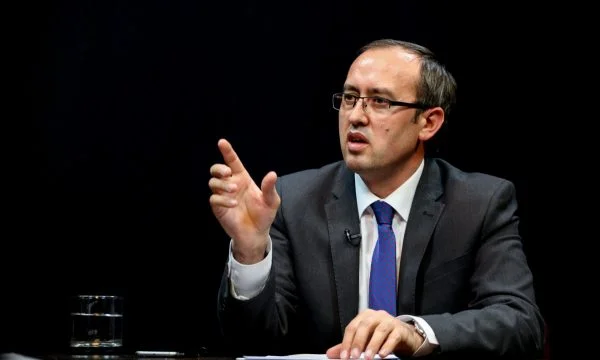
Periskopi(2 years ago)
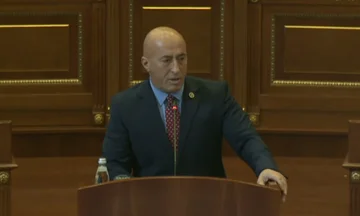
(2 years ago)Democratic League of Kosovo MP Avdullah Hoti has criticised Prime Minister Albin Kurti, saying he has failed in dialogue with the Serbian state. Hoti through a Facebook post wrote that with two mediators for the Josep Borrell and Mirolsav Lajcak dialogue, the competencies of the Association have been chosen to an autonomy level for Serbs in Kosovo. [...]
Hoti through a Facebook post wrote that with two mediators for the Josep Borrell and Mirolsav Lajcak dialogue, the competencies of the Association have been chosen to an autonomy level for Serbs in Kosovo.
The “reportedly, compared to previous mediators Borell and Lajcak, did not achieve anything in dialogue during their mandate ending in May. But, for Kosovo's bad luck, the truth is completely different:
1. Baroness Ashton reached the 2013 agreement, where she presented an association with competencies to the line of executives, which was ratified in the Kosovo Assembly and enabled, despite difficulties in implementation, the extension of Kosovo state institutions in the north;
2. Ms. Mogerini reached the 2015 agreement on the principles of the establishment of association, but Prime Minister Mustafa made sure that the competencies of association are in line with the Constitution, receiving the approval of the Constitutional Court before the charter of association is empowered;
3. While Borrell and Lajcak, with the Brussels/Ohri Agreement, achieved that the competencies of association expand at the level of autonomy-CEnadation for Kosovo Serbs, as well as formally handed over to the Kosovo Government draft association statute, which refers to Resolution 1244, formalise parallel structures in education and health for several years, impose arbitration on the Constitution and laws of Kosovo, etc., writes Hoti.
Among other things, Hoti says the government has not heard the main allies either.
“For Kosovo's bad fortune, lack of consciousness and state experience by the Government of Kosovo, by not giving space to experts in this process, not listening to the advice of the main ally, not offering transparency of the process for the opposition to take in remarks and suggestions, gave the corrupt dialogue”.
According to Hoti, support from allies for Kosovo has never been lower than now.
This certainly does not enable any kind of good agreement for Kosovo in dialogue or any Euro-integration process. As a result, dialogue has shifted from a “knowledge process to centre” supported by the letters of key Western leaders, to a “with the central-oriented crisis management” process.
To Kosovo's bad fortune, as far as Kosovo's preliminary governments have been determined by Kosovo's reforms provided by the Stabilisation and Association Agreement of the Mustafa Government, now Kosovo's obligations from the Brussels/Ohri Agreement have been set as criteria in the Kosovo European integration process”, it has suggested.
Hoti writes that “for Kosovo's bad fortune, now a new status quo has been created in dialogue”.
The next “government must face consequences, reverse support from allies, and re-enact dialogue for recognition”.