14 minutes ago
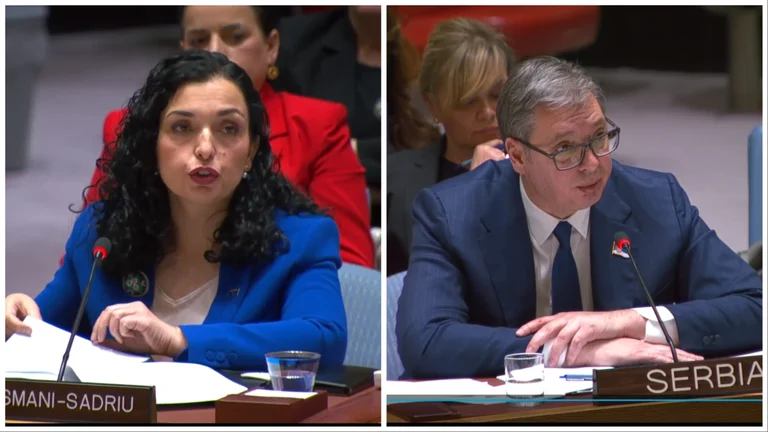
All that happened on Monday at the Security Council where Osman faced Vucinqi
Periskopi(2 years ago)
(2 years ago)Kosovo President Vjosa Osmani has said on Monday that Kosovo Serbs are under pressure from the Government of Serbia, while Serbian President Aleksandar Vuciq has said Serbs in Kosovo are being persecuted in various forms of authorities there, without offering any evidence. The head of the United Nations mission in Kosovo (UNMIK), Caroline Ziadeh, [...]
The head of the United Nations mission in Kosovo (UNMIK), Caroline Ziadeh, has expressed disappointment over the lack of progress achieved between Kosovo and Serbia in recent months towards normalising relations.
They have made these statements at a UN Security Council session organised to discuss UN Secretary General Antonio Guterres' six-month report on the work of the UN mission in Kosovo (UNMIK).
Representatives of other participating countries have called for Serbia to hold responsible those involved in the Zvecan Banjska incident, which occurred in September last year, for forming Asociaconi of majority Serb municipalities in Kosovo, and for resolving the issue of the Serbian dinar.
On 1 February, the Kosovo Central Bank (BQK) has started implementing a new regulation that defines the euro as the only currency for conducting cash payments.
Thus, the Serb community in Kosovo has been unable to use the dinar, Serbian currency.
Serbia claims it shares aid worth millions of euros to Serbs in Kosovo, and pays them salaries, pensions and additional aid.
France has also called for holding new elections in northern Kosovo, saying that the “withdrawal of current Albanian mayors would be the fastest way to restore representative democracy in four municipalities in the north, and would be a sign of imposing the” situation.
His statement comes a day after holding a vote in four municipalities in northern Kosovo, to evacuate the mayors there.
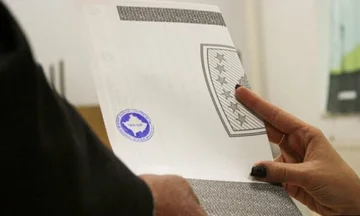
The Central Election Commission (KQZ) has said that the initiative for departure or not of the mayors has failed, as 253 out of 46,556 citizens who have been eligible to vote in this process.
To be successful, the process would have to vote 50 percent plus 1 voters.
This means that current mayors in northern Mitrovica, Zvecan, Leposaviq and Zubin Potok will continue their mandates.
The Serbian List, the largest party of Serbs in Kosovo, which enjoys official Belgrade's support, has boycotted the voting process for the removal or not of Albanian mayors in four northern municipalities on April 21st, and has asked the same of Serb residents.
This party has claimed the planned procedures are “impossible” and that Kosovo Prime Minister Albin Kurti, “has done everything to make the polls fail”.
The initiative for evacuation or not of the mayors has been organised, as the international factor has demanded the removal of Albanian leaders from their positions, considering that although last year's April process when they won the elections, it has not reflected the will of citizens, however.
April 2023 elections have been organised following Serb resignations from Kosovo institutions.
Even in those elections, the Serb List, the main party of Serbs in Kosovo, has boycotted the election process and has called on local Serbs to do the same.
When Osmani has spoken on this issue, he has said Serbs in Kosovo should thank Serbian President Aleksandar Vuciq, why are Albanian leaders still in those positions.
President Vuciq has said the Serb side boycott is reasonable, claiming that in recent months in northern Kosovo the number of Albanian voters has artificially increased.
No member of diplomatic missions in Kosovo, nor international election monitors in Kosovo, have confirmed Vuciqi's assumptions of artificial increase in the number of voters.
U.S. UN representative Robert Wood has reiterated this meeting that the United States believes mission UNMIK in Kosovo has done its job and must be completed.
During her speech, Osmani has said that Serbs integrated into Kosovo institutions have been forced to resign because of pressure carried out by Serbian illegal structures, attacks on their property, destruction and endangerment of their lives, with only one goal: to force them to leave.
“Just imagine a Serbian politician putting flowers on the grave of a seven-year-old girl during wartime who was arrested immediately and tortured in Serbian prisons”.
This, according to her, is the fate of any Serb who is not in line with Serbian President Aleksandar Vuciq's positions.
Nikola Sandulovic from Serbia, was arrested on January 3rd, 2024, shortly after publishing photographs of the memorial complex in Presaz, Kosovo.
He has been arrested under “allegations that he committed criminal acts of inciting hatred and national, racial and religious failure”.
Meanwhile, he was released, but his passports were confiscated.
Kosovo Prime Minister Albin Kurti has said he has been mistreated after apologizing for Serbia's crimes.
During her speech, Osmani has also spoken of women who have been part of her delegation at the meeting a survivor of massacres committed by Yugoslav forces in Kosovo, Elhame Mucholi, a woman who has missing family members in the war, Fahrije Hoti, as well as two women survivors of sexual violence during the war in Kosovo, Vasfije Krasniqi, and Shyete Tahiri.
It has reiterated the need for justice for all victims of the Kosovo war.
Vuciq has complained about why those women have attended the meeting, saying they are not part of diplomatic staff, and why it has been discussed the past, especially the timing of the war, claiming that there were also women sexually violated in Kosovo at the time of the war.
Osmani, on the other hand, has said that women participating are also part of her cabinet.
During his speech, Vuciq has dubbed Kosovo's statements as leaders in the field of democracy in the Western Balkans, and has expressed regret that the UN report has not provided enough information to the contrary.
The Serbian president has cited the signing of the agreement with Kosovo, mediated by the EU in 2013, and according to him, it has become “11 years of unfulfilled promises and reasonings, and the EU's inability to move things”.
When talking about the dinar issue, the Serbian president has said the official Pristina decision has made it difficult for Serbs and other minorities in Kosovo.
Kosovo and Serbia dialogue in Brussels on normalising relations since 2011.
The sides have signed a host of agreements, but not all have been implemented.
The EU has repeatedly repeated several times that resolving all problems between the two countries is an extremely important factor for their European path.