13 minutes ago
Failure to vote in the north, returning to first-year situation
Periskopi(2 years ago)
(2 years ago)There is no doubt that the boycott of the vote on April 21st, for the departure of Albanian mayors in the four majority Serb municipalities in northern Kosovo, was the successful “”, but the question arises who won and who lost? Following the closure of the deployments, the Central Election Commission found that the process has failed. The Serbian and official Belgrade list said [...]
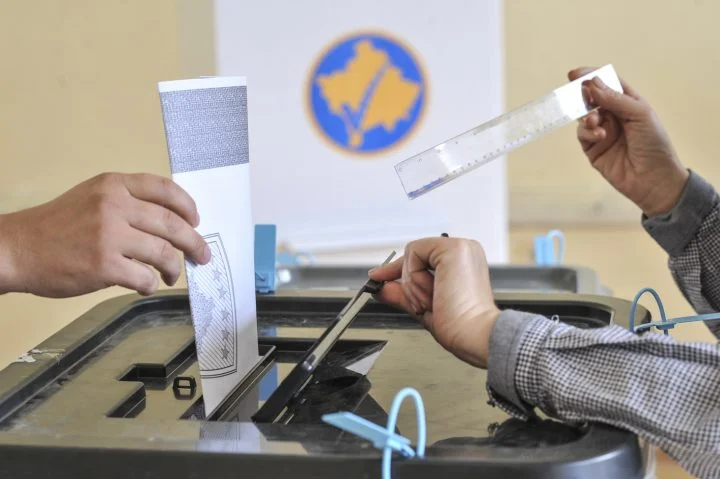
No doubt Voting boycott On April 21st, for the departure of Albanian mayors into the four Serb majority municipalities in northern Kosovo, it was the successful “”, but who won and who lost?
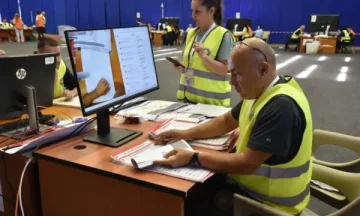
Following the closure of the deployments, the Central Election Commission found that the process has failed.
The Serbian and official Belgrade list said that “has shown a high degree of the unity of Serbs in Kosovo”, while Pristina said “has fulfilled its obligations”.
This vote has had to be the last step towards announcing early elections in Serb majority municipalities in the north and imposing the situation there.
In northern Mitrovica, Leposaviq, Zvecan and Zubin Potok, Albanian mayors came to the helm of municipalities in May last year, because Serbs, even then, boycotted the elections at the invitation of the Serbian List of Serbs in Kosovo, which has Belgrade's backing.
The months-long crisis then created was the reason why the international community exerted pressure on Kosovo to start organising new elections, as well as on the Serbian political representatives to participate in such a process.
It now seems that everything has returned to the starting point of the Albanian leaders, who are not accepted by the Serb majority in northern Kosovo, remain in power.
Losers and Victors After Voting
North Mitrovica municipality Speaker Nedzad Uglanin estimates there are no winners following the failed vote on the departure of Albanian leaders. According to him, the Serb majority community is lost.
The “is paradoxical for non-US communities to take care of the majority”, says Uglan, who has been involved in the work of the North Mitrovica municipality since its founding in 2013.
The vote on the departure of Albanian mayors in northern municipalities has been organised on the basis of the Government of Kosovo Administrative Guide, and to be successful it has had to meet the “option, Po” by 50 per cent plus one voter.
Of the some 46 thousand registered electors, however, the right to vote has been exercised by only about 250 people.
For Aleksandar Stojanovici from the nongovernmental organisation Centre for Local Environment Development, “are all losers” after the April 21st vote.
For a society to function, there must be a social consensus. Civil society has called for a long time to start a general dialogue within Kosovo society and among various political actors, so that society can reach a consensus and, in the end, be hired for synchronised actions, when it comes to important questions”, Stojanovic says about Radio Free Europe.
Arton Demhasey, from the non-governmental organisation “Arise”, considers that boycotting the vote brought nothing good to the Serb community.
The key loser in all of this is the Serb community living in those four municipalities, because they [citizens] now do not have their legitimate representatives”, Demhaja says of Radio Free Europe.
According to Demhasey, the winner is Serbia's president, Alekasandar Vuciq. The boycott of the vote, he adds, shows that the Serb community, which lives in the four municipalities in northern Kosovo, is aware of Vuciqi's policies.
“This I think negatively affects them, because it is better for the Serb community to go out and vote and to choose its legitimate representatives than to remain so blocked, as is currently remaining”, Demhaya says.
What do citizens say?
Branko Barovic, from Northern Mitrovica, says Serbs from the north have always heard their “state Serbia” and that the April 21st vote was a “masquerade” by Kosovo authorities.
“The turnout should be 50 percent plus one vote. Even if we all got out, we'd lose. The city was filled with long barrels [v.j. Police officers... while people had no”, he says.
Milan Dimitri, also from Northern Mitrovica, believes the vote would not change anything and that the way for Albanian leaders to remain in power would be found.
We have to take a little longer, but maybe it'll get better”, he says.
The Serb population lives in four municipalities in the north. They [Albanian leaders] cannot be there, they do not have any co-operation with the people”, says Stefan, also from North Mitrovica.
Mirko from Leposaviqi says Serbs listened to their political representatives and responded to the call for boycott.
“People go to the municipality only if they have to get letters and that works for now. But there must be choices, so that in the municipality there will be those chosen by the people and not someone appointed by Kurti”, he says.
Further Co-operation Between Citizens and Local Authorities
Ranko Krivokapiq, North Mitrovica resident, stresses there is no and will never have co-operation between Serbs and the current local authorities.
“Everything they did last year was at stake and against the interests of the Serbian people”, Krivokupic says.
Uglain says the Assembly of the Community will continue its work and that it will represent the interests of all communities, promoting co-existence.
However, he stresses that political problems exist on the ground.
“Citizens have become the classical puppet for deepening the political crisis”, he says, and adds that “has no guide” in which direction relations between the Serb community and local government will move.
Stojanovic, from the Centre for the Development of Local Environments, believes the local Serb community can co-operate with municipal authorities in northern Kosovo in a short-range “ ”.
At the moment, municipalities themselves have no personnel capacity to enable proper functioning in all areas. This is the biggest essential problem. The municipalities don't function at full capacity, so they can't be in the service of citizens”, Stojanovic says.
In November 2022, at the Serbian List initiative, Serbs left Kosovo institutions in the country's north, including local administration. After the Albanian mayors came to power, the employment of new workers also began, but the civil sector stresses that those administrations are not yet functional.
Earlier, he confirmed this for you. REL is also the current director of the Department of Sports, Youth and Culture in the Leposaviqi municipality, Nenad Radosavljevic.
We don't have qualified people to announce tender procedures... We have a problem, we are employing people from other municipalities, but this will not last long if the Kosovo government is not reacting to”, Radosavlevic said.