20 minutes ago
Euronews: EU backs Serbia on wall, must prevent Kosovo's membership in international organisations
Periskopi(2 years ago)
(2 years ago)Brussels has put a dilemma on Belgrade: Either preventing Kosovo's entry into major international organisations or its EU aspirations will be established, Euronews reports. Serbia's path towards EU membership now depends on its silent consent to Kosovo membership in international organisations, such as the UN and [...]
Brussels has put a dilemma on Belgrade: Or preventing Kosovo's entry into key international organisations or its EU aspirations will be raised, reports Euronews.
Serbia's path towards EU membership now depends on its silent consent to Kosovo's membership in international organisations, such as the UN and the Council of Europe, according to the international media.
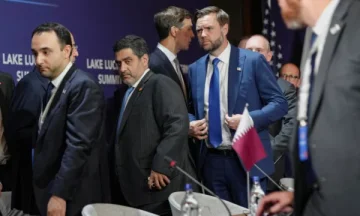
EU Foreign Affairs Ministers gathered in Luxembourg on 22 April agreed to change a key part of the document regarding Serbia's negotiations to join the EU, known as Chapter 35.
The change means Brussels will freeze Serbia's accession process in the bloc if it does not implement an agreement on normalising its relations with Kosovo.
The main condition for Serbia to meet is that it should stop obstructing Kosovo's efforts to join key international organisations, Euronews writes.
Kosovo has taken diplomatic steps to join the UN, the Council of Europe, The EU and NATO since Serbia declared independence in 2008.
Belgrade rejects Kosovo's independence. As a member of the UN, she fears that accepting Kosovo's membership in these institutions will significantly recognise her citizenship.
With the situation in a row, EU foreign ministers added the so-called Ohrid Agreement to Chapter 35, aimed at “abnormalising” the troubled relations of almost three decades of Serbia and Kosovo.
The agreement is named after Lake Ohrid, the North Macedonian resort where it was signed in the spring of 2023 to reconfirm the 2013 Brussels agreement.
This agreement reached between Brussels, Serbia and Kosovo recognised the governmental authority of Kosovo institutions.
Resumption of an EU-brokered effort deal
Only a few pledges in this document have been implemented by both Kosovo and Serbia.
That is why EU foreign ministers have established provisions in the Ohrid Agreement, the binding clause for Serbia, as a kind of standard “receive or leave”.
Serbia will not only have to avoid obstructing Kosovo aspirations to join international organisations, but will also have to recognise official administrative documents issued by the Kosovo administration, such as license plates and passports with Kosovo state symbols.
Such issues have been systematically rejected by the Serbian government since the 1999 war with NATO that imposed partitioning of Kosovo.
Kosovo previously was an autonomous province within Serbia when the two entities were part of Yugoslavia, which was disbanded in 1991.
The conditions created on April 22nd by the EU create a union of political figures parts for Belgrade, putting its political leadership and all Serbian society before a tormenting dilemma: either to start a slow and progressive process of recognising Kosovo or to forget any medium-term hopes for EU membership.
Serbia has so far avoided any steps that can be identified as de facto recognition of Kosovo's citizenship.
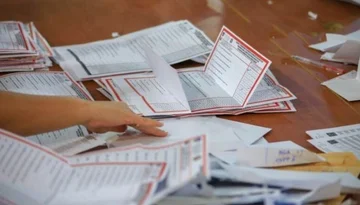
On 21 April, Serbs living in Kosovo largely gave up a referendum called by the Kosovo administration, according to the Kosovo government, to resolve the issue of mayors in Kosovo's majority Serb municipalities.
The issue has been pending since November 2022, when Serbian police officers, mayors and northern Kosovo judges resigned to protest what they claimed was “a violation of the EU-brokered agreements brokered by Kosovo authorities.
Self-management Against Self-Determination
This question of Serbian mayors is also directly linked to the Ohrid agreements.
In the text, Kosovo agreed “to ensure a proper level of self-management for the ethnic Serb community in Kosovo” and to allow Serb municipalities to harmonise closely.
However, Serbs living in the north claim that Kosovo opposes the creation of “asciation of Serb municipalities”.
There are four Serb majority cities in northern Kosovo: Northern Mitrovica, Leposaviqi, Zvecani and Zubin Potok.
This majority Serb area in Kosovo is dominated by the Republika Srpska List (the only political party for the Serb community).
Kosovo claims that this party is directly instructed by Belgrade, especially by Serbian nationalist-conservative President Vuciq.
The Kosovo government claims local Serbs are acting in the same line as Belgrade, which means it does not want to make concessions for Serbian territorial autonomy.
“We do not want the northern part of our country to become a kind of Republika Srpska”, said Kosovo leftist nationalist Prime Minister Albin Kurti, referring to the Serbian autonomous entity in Bosnia and Herzegovina.
Kosovo cannot accept an integrated and autonomous Serbian administration within its territory along the border with Serbia, a country that does not recognise its independence.
Meanwhile, Serbs fear that by breaking ties with their homeland, they could become second-hand citizens in a country that will discriminate.
Council of Europe, Kosovo new blow to Belgrade
Kosovo has recently achieved relative political success.
On April 17th, the Parliamentary Assembly of the Council of Europe ( KiE) approved the recommendation that Kosovo become its 47th member state, causing outrage in Belgrade.
President Vuciq said that “if Kosovo membership in the KiE, Serbia is ready to question its membership in the Council of Europe”.
Serbia has conducted massive military exercises at the borders with Kosovo to show its deep disappointment with the Strasbourg-based human rights organisation's decision.
The KiE Assembly decision has been made after Kosovo has returned the land to the Serbian Orthodox Church, which belongs to the Decani Monastery.
International organisations had demanded that Kosovo authorities take this step.
EU, Serbia, Russia
In December 2023, Serbian President Vuciq declared that “I don't think it is possible for the Ohrid Agreement to be included in Chapter 35, because that means de facto closing the door (of the EU) for Serbia”.
According to an April 2022 IPSO poll, the number of Serbs opposing EU membership was more than those in his favour for the first time.
This survey found that most Serbs think the EU is dragging itself on when it comes to enlargement, with the bloc unwilling to accept new members.
The lack of faith of Serbs in Brussels seems to reflect some truths.
A recent March 2024 survey IPSOS/Euronews found that most EU voters oppose further enlargement of the union.
Relations between Serbia, the EU and NATO have suffered amid the Russian invasion of Ukraine, as Belgrade has not joined EU sanctions against Moscow.
Western capitals see Kosovo as a potential source of instability in the heart of Europe.
Serbia and Kosovo do not trust each other. Both are afraid to make concessions that can be betrayed by their counterpart.
Kosovo's security is guaranteed with NATO presence and EU support for organisations promoting rule of law.
However, the ghost of instability seems great.