7 minutes ago
Supreme in America decides in favor of Trump states can remove it from the ballot
Periskopi(2 years ago)
(2 years ago)The Supreme Court on Monday restored former President Donald Trump's name to pre-election ballots in this year's presidential race, rejecting efforts by several states to hold Mr. Trump responsible for the riots in the Capitol. One day before Martha's preliminary elections, judges ruled that states cannot [...]
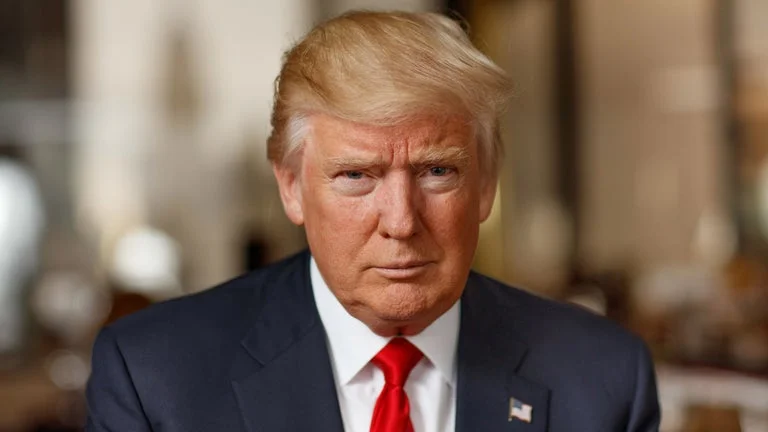
The Supreme Court on Monday restored former President Donald Trump's name to pre-election ballots in this year's presidential race, rejecting efforts by several states to hold Mr. Trump responsible for the riots in the Capitol.
A day before Martha's preliminary elections, the judges decided that states cannot introduce provisions of the Constitution written after the American Civil War to remove presidential candidates from the ballot. According to the Supreme Court, this right belongs to Congress.
Grand American Fito!! ” wrote Mr. Trump on his social platform immediately after the verdict was announced.
This decision puts an end to efforts in states like Colorado, Illinois and Mei to remove Mr. Trump's name from the ballot, while he is the main republican candidate to win the appointment of this party because of his efforts to overturn the 2020 election outcome against Democrat candidate Joe Biden, efforts that culminated in the January 6, 2021 attack on the Capitol.
Mr. Trump's case constitutes the first time that the Supreme Court examines a article in the 14th Amendment, adopted after the Civil War, aimed at banning former officials who had public office and that “took part in the uprising”, returning to such positions.
The Colorado Supreme Court, in a historic decision, had decided that this article could be implemented in the case of Mr. Trump, who, according to this court, sparked the attack on the Capitol. No court in the past has implemented this article against a presidential candidate.
Some election process observers have warned that a decision leaving open the possibility of the House of Representatives' action to implement this article would likely enable a new disagreement over its use to disqualified Mr. Trump if he wins the elections. According to a possible scenario, a majority democratic House of Representatives may not confirm Mr. Trump's election on January 6, 2025, based on this article.
This case would then be brought back to the Supreme Court, perhaps amid a deep constitutional crisis.
The sides had demanded that the court act quickly. The court heard the arguments of the parties on February 8th, less than a month ago. The judges since then seemed inclined to make a decision in favor of Mr. Trump.
Mr. Trump's names had been removed from balloting in Colorado, Maine, and Illinois, but these decisions were suspended pending the Supreme Court's decision.
The issue constitutes the court's most direct commitment to presidential elections since the issue between candidates for president Bush and Gore, for whom a decision was made 25 years ago, giving them victory in the 2000 republican candidate George W. Bush.
And that's just one of the issues against Mr. Trump, or that could affect the likelihood of him becoming president again. In late April, the parties will present arguments in another case that will consider whether Mr. Trump should be prosecuted on charges he has intervened in the election, including for his role in the January 6th attack on the Capitol.
The Supreme Court ruling framework has raised dilemmas if Mr. Trump is to be tried before the November elections.
The hearing hearing of the parties' arguments in February was the first time the Supreme Court agreed to consider a case based on Article 3 of the 14th amendment to the American Constitution. This article, composed of only two sentences, aimed at excluding from the public functions of some members of the Confederata. It says that those who violate the oath to support the Constitution are barred from various positions, including in the legislature, or as electorates for electing the president. It does not specifically mention the office of president himself.
The conservative and liberal members of the Supreme Court posed their questions on the case against Mr. Trump. Their main concern concerned whether Congress should first act before the 14th amendment is introduced. There was also question whether this provision applied to the presidential post.
Representatives of voters who had filed the indictment to exempt Mr. Trump from running into Colorado had argued there was sufficient evidence that the events of January 6th were a rebellion and that they were prompted by Mr. Trump, who had called on a crowd of his supporters gathered in front of the White House “to fight with all forces”. They said it would be absurd for point 3 to apply to any position other than the presidency, or that Mr. Trump could be excluded from this article. They also argued that for implementation of this article there was no need for any support legislation.
Mr. Trump's lawyers presented some arguments about why this amendment could not be used to remove Mr. Trump's name from the ballot. They said January 6th was not a rebellion and that even if it was, Mr. Trump did not go to the Capitol, nor did he join the rioters. They also said the frasology used in the amendment rules out the presidency and candidates for president. They said even if none of these arguments were to stand, Congress still had to adopt new legislation to reactivate section 3 of the 14th Constitution Amendment.
Among the Supreme Court members are three judges appointed by Mr. Trump himself while he was president. They have considered over the years some issues related to Mr. Trump, refusing to support his unproved claims of manipulation in the 2020 elections, or rejecting his request that his tax records not be given to Congress and prosecutors in New York.
The last time the Supreme Court had such a concrete role in politics for electing the president was 23 years ago, when a 5 to 4 verdict was made on the Bush case against Gore. Of the current members of the court, only Judge Clarke Thomas was at the time on duty. He has rejected calls from some democratic lawmakers to withdraw from Mr. Trump's case because his wife, Ginni, supported Mr. Trump's efforts to overturn the outcome of the 2020 elections and attended the rally preceding the attack on Capitol. / VOA