4 minutes ago
MPJD's report to Banjska, sent to the EU reportedly insufficient, Serbia is covering sanctions
Periskopi(2 years ago)
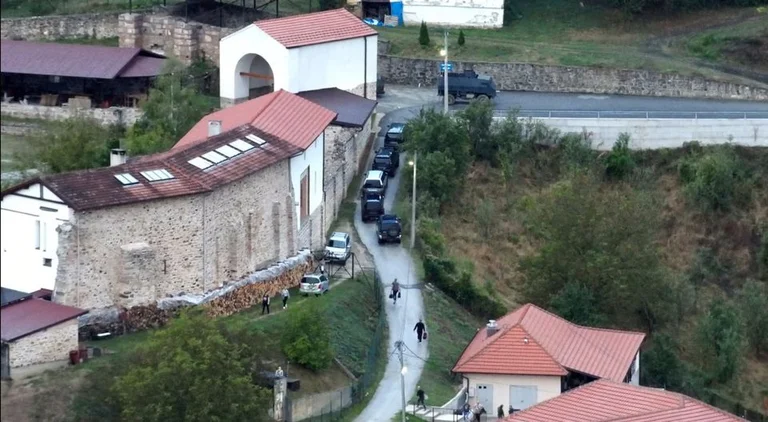
(2 years ago)This week, police have again found weapons near the Banjska Monastery in northern Kosovo. Now, after several months of armed assault there, some ask why the European Union has not yet imposed sanctions on Serbia, which Kosovo is constantly demanding. Some believe that the EU's approach to Serbia is “soft”. [...]
This week, police have again found weapons near the Banjska Monastery in northern Kosovo.
Now, after several months of armed assault there, some ask why the European Union has not yet imposed sanctions on Serbia, which Kosovo is constantly demanding. Some believe that the EU's approach to Serbia is “soft”.
European Union has no willingness to impose punitive measures on Serbia after Attack Armed that occurred in the village of Banjska, north of Kosovo, and the European bloc's double standards represent nothing new ʹ so have free Europe told Brussels' and foreign experts to Radio.
According to them, calls in procedural aspects -- and in the absence of a final report by Kosovo authorities -- are only rationale for the drag-on case.
The West has no say in taking any measures against [Serbia's president, Aleksandar] Vuciq, and anyone involved... The West needs Serbia and does not want to damage this delicate relationship”, estimates analyst Toby Vogel, associate with the Council for Democratic Policy, in some response to Radio Free Europe.
Kosovo, on the other hand, insists on imposing measures on Serbia, as it claims to have been carried out against it Terrorist attack.
What happened in Banjska?
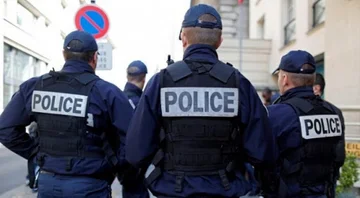
On 24 September 2023, an armed group of Serbs killed Kosovo Police Sergeant Africa Bulnjak, in Banjska in the municipality of Zvecan.
Three Serb attackers were killed as a result of further clashes.
Kosovo holds the state of Serbia responsible for the attack, while official Belgrade rejects that stance.
Former Serbian List Vice-President ) the largest party of Serbs in Kosovo, Milan Radojic, later claimed responsibility for the attack.
Serbia's authorities have launched a court process against him, but have freed him from the detention measure, provided he no longer goes to Kosovo.
The International Police Organisation, more known as INTERPOL, has issued a warrant for his arrest.
The West has strongly condemned the attack in Banjska, but much-wanted punitive measures by Kosovo authorities have never been imposed.
Waiting for the Kosovo report...
The European Union has accepted a 48-page report from the Kosovo Ministry of Foreign Affairs and Diaspore last year for the attack on Banjska.
However, Brussels sources have said it is not enough, praising that it has political tones, and that a report drafted by the justice system is needed from Kosovo.
Kosovo authorities have criticised the State Prosecutor, who has not yet come up with a report on the events in Banjska and has not filed any charges.
The Kosovo Prosecutorial Council, on the other hand, has asked the Kosovo government not to interfere in the affairs of the justice system, claiming that the declarations of power are biased.
Why doesn't the EU conduct its own investigations?
Brussels claims it has no mandate for such a thing. From the EU, they have said the attack took place on Kosovo territory and that authorities there are competent.
When they speak publicly, EU officials have named the attack in Banjska as a terrorist.
But, in the 2023 EU Progress Report, in the part of Serbia, the Banjska attack is described as being carried out only by the “heavily armed individuals”.
EU spokesman Peter Stano has not returned answers to Radio Europe's Free Radio question, why the European bloc has not yet made any decisions on the case.
In the past, he has repeated several times that the final report from Kosovo is pending.
The European Parliament has demanded the punishment of Serbia, but such is in the hands of the Council and the European Commission.
Alejandro Esteso Peres, analyst and Balkan policy researcher and EU enlargement, tells Radio Free Europe that the EU does not want to put Serbia in front of the mirror.
“does not want to jeopardise a potential response by Vuciqi, whether by drawing close to Russia or China that he is already doing and realize that without Serbia there can be no Kosovo-Serbia dialogue”.
Meanwhile, analyst Vogel says he has heard from EU lawmakers who Serbia is criticised in private conversations. But, according to him, if anything is not publicly said, it's as if it wasn't said at least”.
What measures should be taken against Serbia?
Vogel mentions two measures, which are the minimum:
Measures similar to those imposed on Kosovo, following increasing tensions in the north, in May 2023
A clear statement by Western leaders that the incident will be investigated in detail and that Vuciq must publicly give up any military activity near Kosovo.
Analyst Perez, meanwhile, considers other measures needed:
Immediately launching an independent investigation
Economic Measures
Measures marking individuals freezing wealth, stopping on travel.
Sources in Brussels estimate that the EU uses the failure to set measures on Serbia “to pressure” Belgrade for processes it wants to move forward.
However, Serbia continues not to co-ordinate its foreign policy with that of the EU. Russia's non-sanction for the war launched in Ukraine is just one example.
Will this approach of the EU have influence in Kosovo?
Perez believes so.
“I am surprised by such minor EU efforts to understand the Kosovo situation. If there is no movement in the coming months, the population's trust in it will decrease and they will be even more hopeless than now”, he says.
Kosovo has applied for EU membership in 2022, and currently has only signed Stabilisation and Association Agreement with the European bloc. /Radio Free Europe/