8 minutes ago
Love under fire: How an Albanian-Serbian mixed couple survived war in Kosovo
Periskopi(2 years ago)
(2 years ago)When Aliu and Jelica married in 1960, relations between Albanians and Serbs in Kosovo were unusual. But after the NATO war and shelling began 25 years ago, they had to deal with prejudice and fear. From Serbze Hadziaj when the first NATO bombings in Kosovo fell on March 24, 1999, [...]
When Aliu and Jelica married in 1960, relations between Albanians and Serbs in Kosovo were unusual. But after the NATO war and shelling began 25 years ago, they had to deal with prejudice and fear.
By Serbze Hadziaj
When the first NATO bombs fell in Kosovo on 24 March 1999, Ali Zeqaj told family members to get ready to leave home.
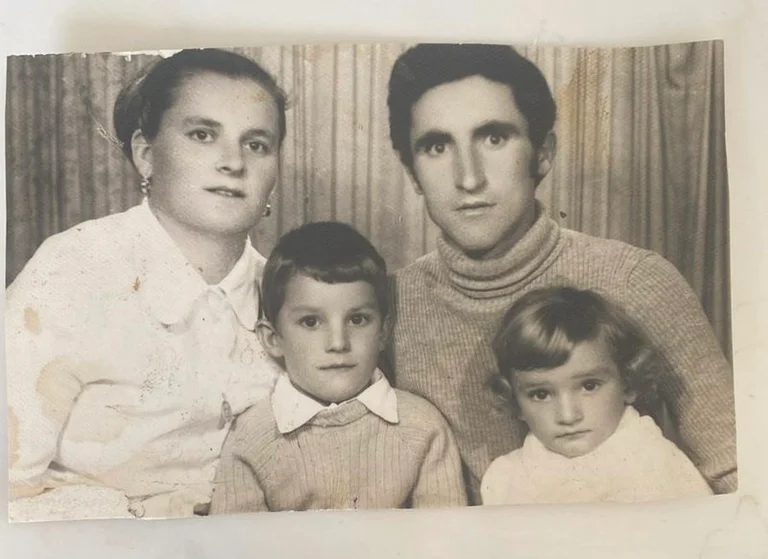
Aliu and his wife, Jelica Keresovic, are an ethnically mixed pair, Albanian and Serbian. But having a Serbian wife would not serve as a shield to mistreatment during the war.
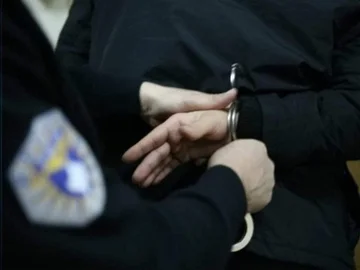
A few months ago, Aliu was injured by Serbian police on Pay-Decan Street, until he and his wife were trying to help a young man avoid police arrest.
“People thought having a Serbian woman is intact, but the war was bitter even for us”, Aliu says.
NATO had launched air strikes to force Yugoslav President Slobodan Milosevic to stop thepression campaign against Albanians in Kosovo. But for 78 days of bombing, Yugoslav forces intensified the attacks before June of that year were forced to leave Kosovo.
Ali, Jelica, and their family were the last to leave their home in the village of Strellc the Low.
Speaking of BIRN at his home in Low Stream, Ali, now 85-year-old, a retired teacher, says he wanted to tell his story, even though his wife was now lying behind a stroke, two weeks ago that left him unable to speak.
I owe this (to tell the confession)”, he says. Interethnic environments can destroy any family, no matter which side it holds”.
Ali and Jelica have experienced this devastating pain in their skin. They lost the boy in the war.
The boy was killed after joining the KLA
During the war the couple housed many displaced people in their small house in the Low Strellc, unless others dared. They also sheltered animals after a displaced family had brought the flock with more than 200 sheep, and Ali had to build a stable for them, a place that had also been used by the Kosovo Liberation Army to hide several weapons.
On April 2nd, when he, his family, and the displaced ones who were taking refuge in his home were the only ones left in the village, he summoned his children to board the tractor and head for Albania.
But his son, Rex, then 30-year-old, refused to leave. He had decided to stay and fight side by side KLA.
I screamed, trying to convince him to come with us. I felt that I would no longer see him alive”, Aliu says. His mother, Jelica, just gave him a hug.
“Rexha had graduated from Military Academy in Belgrade and recently joined The KLA, after more than a year ago, was rejected by an FARK branch (The Armed Forces of the Republic of Kosovo), the military arm of the Democratic League-led government. Perhaps they had refused the fact that she had Serbian mother”, Aliu says.
A month after the family left the village, Rex had been killed on May 1. Ali had heard that his son had been killed on July 1, after the war had ended, until he was still standing as a refugee in Albania.
A few miles after Aliu, Jelica, and the others boarded the tractor as part of the column heading toward Albania, they faced the first test.
“In Decan stopped us (Serbian police) and all the young people were put in. A cop put a gun to my head, saying: I'll kill you.
The policeman set up his watch and told him he would kill him if Ali didn't leave in two minutes. I said, kill me I can't drive” The young man who was driving the tractor had been stopped by the police and had not been seen.
After a few hours there, one of the policemen had put the nylon cover in the trailer under which women and children were standing and screaming. Then Jelica screamed at him saying: You must be ashamed. A few minutes later we were allowed to leave, without boys”, he says.
In the vicinity of Gjakova they had stopped again and a member of the Yugoslav Army had received their IDs. When she saw Jelica's ID, she blinked at”, Zeqaj recalls. “Might not have expected a Serb to leave as a refugee to Albania”.
Ali's eyes are filled with tears when he recalls a Serbian elder who had met him in Prizren during the three - day journey to Albania.
“The contractor was left without oil. I went to a small store store to ask a Serb if he had a liter to sell me. The old man told me: “I have enough bread, please take it and don't need to pay it, but I don't have”, recalls Zeqaj.
Then he told me: Listen buddy, you're going, but you're coming back. When you come back, we'll leave, but we'll never go back to”.
After Yugoslav forces left Kosovo in June, following NATO intervention, many Serbs fled in fear of revenge attacks.
When the Zeqaj family entered Albania, several French journalists interviewing refugees from Kosovo stopped talking with Jelica.
I listened to him say that what Milosevic is doing was the same as Paul Pot (the dictator who led the genocide in Cambodia)”, Zeqaj says.
When asked for his name, they were stunned. They did not expect a Serbian woman to have her son at KLA”.
But even after arriving in Albania, he did not feel completely secure.
I was at a cafe in Kukes waiting for someone and a man in KLA uniform came and sat at the nearby table. I spent three hours waiting, and I felt he was constantly looking at me”, he remembers.
Two men who knew me, including him, came suddenly. After I was embraced, they headed for him. Soon they got out of”, Aliu says.
A few minutes later, the two men whom he knew had again come and told me that his member The KLA had told them it had come to arrest Ali “as a man associated with Serbs”. But they had told him Ali Zeqaj is a man “who doesn't have his husband in Dukagjin”.
A Summer Romance
The couple first met in 1965 when Aliu and his school organized a field trip to various parts of Yugoslavia. On the train to Zagreb, they met another group of students. Among them was a girl named Jelica Keresovic of Brcko, Bosnia.
It was beautiful. We started exchanging letters, and soon we got married”, says Aliu, until his eyes were filled with tears again.
The “was bold and loyal. I've heard him scream at Serb police in the municipality and other institutions”, he recalls.
His marriage, like many others ethnically mixed during the former Yugoslavia period, was viewed as normal by family members and others, though in Kosovo marriages outside the ethnic group were generally less common. The boundaries between the two ethnic groups -- Albanians and Serbs -- were less close than indicated the lower rate of marriages between them.
But after the 1990s, when interethnic reports deteriorated and divisions deepened, many people began to view Ali as “person related to Serbs”, he says.
His wife worked as a Serbian - language teacher until 1992. High schools and the university were then closed to Albanians from the regime, which created a parallel educational system where Serbocracies were no longer taught.
It was a hard time. I have often had to buy notebooks and pencils for students because they came from very poor families”, Aliu says.
While depression was growing in Kosovo and war was knocking, his wife had often helped people arrested or imprisoned by Serbian police. There were no days when someone didn't come to ask for help from Jelica”, he says.
In the meantime, he had to live with labels like “spiun”, “trander” of “pro-Serbian”.
There were people who avoided me on the street for years and did not want to talk to me. Then suddenly, when they had to release someone from prison or obtain a document, they would come and pray to me”, he says.
After the war and after losing their son, he and his wife returned from Albania to their home in Strellc on the Low and found it difficult to rebuild their lives.
Despite all that they've been through, he, however, has a philosophical explanation for what happened.
“We did not select this story”, he says. “