9 minutes ago
Kosovo's story that worked 35 years on a farm in Switzerland without permission of work was expelled last year
Periskopi(2 years ago)
(2 years ago)Sans-Papiers, so the people who are in the country without permission, are apparently being exploited on Swiss farms. According to federal Council estimates from 2015, they make up between 3,000 and 6,000 people as agricultural workers. At almost 50,000 local farms, this means that about one in ten companies are [...]
Sans-Papiers, so the people who are in the country without permission, are apparently being exploited on Swiss farms. According to federal Council estimates from 2015, they make up between 3,000 and 6,000 people as agricultural workers. In almost 50,000 domestic farms, this means that about one in ten companies are engaged in illegal work, reports “K-Tip”.
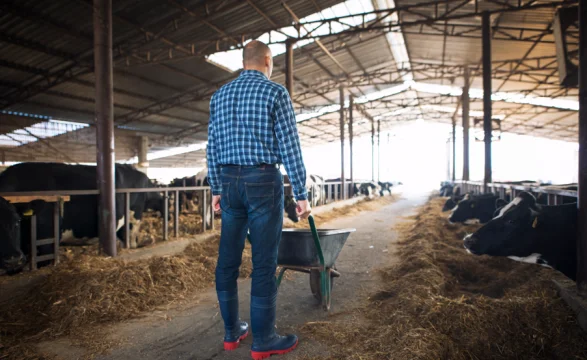
One example is that of 61-year-old S.J. Kosovar was mainly responsible for stable jobs. That's why SJ. had worked on Swiss farms for 35 years without work permits or residences. By “K-Tipp”, his activities included cow milking, calf care and stable cleaning. Despite working long hours from morning to evening and on weekends, he never took a pay vacation, records albinfo.ch.
Using the Sans-papper is not an isolated case. Philip Sauvin from the Social Agricultural platform describes the conditions of user labor as the usual “ ”, even though they are clearly illegal. While illegal immigrants are supposed to have some protection from legal exploitation, in reality they often remain vulnerable.
Authorities rarely take measures against farmers who hire foreigners illegally, according to the report. According to a “survey K-Tipp” in twelve large cantons in German-speaking Switzerland and French-speaking Switzerland, it seems that farmers should be afraid of only minor consequences if they employ foreigners illegally. Only eight of the twelve cantons have commented on whether farmers will be prosecuted for illegal employment. These cantons were Basel-Landschaft, Berna, Freiburg, Grabüden, Soloothurn, Turgau, Vaud, and Cyril.
In total, these eight cantons imposed less than 20 fines, with average fines less than 500 francs. According to the report, authorities in the Valais and Aargau cantons seem not sure whether farmers are convicted of illegal employment. St. Gallen and Lucerne didn't even answer questions “K-Tip”.
The Federal Council took into account the uncertain working conditions of undocumented workers, but described the existing system as appropriate “” and dismissed new safeguard clauses.
After a police raid, S.J. He was expelled from the country in 2023 without being paid his last salary of about 2,000 francs. His story illustrates the uncertain situation of undocumented immigrants on Swiss farms. /20minute