7 minutes ago
Why would Kosovo's membership in the Council of Europe be important for minorities?
Periskopi(2 years ago)
(2 years ago)Countries that sign the European Convention for Human Rights, when they are joined in the Council of Europe, pledge to protect the fundamental rights and freedoms of individuals, to rule of law and democracy, writes Radio Free Europe. Membership in this international organization also benefits one country's minorities. So states Sophia [...]
Membership in this international organization also benefits one country's minorities.
So states Sofija Todorovic, from the office of the Youth Initiative for Human Rights (YIHR) in Belgrade.
“Add to the possibility of protection, as the possibility [they] address the European Court for Human Rights, as a legal mechanism”, it tells Radio Free Europe.
Kosovo's Inquisition into this body has been re-actualised in recent weeks, as, at the request of the Government of Kosovo to the Cadastral Agency for the transfer of 24 hectares of land on behalf of the Decani Monastery, one of the main conditions for membership has been met.
The ownership of the Decani Monastery on this land was confirmed by the Constitutional Court of Kosovo in May 2016, but the authorities responsible did not comply.
What is the Council of Europe?
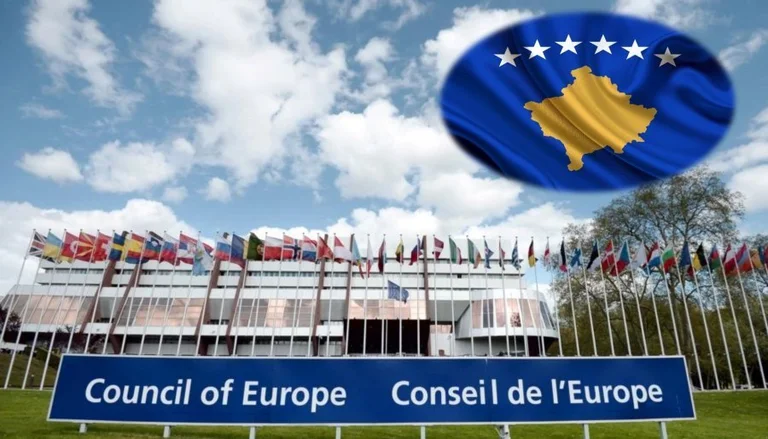
The Council of Europe where Kosovo applied for membership in 2022 is a leading organisation in Europe in the field of human rights.
Its share is 46 states, including 27 European Union member states and all countries in the region.
The European Court for Human Rights, headquartered in Strasbourg, France, monitors the implementation of the European Convention on Human Rights.
On occasion, countries must change their laws or make any other changes so that a calculated offense will not be repeated.
Todorovic says Russia has been among the only countries that have not respected the Council's decisions, but it is no longer part of it.
The Importance of Minority Membership
In some reports compiled on Kosovo, in the field of human rights, along with problems such as corruption and gender-based violence, both cases of threats to ethnic minorities and other marginalised groups have been cited.
Finally, also the US special envoy for the Western Balkans, Gabriel Escobar, said in an interview for Radio Free Europe that one of the reasons for communication problems between the US government and Kosovo is the treatment of minorities.
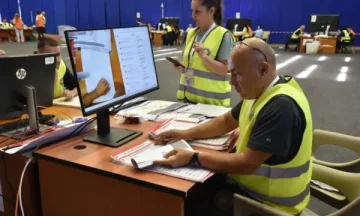
According to the population census, conducted for the last time in 2011, 91 percent of Kosovo's inhabitants are Albanians, 3.4 percent are Serbs, while the other 5.6 percent consists of Bosniaks, Gorani, Turks, Roma, Ashkali and Egyptians.
The census did not take part in this process of nearly 50,000 Serbs, who are estimated to live in northern Kosovo municipalities.
Kosovo's Constitutional Court has told Radio Europe free of charge that in the mid-2023s, this body has accepted 2,801 complaints from Kosovo citizens.
Of them, 247 complaints were filed by the minorities -- 167 by Serbs alone.
When can citizens turn to the Court of Strasbourg?
A person may file complaints to the European Court for Human Rights when he is personally a victim of rights violations.
The violation must have been carried out by a state that signed the European Convention on Human Rights, and the complainer must have exploited, in advance, all scales of judgment, in the place where violations occurred.
For what occasions can you address the European Court?
Todorovic specifically mentions the issue of expropriation.
Bekim Blakaj, from the Fund for Humanitarian Law in Kosovo, does not rule out any possibility.
For everything. All available subjects could end up in the European Court of Human Rights. When someone believes he's been violated by individual rights. I'm guessing, someone who thinks he was unjustly punished”.
The Constitutional Court has told him REL that, the <x0th natural requirements put forward by minorities are different... from protection of right on property, to claims of denial of law in fair and impartial judgment, right to work and judicial protection of rights”
Gerald Knaus, from the European Initiative for Stability, tells Radio Free Europe that if the Council of Europe member states really care about minorities in Kosovo, then they should support Kosovo membership.
The only question for Council of Europe members is what logic they will follow. If logic is protection of minority rights, including the Serb minority in Kosovo, then Kosovo should be a member, because the European Court of Human Rights and all mechanisms of the Council of Europe will strengthen human rights”, it has indicated.
Are the decisions of the European Court binding?
Todorovich says he does.
The relevant states are obliged to follow the verdicts of the Strasbourg Court, although the latter has no punitive mechanisms, unless its decisions are taken into account.
Would membership strengthen the judicial system in Kosovo?
Blakaj believes it is, mentioning with him the strengthening of democracy.
In addition to promoting conventions and monitoring progress, the Council itself makes recommendations through expert troops.
Part of it is the Venice Commission, in which Kosovo is only a member.
This commission consists of constitutional experts offering legal advice to member states in areas such as democracy, human rights and rule of law.