7 minutes ago
Former Italian Prime Minister D '%Ama points to moments in NATO intervention decision
Periskopi(2 years ago)
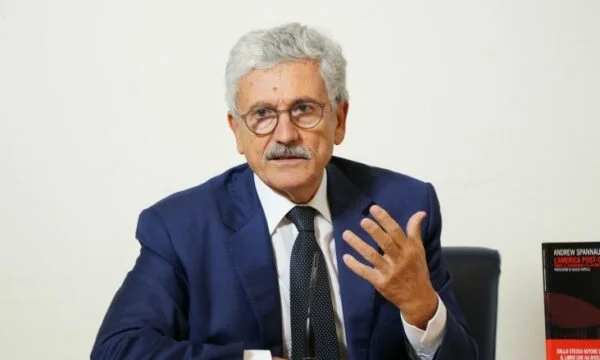
(2 years ago)Former Italian Prime Minister Massimo D'Alema showed in an interview for Euronews Albania moments from the NATO countries' decision to intervene in Serbia following the bloody conflict that had caused thousands of innocent victims in Kosovo. He said the decision on a military operation, where there is always the risk of casualties among civilians was difficult, [...]
Former Italian Prime Minister Massimo D'Alema showed in an interview for Euronews Albania moments from the NATO countries' decision to intervene in Serbia following the bloody conflict that had caused thousands of innocent victims in Kosovo.
He said the decision on a military operation, where there is always the risk of casualties among civilians was difficult, while he added that he is convinced today that at that moment it was the right thing to do.
Total interview:
President, thank you very much for taking the time for this interview at Euronews Albania on this very important day for us Albanians. And the first question that comes naturally is how do you remember March 24, 1999?
First of all, thank you for this invitation and afternoon. I salute all the spectators, the viewers. But my memory begins a day earlier, because a few days before that March 24th, I believe it was 15 or 16, it was Easter, it was the days before Easter, I went to the border point of Kukes and saw refugees arrive from Kosovo. A flood of vehicles and people fleeing Kosovo.
And I met these people and I talked to them, and I immediately realized what was going on and Italy was organizing refugee aid, along with Albanians. I went and met these Italian, military, civilian operators who, along with Albanians, were coming to the aid of these refugees, the refugee lists, and refugee confessions convinced me that something had to be done, that it had to be done. I was very hesitant because the idea of military intervention seemed negative, even for cultural reasons, I'm not in favour of the war, I'm against it, so. But I realized that it needed action, so even when military intervention began, of course, I felt that Italy should play its role.
Mr. President, I have a question that comes naturally to me, when we all remember President Clinton, who turned out to be in that communication with his citizens who informed them of what was going on. When Clinton came out, did she agree with you about what she was doing?
Yes, yes, we had an ongoing consultation with the Allies. Clinton was very correct in dealing with European allies. Clinton's military action was also very, very correct. We had continued contacts, let's say, and before military actions we talked together and he told me that Italy is close, having historical relations with Serbia, he might be in a difficult position” and he told me if I would prefer to make air bases available, without taking part directly.
But I said no, I told him that I wanted to share in political management of the conflict, and so I realized that this also led to full responsibility from a military standpoint. But the relationship with Clinton was very close throughout this event. And this event was very complex, even politically, and then maybe we'll talk about it further.
What about your reports with the Kosovo Liberation Army? Have you had contact with them?
These contacts were, at the military level, but I had to be honest, we... my view was to work so that there was a political solution at the end. And, in the end, there was a political solution. And, according to my vision, the personality that could help with a political solution was Ibrahim Rugova, so we made efforts to release Rugova. And so there probably were different ideas among the allies, but Clinton supported me, and we managed to free Rugova, and he came to Italy with his family, and I think that this was, that the idea was to find a solution and, even though Rugova was one of the most important personalities, let's say, in the struggle of the Kosovo people, there was also a man of peace, a man who could promote a process of reconciliation. And, indeed, then Rugova won the elections, namely, it wasn't a bad choice, but it was a choice that seemed fair. Unfortunately, however, Rugova died quickly because of his illness, but at that point, let's say, that my principal Kosovo conversationist was Ibrahim Rugova, who also became my guest, with whom we discussed how this event should be concluded and how to lead to a positive outcome.
Mr. President, at moments before the launch of the campaign, but even during the launch of the campaign, what has been the most difficult moment in the meetings you held among NATO allies?
But there were some difficult moments, indeed, of course we had even a moment of disagreement, because neither we, Germany, Chancellor Schroeder, we didn't agree with the bombings in the cities of Serbia. We were in favour of air strikes against Serbian troops in Kosovo, and for this point we had a disagreement with Americans, as true as the bombings in Belgrade were carried out not with NATO assets, but with American and English aircraft and rockets, because inside. NATO, several countries -- Italy, Germany -- disagreed. Even because of the high risk of civilian casualties, which there was. Another point, a serious point of discussion, was even after this campaign was already under way for weeks, was not producing results, so a meeting was held in Washington, during the 50-year NATO summit, after about 70 days, let's say. There was a very difficult discussion, because some proposed an intervention of troops from the ground, in a word, an invasion that could hardly be carried out only in Kosovo, as it was actually supposed to wage a war against Serbia. We were opposed, the French were opposed, the Germans were opposed, as Clinton ended up saying “we're only going to do what we're all agreeing to”, so there was a stop, an initiative that I think would have been catastrophic.
Because the idea of occupying Serbia, let's say, to do in Europe what Americans did in Iraq, would have been a catastrophic idea. We said at the beginning, that our soldiers could enter Kosovo only under the auspices of the United Nations. So true, even though I can't remember, but I want to remember, because it's absolute truth, that the contingent that entered Kosovo wasn't. NATO, but was a UN contingent. KFOR was a United Nations force. And the first military contingent to enter Kosovo were the Russians, who invaded Pristina Airport, and not Westerners, because this political behaviour allowed, then the action took place. NATO, but then, war ended with a UN Security Council resolution, and with a UN mandate, so finally, the solution was found, say, under international law. And that became possible, because during the entire conflict we held a dialogue with Russia, agreeing with Clinton. I remember that the Russian envoy was the former prime minister of the time, Cernonerdin.
Cernonerdin came to Rome, we called Bill Clinton at dinner, and after talking to Clinton, Cernonerdin went to Belgrade the next day to discuss with Milosevic and the Serbs. So I say this because military action took place, but there was also a strong political action so that such a solution could not finally leave an open wound, let's say. Because ultimately, our objective was peace. A peace that respects the rights of the Kosovo people, but a peace. And, in the end, much is said about the Kosovo war, that is, we have fought. But let's say things as they are, the war was going on, we didn't, it had started before we intervened, it was a long struggle, but Kosovo had been the last episode of a very long war in the Balkans. We intervened to cease the war, of course we intervened strongly, but to create a peaceful balance, that was the goal of NATO's action, and that was the reason we agreed on.
Mr. Prime Minister, 25 years have passed and some information has been released, many things have been declassified, we take a look at Albania's role. What can we find out from secret meetings that were held by NATO with the Albanian government, but your personals as Italy's prime minister?
I remember that our co-operation with Albania was really exotic, because we were afraid that fleeing Kosovo would cause a huge influx of refugees in the direction of the European Union, this danger existed. If you think about what happened a few years later, with the war in Libya, then we happened in the face of a dramatic emergency. Now, in this case, this emergency didn't show up, and this, above all, thanks to the co-operation between Albania and Italy, because we managed together and I seem to say that Albanians did this very generously and with great skill, the refugee wave, these were hosted for the most part in Albania, with the help of the Italian army, but working together, and thus avoiding a humanitarian disaster.
If you think about half a million people escaped, it was something extraordinary, and no vessels were launched in the Adriatic. Nothing happened, everything was governed, part of the refugees, were those most in need of help, accompanied to Italy, but in other countries, Austria, Germany, and so on, while much were helped in Albania. So the first thing I want to say is that it was an important, positive moment, of humanitarian co-operation, Italy-Albania, in helping people, which I believe has been one of the moments that have cemented our relationships even more.
Then, of course, Albania was part of this event, even in the search for a solution. Finally, for example, it was very important that Albania not be caught behind the idea of Greater Albania, let's say, that it would make everything even more difficult. But, he acknowledged the idea of an autonomy -- of a Kosovo independence -- Kosovo was administered by the United Nations, without any claims of territorial character. So I have to say that during all of this, Albania's behavior has been very wise, very efficient, I discovered a governing class capable of taking on its responsibilities.
President, we return to the campaign once more because the role of France is often mentioned in the NATO bombing campaign. What really was France's role?
Look, everybody did their part, I don't want... from a military point of view, the biggest weight that the United States weight, and then the United Kingdom, and then Italy's, but I think this data can be found, let's say, in the sense that NATO is very accurate, as a number of missions, but I'm adding that we had all the bases, those air, etc., and we took over our responsibilities. The French did their part.
I ask you about France's role that everyone knows the connection France has with Serbia and therefore we always ask questions about France's role in the campaign.
But, look, I believe the French government was very determined, even Prime Minister Jospin himself, probably the one who had the most doubts was President Chirac, me... but, after all, the action of NATO was established by all together, I don't believe... we also had good relations with Serbia. I tried to make the Serbs understand that they had to act to avoid, before the war, I met confidentially even with Milutinovic, who was then the president of Serbia, was one of Milosevic's closest persons. I arranged for this meeting at the dentist because he came to Rome to the same dentist I went to.
He came confidentially, my dentist is Istrian, he's a big dentist, he's descended from Istria, and so he had a lot of relationships with the world of the former Yugoslavia, and he himself organized this private meeting. And I said <x0... but you're doing unacceptable stuff”, there was a view of the massacres they had done, of those paramilitary groups, etc., “you have to retreat, that this is where you're going to get to war“.
I told him openly, inviting him to take... and he responded by saying "x0..." but no, the West will never enter a war, for these four halves... “I was very impressed that he showed some arrogance, some blindness... but we tried to prevent the war, of course trying to let the Serbs know that they had to withdraw, before someone interfered with the forced to withdraw, so let's just say... We are friends of Serbia, after a few years, as foreign minister, I went to Belgrade to explore the Italian Culture Institute, and, of course, I had some tension, because it was the first time after the war, that I was returning to Belgrade.
But I have to say that, having met with young people, intellectuals, and then there was the Belgrade Book Fair, etc., I found a lot of people who told me “at the end of the day, also helped us break out of Milosevic“. I must say, of course, the war was a tragedy, but after all, at least part of the opinion, of young people, of intellectuals, etc., understood that through the war, a democratic change in Serbia had been opened up.
President, these last few minutes I want to stop by today's Kosovo, how do you see Kosovo today?
You see, I have to tell you the truth... I believe that Kosovo authorities should be encouraged, not to get involved with nationalist feelings, and to look for the way of a dialogue with Serbia, because, honestly, without touching Kosovo's independence, above all, efforts should be made to function better together, because we know there is a Serb minority in Kosovo, which is limited, but it is important, in a certain area of Kosovo, with which it should be co-existed. Among other things, we know there is also an Albanian minority still in Serbia, in Presevo, we know all, let's say that we are people who know that part of the world.
I have also been co-operating for a short period of time with the Kosovo government, in that period in which Foreign Minister Behgjet Pacolli was in, but Kosovo must be careful not to invade the nationalism demon, because in the end, let's say, if Kosovo wants to get out of these half conditions, that Kosovo is a country that has been recognised by many, but has not yet been recognised by a few others, which cannot be part of the United Nations Assembly, and even the European Union has problems, because there are even within the countries that do not recognise Kosovo. So, if Kosovo wants to achieve a full recognition status, this goes through dialogue with Serbia, it is inevitable, namely, it is not one thing that can be avoided. So it takes a governing class to be able to request this dialogue.
It's futile to feed the elements of the counterinvention. Serbia, too, is sick of nationalism, let's say, but we know that nationalism in Europe, and particularly in the Balkan countries, has always brought tragedy. So, if I have a message, it is that Kosovo must work harder for dialogue. Sometimes I see much more courage in dialogue in the Albanian leadership, that Albania in these years has played a very positive role in the Balkan countries, has been a country that has worked for stability, has worked for co-operation. Here, I would like this Albanian example to be followed by Kosovo.
But how can you negotiate with Serbia, when they say we do not recognise the Ohrid Agreement, do not implement the signed agreement, do we not know the provisions of those agreements, how can you discuss with this Serbia?
I am not Serbia's lawyer, I know very well that Serbia has some rather rigid positions, but some dialogue between Vucic and Thaci was open. There were times when this dialogue was supposed to be more likely, I didn't open it, they opened it. And then, there has been uncertainty even in the Kosovo leadership, and a going back, let's just say things how they are. You're talking to someone who's been following these events very closely, no... Yes, you're right, but at the same time, I'm not talking about... negotiations that have to be held tomorrow, I understand there are difficulties, but I believe that if there's a will on the Kosovo side, to find the ways of dialogue, this position is stronger, and it's even easier for the international community to help Kosovo exert some pressure on Serbia, if Kosovo leaders help us seek a possible basis for dialogue. So, I'm not talking about negotiations tomorrow, but I'm talking about an attitude, here's the attitude that has to be taken, we have no interest, the world is already involved in terrible conflicts, we shouldn't harbor tension in the heart of the Balkans, which has already experienced many and many conflicts over the years.
Mr. Prime Minister, the role of Lajcak and Borrell among Albanians is often discussed as negotiators at this table of talks concerning their approach not often in favour of Kosovo.
I don't know, I don't want to criticize High Representative, it's clear that Borrell represents European positions, let's just say, because he's conditioned also from Spain's position, we can't forget that Spain is a country that doesn't recognise Kosovo, so it's clear that he has a way of taking these into account, but I don't believe he's against Kosovo, of course that some weight in his positions has a Spanish position.
Prime Minister, if you came back 25 years ago, would you do the same again?
Look, I assure you to participate in an armed conflict is an experience I wouldn't like to repeat, let's say. That was a dramatic experience, it was a very difficult day, even because I felt the weight of responsibility, when I looked at images of shelling, of people killed, all of this affects the deep conscience of political responsible ones if they are responsible people. But I continue to think that at that moment it was the right thing to do, I continue to think that there were no options, I keep thinking that... I've seen the wounded people, in Kukes, I've seen people escape, I've seen the old people with their feet injured by the dungonettes, I've witnessed with my own eyes what was happening, so I'm convinced that today that the international community can't stand against this tragedy.