14 minutes ago
German media alert to potential conflicts in the Balkans: Banjska Attack Concerns Berlin, European Capital
Periskopi(2 years ago)
(2 years ago)The EU has long neglected the Western Balkans and saw old conflicts flare up again. Russia knew to seize the opportunity to gain a ground in the region. The German foreign minister seeks to correct this strategic mistake. But she has a problem. It's a mixture of autocratic politics, Russian influence, [...]
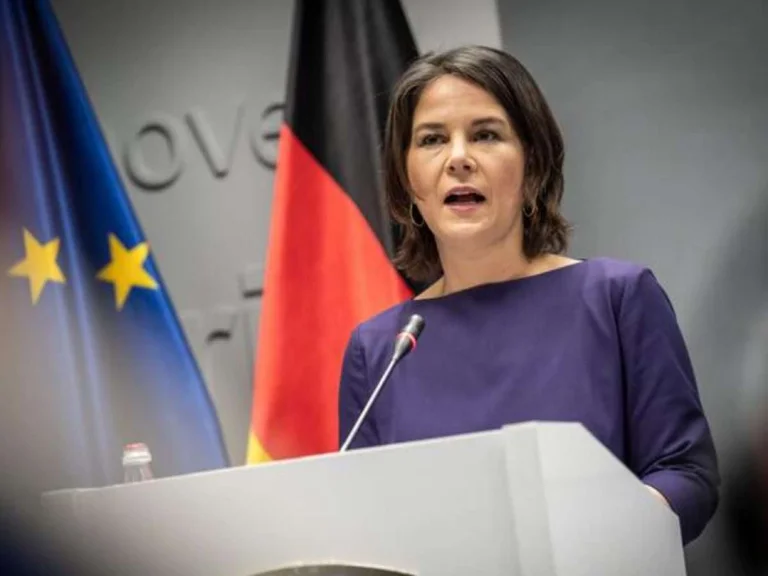
The EU has long neglected the Western Balkans and saw old conflicts flare up again. Russia knew to seize the opportunity to gain a ground in the region. The German foreign minister seeks to correct this strategic mistake. But she has a problem.
It is a mixture of autocratic politics, Russian influence, organised crime and territorial disputes that are increasingly destabilizing the Western Balkans. Those watching it agree that Europe will be secure long-term only if the countries of the region are strongly integrated into the community of states.
Thus reports German medium “Welt” until describing the visit of the German top diplomat to Montenegro and Bosnia and Herzegovina in early March, the Express broadcasts.
But this geopolitical realization comes late, according to Welt. Little has happened in the last 20 years. Federal Foreign Minister Annalena Baerbock wants to correct this strategic and rapid error. So it has travelled for the second time to the Western Balkans in its mandate. It is important “that things move quickly now,” she said in Podgorica, Montenegro's capital.
It called EU enlargement in the region a “geopolitical default”. It cannot be faced with the grey area Russia benefits. But Backback will have to be measured by the federal government's achievements. The Western Balkans should actually be in the centre of German foreign policy and major progress must be achieved. But wars in Ukraine and Gaza have shifted the focus from the region over the past two years. And so Berlin's balance is mixed at best, writes Welt.
For Kurt Bassuener of the Berlin Democratic Policy Council, German approach consists of words without actions, without strategies.
“should have a strategic recalculation”, he says.
Contrary to expectations, the invasion of Ukraine did not lead to a change of direction. Only rhetoric is different.
He cites German-French mediation in the Kosovo conflict as an example.
The aim of this dialogue was to prevent escalation”, Bassuener said. Instead, a serious incident occurred last September. Heavyly armed Serbs attacked Kosovo police officers and occupied a monastery in northern Kosovo.
Belgrade placed its army on the border. Pristina viewed this as an attempt to annex parts of Kosovo. Serbia still does not recognise Kosovo. Experts believe it is impossible for Serbian President Aleksandar Vuciq to have known nothing about the events. But he should not be afraid of the consequences.
Concerns about a new Balkan conflict are growing not only in Berlin, but also in other European capitals. Whether because of the Serbian attack in northern Kosovo. Or because the Serbian ethnicity wants to be cut off from Bosnia and Herzegovina's multiethnic state.
The president of this republic, Milorad Dodik, has speculated about joining Serbia openly for years and he is Vladimir Putin's close ally. He has met a total of four times with the Russian president since the beginning of the war in Ukraine, recently in late February.
Balkan people are disappointed
So far it has not been possible to curb separatist Dodik. Backock attacked her sharply shortly after she took office. I defended what the existing sanctions regime should now be used against Mr. Dodik”, she said in December 2021.
However, the EU could not take punitive measures. Because Hungary blocked every attempt to do so in March 2022. Germany completed infrastructure projects in Republika Srpska worth 105m euros. There were no personal sanctions against Dodik.
People in the Balkans have expected to become EU citizens for up to 20 years. Many are disappointed and sensitive to propaganda. Russian state media broadcast without obstacles. In Serbia, polls show that only about a third of the population is in favour of EU membership.
Putin uses “Ruski Mir” The Russian World to justify its claim to countries such as Ukraine, Moldova or Georgia, and claims that “the Russian countrymen” in these countries must be named “A similar concept circulates in the Balkans for several years: “Srpski Svet” The Serbian world.
Therefore, ethnic Serbs in the region belong together, whether they live in Serbia, Kosovo, Montenegro or Northern Macedonia. The idea reminds you of a Greater Serbia, as former Yugoslav president and war criminal Slobodan Milosevic had predicted.
At least Bosnia and Herzegovina now hopes it can start accession negotiations with the EU at the end of March. Foreign Minister Elmedin Konakovic warned at his meeting with Baherbox that if this does not happen, disappointment in the society will increase.
A report by the Balkan Policy Consultative Group in Europe last December described the countries in the Western Balkans as “stabilocracy”, that is, “regia between autocratic and democracy, and backed by foreign actors who do not recognise this situation and continue to work so with these autocratic leaders”.
Montenegro wants to become EU member by 2028
Former cadre Angela Merkel, for example, was based on economic co-operation with Serbia and had turned a blind eye to anti-democratic developments.
The supposed stability is an illusion, says the report: “People like Dodik in Republika Srpska or Vuciq in Serbia tend to become more authoritarian as long as they stay in power. Stabilocracy is not a stable form of the regime; it changes for the worse with the passing of time and returns to autism, especially if supported by outside”.
On the positive side, there is progress that small Montenegro has made under its new pro-European government. Podgorica wants to join the EU by 2028. In Berlin, people welcome the zeal for reform but do not want to engage for a year. Berlin also sees as a success the fact that Vucikis are repeating the local elections following accusations of manipulation that the federal government is primarily responsible for.
At the same time, negative developments like the Kosovo conflict, Serbia's autocratic tendencies and separatism in Bosnia and Herzegovina overshadow such bright points, Welt writes.
The presence of Western soldiers shows how explosive the situation is still in the Western Balkans. NATO has troops stationed in Kosovo and the EU in Bosnia. They aim to ensure the fragile peace Russia is trying to sabotage with all its might.
Putin knows it is easy in the region, because institutions in the countries of the former Yugoslavia are weak or openly handsome towards Moscow, or both. And because the West has so far had only words.