2 minutes ago
Serbs from Kosovo asking for dinars
Periskopi(2 years ago)
(2 years ago)“I'm getting to”... “I'm waiting for a solution to”... “Pulling euros with commission”... “Money attracts them to Serbia” ...That's what some members of the Serb community in Kosovo say, who receive revenues in dinars from Serbia's budget ʹ started from salaries and pensions to additions for children. Those living in municipalities in [...]
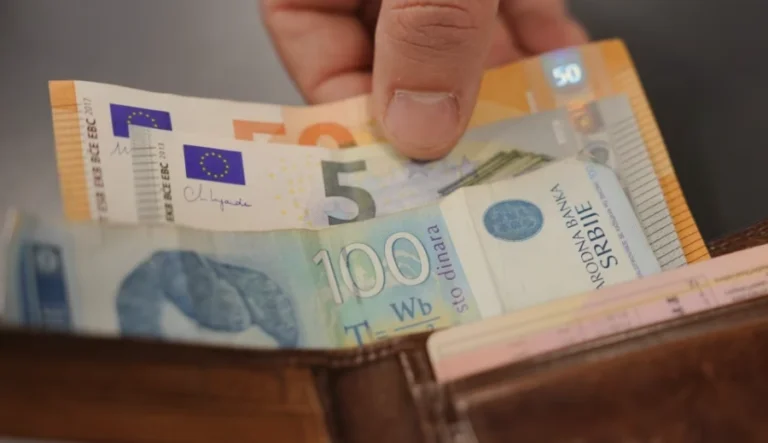
Those living in municipalities south of the Iber River have not been able to withdraw their income since mid-February, because post offices operating under the Serbian system have no dinars.
In municipalities in the north, meanwhile, dinars can still be withdrawn to the Post Savings Sports, which, currently, is the only one operating with this currency in Kosovo.
However, even there, only a limited sum can be withdrawn -- from 5,000 to 10,000 dinars, meaning 40 to 90 euros.
As Radio Free Europe notes, larger sums can be attracted only to euros.
The situation followed a Kosovo Central Bank regulation (BQK), which went into effect on 1 February. It defines the euro as the only currency that can be used for cash payments in Kosovo.
According to it, Kosovo Customs, twice over the past month, banned the entrance of dinars from Serbia to Kosovo, with the argument that it does not have the CEC's approval.
Representatives of Kosovo and Serbia discussed this regulation Tuesday in Brussels, but without any concrete results. European negotiating mediator Miroslav Lajcak said additional meetings would be needed.
The US State Department said, as well, that Pristina and Belgrade should continue talks on the issue urgently.
Citizens ' Temporary Solutions
Millena from Gracanica é majority Serb municipality near Pristina drew money for several of its fellow citizens last weekend in Serbia.
Relatives and some friends asked me to withdraw the money at a ATM in Serbia because they heard I was going. Here in Gracanica there's no dinars and no way to attract their income. People do it in different ways”, she tells Radio Free Europe.
Similarly, Stanko from North Mitrovica provides the money with a majority Serb municipality in northern Kosovo.
A sheet with a Serbian-language inscription “Bancomati does not work” in Leposaviq.
“Or I wait in line [to withdraw money in the Post Savings], or I use [the opportunity] when someone goes to Serbia to go and get there”, he says.
According to him, in Post Savings Sports, some of the revenue may be attracted to dinars and the rest in euros.
For now, Lubisha from Northern Mitrovica and Marija from Leposaviqi have decided to go to Serbia to withdraw their income.
I was on Kraleva and I got the money there”, says Lubisha.
“Rashka is right next to us, so when we go for food, because everything has become expensive here [in Leposaviq] we pull the money there”, says Marija.
Pensioners Expect Solutions
But some pensioners, both in the north and south of the Ibri, say “can't make it to” and hope for a solution.
One of them is Zoran from Gracanica.
I can't understand, I'm waiting for them to agree, for God's sake. I didn't get a pension, I have to wait”, he tells Radio Free Europe.
Borivolo from North Mitrovica says the pension for the month of February has been received until there has been yet to be dinars, but that he says he is concerned about the next one, which should be paid in early March.
How can I get out? Go [to Serbia]? I'm disabled, I can't wait [in line]. They must be ashamed”, Borivoya says.
Radoslav from Leposaviqi says he has a bank card from Serbia, in which he receives his pension. He says the money now withdraws from ATMs to euros, but shows the commission is high.
“The exchange is 123 dinars per euro. Not worth it to us. In 500 euros we lose 2 to 3 thousand dinars [about 25 euros]”, he says.
He adds there is nothing against using the euro, but, as he says, an alternative solution should be found for all who receive payment in dinars.
“The Kosovo Government's measures for easing the consequences will be public”
Kosovo Deputy Prime Minister Besnik Bislimi said on February 21st that the government is aware that the CEC regulation affects some of the citizens from the Serb community and, for this reason, will take measures to ease the consequences.
Free Europe radio addressed the Government of Kosovo to ask what measures it is about, but in the response it received, it briefly said they would be public and warned.
Bislimi said earlier there will be ten measures “through which we will make sure that citizens are not harmed in this transitional period to formalise payment transactions”.
Serbia's People's Bank did not answer REL's question whether there is a solution to the horizon for payment in dinars for Serbian citizens in Kosovo.
For years, the People's Bank of Serbia sent dinars to its vault in Leposaviq, from where the international company, Henderson, transported them to financial institutions operating under the Serbian system, such as Post Post Office or Savings.
But, the CEC now says this practice is illegal.
For Kosovo, technical issues, while for Serbia, political
Kosovo Central Bank Governor Ahmet Ismaili said that at the meeting in Brussels on February 27th it is not discussed the regulation that prohibits the use of the Serbian dinar in Kosovo, but that some technical models have been presented about how Serbia can continue financing Serbs in Kosovo through legal and transparent channels.
Kosovo's stance is that the dinar issue is not negotiated within the dialogue on normalising relations with Serbia and, for this reason, Kosovo's chief negotiator, Besnik Bislimi, did not attend the meeting in Brussels.
On the other hand, Serbia's chief negotiator, Petar Petkov, said it is a problem that should be solved exclusively on the political level.
In a statement given to Radio Free Europe, the US State Department said Pristina and Belgrade should urgently continue talks with the European Union's mediation for the use of dinars in Kosovo.
Earlier, American diplomats said Kosovo's decision to enforce regulations banning the dinar has affected the quality of US-Kosovo reports./ REL