2 minutes ago
Petersen: Kosovo Serbs hostage to Belgrade destabilising policies
Periskopi(2 years ago)
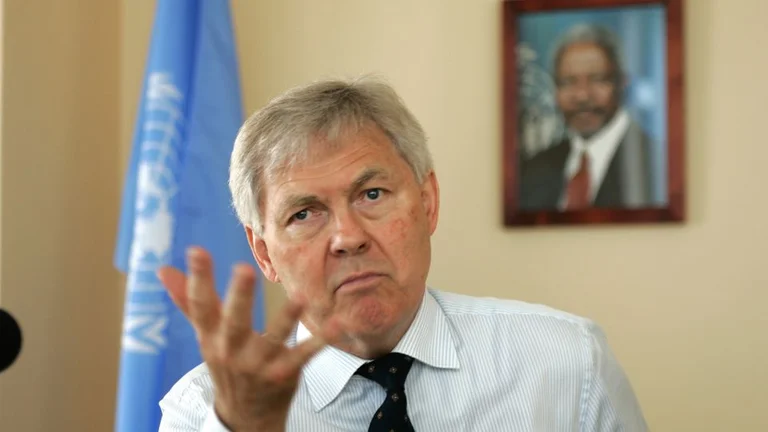
(2 years ago)Former UN Prime Minister in Kosovo Soren Jessen Petersen has talked about current developments in Kosovo and the country's performance since he held a key role in provisional management. In an interview for Telegrafi, he has highlighted not only the major steps Kosovo has made as [...]
Former UN Prime Minister in Kosovo Soren Jessen Petersen has talked about current developments in Kosovo and the country's performance since he held a key role in provisional management.
In an interview for Telegrafi, he has highlighted not only the major steps Kosovo has made as an independent state, but also the challenges still facing its political and economic development.
With a marked approach to dialogue between Kosovo and Serbia and the role of the European Union and the US in this process, Jessen-Petersen expresses clear thoughts about the current leadership and the possible path towards improving relations in the region.
It also stresses the importance of integrating non-US communities and meeting with challenges that hinder Kosovo's progress in the European and international arena.
Petersen stresses that, despite progress, Kosovo still faces challenges coming from within and outside.
Part of these challenges is the need for new blood in politics, a vision he has expressed years ago.
“There is the danger that overload of negotiations and political disputes discourage the new generation of leaders engaged in politics,” he says, hoping that this will not happen.
About the dialogue process, Jessen-Petersen is cut off: “Dialog is the only way forward,” he notes, emphasising on the role of the EU and the US in the process.
“The EU uses both carrots and both integration staff, while the US stands firm in its support. ”
But as for Serb majority association, he expresses concern that new ethnic lines could be created within Kosovo.
“Kosovo must do more to integrate Serbs who should feel as part of the country, while avoiding Belgrade's continued influence,” he says.
Jessen-Petersen, urges Kosovo political leaders not to take support from allies as well and to be cautious in their actions.
In terms of economic and social progress, he acknowledges that there is a slow movement, influenced by external factors, but adds that the recent visa removal could bring new impetus to the country.
As for the Special Court, the Special Court, specialised Chambers in The Hague, he expresses the desire for a fair and fair process, despite the fact that the process has been slow so far.
Full Interview
graphy: Mr. Jessen-Petersen, you have been one of the UN Secretary General's first representatives in Kosovo, between 2004 and 2006, can you give us a reflection of your prism, how much progress has Kosovo intermittent?
Jessen Petersen: When I came in August 2004, talks on determining Kosovo's final status had not even begun, when I left June 2006 status talks were under way. Today Kosovo has been independent for more than 15 years and still builds the country. Progress may be slow sometimes, but direction ahead is clear and irreversible.
graphy: Years ago you have said that Kosovo needs a new generation of political leaders, has this happened now?
Jessen Petersen: Again, progress seems slow. This will happen, but there is the danger that many conversations, very few actions and many political disputes and disputes between power will discourage young people from entering politics. I hope it's not.
graphy: How do you see the current process of dialogue between Kosovo and Serbia?
Jessen Petersen: Dialogue is the only way forward to the European Union's leadership and close consultation with the US. The EU uses integration into the European family, both carrots and both stickers, and the US does not waver with a single voice supporting the process.
graphy: Do you believe that any eventual agreement between Kosovo and Serbia will be reached this year?
Jessen Petersen: I'm afraid that won't happen, given the current political leadership in Serbia.
graphy: There is already a draft state to establish Serb majority association in Kosovo, but there are opposition from the opposition to maintaining association at certain points...
Jessen Petersen: The association was rightly part of the Ahtisaari agreement. Kosovo institutions should do more for Serbs in terms of belonging to Kosovo, while also caring for Belgrade's continued destabilising movements, holding many Serbs in Kosovo hostage to their destabilising policy in Kosovo.
graphy: Kosovo faces sanctions from the European Union due to the current situation in the north. Prime Minister Albin Kurti continues to call for the removal of these measures, calling them unfair, while the EU says conditions have not yet been created...
Jessen Petersen: I am unaware of any reluctance by the EU and do not understand the reasons why the EU is acting on sanctions. On the other hand, Kosovo politicians, as long as they do not compromise their independence, should be more careful not to itemise their friends and supporters and not receive such support as well.
graphy: How do you see Kosovo in terms of economic and social progress, since 2006 since you were chief administrator, wide with now?
Jessen Petersen: Progress seems to be slow, but responsibility for this is a factor of regional and global economic circumstances and still tense political climate in the region, while politicians can also be part of the blame. However, the recent decision on visa liberalisation may help boost the speed and essence of progress in these areas.
graphy: Former KLA leaders continue to be tried at The Hague by the Special Court. Do you believe the right judgment is taking place?
Jessen Petersen: I certainly would like to believe that there will be a fair trial and I have no reason to doubt that. At the same time, I regret the process has been very slow and continues to be so.
graphy: When will you visit Kosovo? Do you have a plan?
Jessen Petersen: I hope to visit Kosovo in the near future.