16 minutes ago
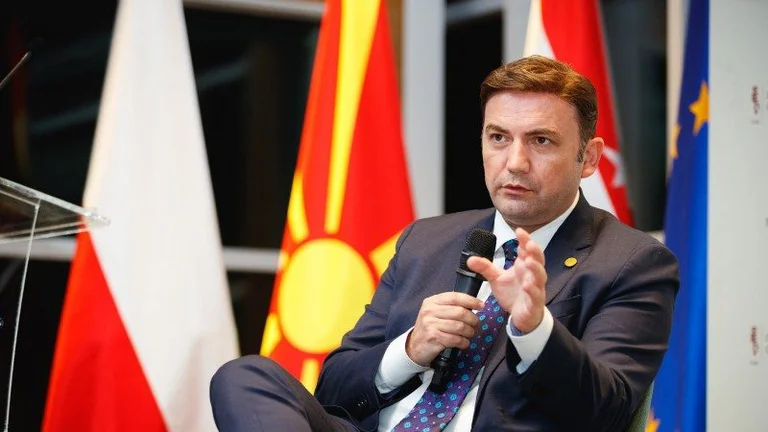
Osmani on running for president of RMV: A referendum, the figure must be the one that unites citizens
Periskopi(2 years ago)
(2 years ago)Preparations for presidential and parliamentary elections have started in northern Macedonia in late April and early May. Of the Albanian political parties, there will be two candidates for presidential elections. The Albanian opposition candidate coalition will be Arben Taravari, while on Thursday, the Democratic Union for Integration declared that the candidate [...]
Preparations for presidential and parliamentary elections have started in northern Macedonia in late April and early May. Of the Albanian political parties, there will be two candidates for presidential elections.
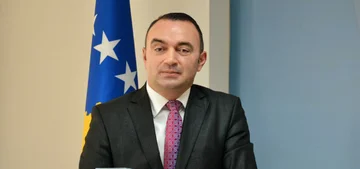
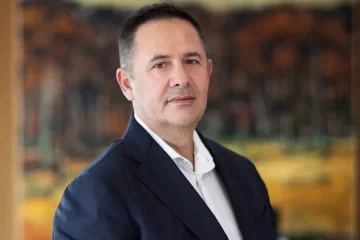
The Albanian opposition candidate coalition will be Arben Taravari, while on Thursday, the Democratic Union for Integration announced that its candidate will be Bujar Osmani, who holds the post of Foreign Minister of Northern Macedonia.
In an interview for Voice of America, Mr. Osmani said his candidacy was “a referendum” in support of the idea of the president being elected by parliament.
“A plebiscary support for the idea of the president being elected in Parliament by two-thirds of the vote and double majority, where even the majority of Albanian deputies will be determining for the election of President”, he said, adding that the president should be a figure uniting the country's citizens.
Osmani said he expected the new government to adopt changes to the country's constitution as evidence of the goals for the European integration of Northern Macedonia.
Voice of America: Mr. Osmani, at today's UN plenary session, where support for Ukraine was discussed, you held the word of the case. What were your main attitudes?
Brad Osman: I think this second anniversary of the beginning of Russian aggression was a good opportunity that a group of foreign ministers, who have been more loud at the alarm that the Russian Federation poses the greatest danger to the safety of the continent, but of course from my perspective and to the Western Balkans and North Macedonia, so that we can still recall the exploits of the Russian Federation in Ukraine and the risk it poses for all of us. Besides my speech at the General Assembly, I was able to have a meeting with Ukraine's Foreign Minister, Mr. Dmytro Kuleba, once again confirming Northern Macedonia's continued support for Ukraine's fair fight. I believe that if the Russian Federation wins in Ukraine, the next target will be other vulnerable regions, especially the Western Balkans, and that is, of course, multiethnic North Macedonia. So it's very important that we continue to support Ukraine to win this fair war, but we also maintain our strategic clarity and resistance to confront the Russian hybrid influences that have been introduced into every port of the system and therefore it was the message here to say not to Russia but the continuation of the European integration of the Western Balkans and North Macedonia in particular.
Voice of America: Mr. Osmani, yesterday, you were officially declared the candidate of the Democratic Union for Integration for President. What will be your offer for the electorate?
Brad Osman: It was a coincidence that the nomination for state presidentship by the Democratic Union of Integration would find me here in the United Nations, in the United Nations, and I take this opportunity, because it is and my first presentation after the nomination, to thank all those who gave me great support during the day of yesterday, but of course Chairman Ali Ahmeti, who decided that part of his great historic mission on my shoulders. Because my candidacy is not just the candidacy of a politician who has a unique local institutional and international experience. Since I was last year chairman of the world's largest security organisation O The SBB with 57 states and 1.3 billion people, but more than that, my candidacy is a referendum on an idea of full equality of all communities in northern Macedonia, because we come up with ideas for a plebiscite, a plebiscite support for the idea of the president being elected in Parliament by two-thirds of the vote and double majority, where even most Albanian MPs will be determined for the president's election. Because the president must be a unifying figure, connective tissue, cohesive tissue that holds together the different narrations in the country; in a tissue, in a multiethnic and social harmony. Therefore, this candidacy of mine is a great message that the time has come for all ethnic monopolies that have been created in the state to be destroyed and to create a state of complete equality for all the Inidd individuals and for all other communities.
Voice of America: In the race, there are two candidates from Albanian political parties, you and Mr. Arben Taravari. In the past, Albanian candidates have not gone to the second round of elections. What are your expectations, what's changed this time?
Brad Osman: I think the situation is a little different. Not wanting to talk too much about myself, but my international and local institutional experience makes me very competitive compared to all other candidates, including those Macedonians or Albanians; a new quality in decision-making for president in northern Macedonia. I think this referendum on this idea that the time has come to exceed the ethnic boundaries, because it is the idea of equality, the institutionalisation of equality, the dignity of communities, the breaking of ethnic monopolies, and that support will give not only Albanians with plebiscite, but also the Macedonians, who know that equality will only enable a state, which will be in harmony and progress and in European integrations and the European institutions.
The Macedonian community has realised it has been a focus of stereotypes against other communities. Only equality allows for additional value to all communities separately, but also for the state in general, so I remember that this referendum on this great idea President Ahmeti presented yesterday by carrying on my shoulders this mission will be supported by all communities, primarily by Albanians with plebiscite, but also by all those who want to see Northern Macedonia as the state where citizens are equal in privileges but responsibilities to the state and society.
Voice of America: DUI and the LSDM, two parties in the coalition, are coming up with separate candidates for president. Is this expected to affect the appearance of joint election lists for the parliamentary race?
Brad Osman: I, although not having a final decision, remember that DUI will come up with a European front, where Albanian political parties which in Northern Macedonia are the compass of strategic orientation, or the Guardian of the country's geostrategic course will be together because we are living at an important geopolitical crossroads. The danger from the Russian Federation, which is extending to all of the system's ports, as it presented itself as a direct threat to the security of the Western Balkans, but also to our country, makes the need for strategic clarity necessary. We do not dare to allow at these important moments to deviate from the strategic course by supporting political parties that may be either proxy) players of the Russian or undefinated influences in strategic orientation. What the Western Balkans and Northern Macedonia need at the moment is strategic clarity, a political predictability, which will create state resistance in the Russian tendency to destabilise processes in northern Macedonia, but also in the Western Balkans in general.
Voice of America: Your country is expected to make changes to the Constitution, a sensitive issue for your country. Do you think that after the elections, no matter which force you gain, these changes will be adopted?
Brad Osman: Since I stressed that DUI, but also our political option in general this European front is the Guardian of the Euro-Atlantic state course for us these are red lines. Mayor Ahmeti said yesterday that “will not have government without constitutional changes”, which means the introduction of the Bulgarian community and other communities in the country's constitution with the aim of opening the country to all communities, transforming it into an equal state for all and second: changing the concept of electing the president of state with a majority of 2/3 and a double majority, represented here also most Albanian representatives. I remember that this idea, along with constitutional changes related to European integrations, creates an offer that is irrefutable to the Albanian community, but I am also sure of all other communities in northern Macedonia.
Voice of America: In recent weeks, citizens of your country are facing long-awaited expectations for receiving passports and IDs with the country's new name “North Macedonia. Citizens say their freedom of movement is limited. Why has this matter not been resolved until now, and when is it expected to take course?
Brad Osman: I hope the Ministry of Internal Affairs will be re-organised to increase its capacity for providing passports. The easiest way is to seek to postpone international agreements deadlines, but international agreements cannot change unilaterally. International agreements which have been ratified in the country's parliament are part of the internal legal order and they cannot be changed by law, so I remember that the best way to go out in service to citizens is a reshuffle. As did the Foreign Ministry in diplomatic and consular representations. We put jobs on two shifts, we put jobs on Saturdays and Sundays, we increased the capacity of the base stations for passport delivery, and we're getting in service as much as we can for people to change travel documents.
So, I remember that the opposition who is now temporarily part of the government has been calling citizens for five years not to change documents because the “at will return the old constitutional name”. Now it turns out they've manipulated people because a lot of them have heard them hoping that when they really come to power they will return their old name. Now they've become part of the government's election organisation, and what we're seeing is just an attempt to find alibi for this situation and a disorganization which is more about political benefits than to service citizens. My call was also called by Prime Minister Xhaferi, who ordered the interior minister to be organized as soon as possible with all his capacities to serve the people. I think that's the only way to overcome this pressure that we have temporarily up to changing travel documents.