6 minutes ago
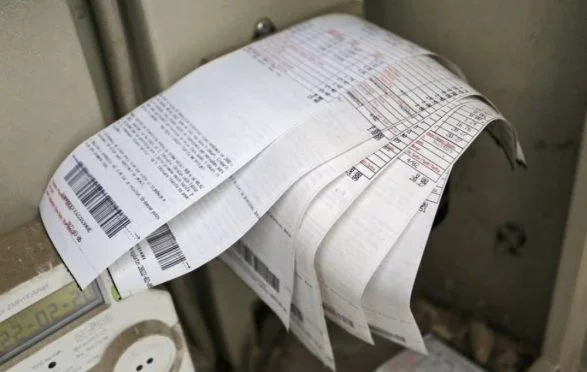
Mystery bills: Who's paying the power in the north?
Periskopi(2 years ago)
(2 years ago)Citizens of four Serb-run majority municipalities in northern Kosovo say they have not accepted electricity bills for January, even though the Kosovo government said that in the area, where the current is not paid now and 25 years, some 20,000 have been distributed. Rafael Ralovic of Leposaviqi
Rafael Ralovic, of Leposaviqi, some 70km from Pristina, says he has been installing the distributor in his home that measures the cost of electricity.
My power measures are relatively new, but how it works exactly, I don't know”, says Ralovic.
He shows that he has never accepted the bill for electricity spending, but that he has expected that for last January, it would be different, due to warnings from Kosovo authorities that the current would be billed.
“About a month ago came and recorded the state of the electricity meter. Now nobody came in anymore. I don't know what the situation is like”, Ralovic says about Radio Free Europe.
In Leposaviq and in three other Serb-run municipalities in northern Kosovo, northern Mitrovica, Zubin Potok and Zvecan écan residents have not paid the current since the post-war in 1999.
The refusal has occurred as a result of civic disobedience, but also the impact of various structures there, which have operated under Serbia's correction.
Over the years, the expenses made in the north have been paid by citizens of other Kosovo municipalities, while from 2017 onward by the Kosovo Government's System, Transition and Market Operator (KOSTT) and by the subsidies of the Government of Kosovo.
To resolve this issue, Kosovo and Serbia reached agreement in 2013, but it was not implemented for years, until the two countries agreed on a guide for its implementation in 2022.
With this guide, the obligation to supply and bill electricity to the north was obtained by the Serbian company Elektrosever, which was equipped with operating licenses in Kosovo that same year.
Despite that, the situation did not change until January 1st of this year, when COST announced that from this time on <x0 use of energy consumed in the northern part of Kosovo, inhabited by Serb majority, will be paid the same as in the rest of the state”.
COMM The STT said then that Elektrosever “has begun taking responsibility for energy consumption in the north”.
Kosovo Deputy Prime Minister Besnik Bislimi, during reporting to a parliamentary commission on January 26th, said that “over 20 thousand bills have been distributed in the north for energy consumption during January”.
“
Despite Bislim's statement, some citizens surveyed by Radio Free Europe in municipalities in the north say they have not accepted any receipts.
We didn't get the electricity bill. We've been talking about this for months. There are various types of information or misinformation”, says Snezana Ratkoviq of Leposaviqi.
She says she owns an old electricity meter and that she has heard that “will be set new metres and, then, will start paying off electricity”.
Neither did Nenad, a North Mitrovica citizen, receive the figure about 20 miles [30 km] from Leposaviqi.
We're waiting for the new [met], because there are words that will begin electricity billing. There is no other information in the media or among people. Nobody [has received a bill], no one in my building”, he says.
Other citizens from North Mitrovica also say they have not received bills and that they have no information about the current's eventual payment.
In northern Kosovo, the number of electricity consumers is not correctly known.
The Kosovo government and KED, which is the company responsible for electricity supply, told Free Europe Radio that, up until now, about 20 thousand consumers have been registered according to the recognisers there.
However, there are buildings in the area that have no electric meters installed at all or that have dysfunctional measurements.
According to the Travel for Implementation of the 2022 Energy Agreement, it is first for KED to make the deployment of new distributors in that area.
This company said it expects Elektroseverer to compile an investment plan, along with required maintenance costs, which KEDS then handed over to the Energy Regulatory Office for Adoption”.
Klisman Kadiu, from Deputy Prime Minister Bislimi's office, told Radio Free Europe that the European Union has expressed concern for funding and purchasing new exchangers.
The EU did not answer REL questions on the matter.
Who is currently paying the current in the north?
Neither the government nor the COSTT nor the European Union, which was the mediator of the Energy Agreement, answered that question.
The Energy Regulatory Office (ZRRE) told REL that the supplier (in this case Elektroseveri) “is obliged to bill and collect consumer payments”.
“The provider is obliged to ensure that consumers are billed for energy spent on the type of fee agreed on”, the ZRE said.
This office, as well, explained that if any of the consumers don't have a power grid or its meter isn't functional, then he should sign a supply contract.
“and, then, KEDS must install/maintain electrical accounts, so that consumers can have measurements of power spending”, Z explained. RRE
Elektroseveri is owned by Serbia's energy company ) EPS (Electroprivreda Srbije).
This company did not answer REL questions about the billing and paying electricity in the country's north.
According to official data, between 2010 and 2022, a total of 237m euros (between average and 19m euros per year) have been paid for the current spent in the north.
The cost of electricity has increased significantly since 2021, due to the overall increase in energy prices as a result of various global crises.