2 minutes ago
Ten-point Letters of Faithful Bismil, the EU responds with new warnings
Periskopi(2 years ago)
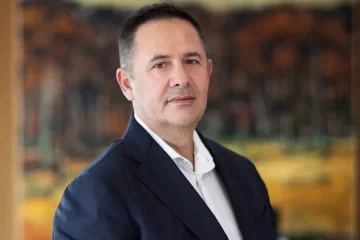
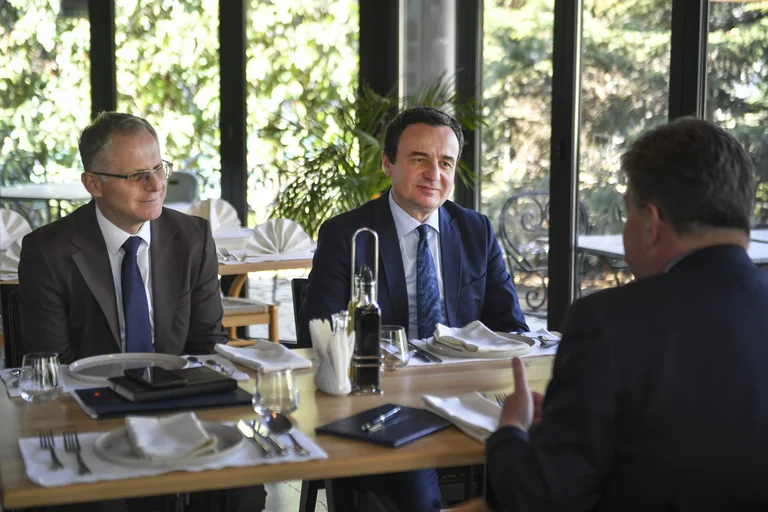
(2 years ago)The government still names EU measures unfair, but is trying to persuade Brussels to remove them, indicating that it has taken some steps to merit this. Deputy Prime Minister Besnik Bislim has sent a letter with 10 points to emissary Miroslav Lajcak, telling him what he is doing and what he wants [...]
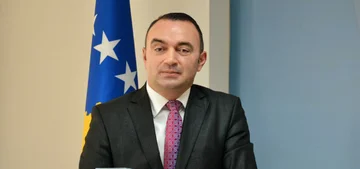
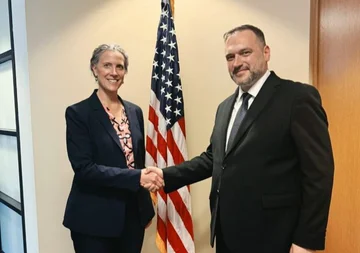
Deputy Prime Minister Besnik Bislimi has been trying to convince the European Union to lift punitive measures against Kosovo, which in Pristina have been considered unfair since their deployment last summer. Last night, he published a letter he said was sending to EU emissary Miroslav Lajcak, where he listed the efforts he said were made to Brussels' demands for the removal of the measures, calling for their immediate departure.
An immediate exit would help us mobilise efforts for accelerated reform progress, create the environment for strengthening regional co-operation, and the fastest integration of the UB6”, Bislimi wrote at “X”, where he published the letter.
The introduction at the top of the letter requires Lajcak and EU diplomacy chief Josep Borrell to make “an urgent and formal request” for removing measures against Kosovo, as “we have reached an irrational situation”.
“Now we have reached an irrational situation where Kosovo is defending rule of law while under measure, while Serbia continues to fuel radicalism without consequences. It is obvious that this unfair isolation of Kosovo also damages the normalisation process with Serbia facing discouragement to formalise and implement the agreement as negotiated. The measures negatively affect our progress and EU reforms. Let me remind you that Kosovo is a regional leader in its desire to join the EU with the highest support of citizens and the entire political spectrum. Blocking the execution of IPA projects undermines our efforts to accelerate, EU convergence and substantial strategic reforms. An immediate removal of these negative measures would not only help us mobilise efforts for accelerated reform progress, but at the same time would create a favourable environment for strengthening regional co-operation and the quickest integration of BB6”, the letter said at the beginning.
Next, Bislimi has added a list of the <x0) pro-active measures undertaken to improve Serb participation in Kosovo institutions and public life”. He cited the establishment of a mechanism for verifying diplomas issued by the Serbian system's high schools in Kosovo. He said that in October the government had established the legal basis for verifying these diplomas.
“This provides great new opportunities for some 30,000 holders of such diplomas to have access to higher education or employment in Kosovo's institutions and labour market, and to provide a labour force reflecting the diversity of Kosovo”, Bislim wrote.
He wrote, among other things, that the Government has divided “additives for 4 municipalities north of Kosovo” and that it has offered to make repair of the damage caused at the Banjsca Monastery. He also showed Lajcak that the government at the end of last year approved the Strategy for Protection of the Rights and Interests of the Public Administration, which has a social action plan, and envisions the 10% quota of members of non-competitive communities that will be employed in central institutions.
Bislimin further wrote that “prime minister and deputy prime ministers are engaged in regular dialogue with the Serb community, including Serbian media”, telling the European diplomat that the government chief regularly publishes video messages in Serbian for citizens of the Serb community.
Lajcak also told Lajcak that the competition for directorship of the Office for Community Affairs at the Prime Minister's Office has been announced only for members of non-US communities and that the process is being monitored by the British. He told them of the significant “budget and grants increase for NGOs working on ensuring law enforcement for the languages”. “
The prime minister's personal intervention solved the problem with the lack of Serbian translation of plenary sessions in the Assembly. For the first time, press reports of the Prime Minister's Office are published in both official languages, and government meetings are broadcast live in Serbian. The websites of some institutes were revised and are now offered in both languages, already in full accordance with the Law on Use of Languages. Additional efforts have been made to improve the participation of communities in sports, culture and, in general, various information campaigns, including the information campaign for visa liberalisation”, says the Bislem letter.
He has also written that the demand of Serbs to receive Kosovo passports has increased rapidly after visa liberalisation.
In the end, Bislimi has unveiled a Government goal for establishing a new programme called “Kosovo Integration Fund” aimed at promoting integration and improving the standard of living of Serbian citizens “through providing various practical institutional, economic and social opportunities for co-operation among municipalities with different ethnic compositions”.
He, according to Bislim, will have three objectives: initially empowering local government development and services through the Intercommunal Co-operation Project. Next, it aims at intercommunal support for the private sector aimed at improving the employment situation of women and young people and supporting initial businesses, innovation centres, teaching programmes, professional education training, online service, technological advancement, etc. Also, this fund, according to the deputy prime minister, is aimed at strengthening the Serbian engagement in public life. This, aims to be achieved through civil society to support civic initiatives, NGOs in a wide range of activities and mobility and the exchange of people.
The Republic of Kosovo's “Government vows to contribute more than half of the 100m euro target of”, which he describes, “will be channeled through budgetary support for municipalities, direct investments for infrastructure, credit and technical assistance for businesses, grants for NGOs start-up and civic initiatives, scholarships for students, and technical assistance and capacity raising for regional programmes”.
Currently, there is a Trust Development Fund, for which Kosovo and Serbia were established in 2013 in the dialogue. For now a decade, the majority Serb municipalities in northern Kosovo reportedly have raised over 14m euros, destined for economic development and infrastructure investments. This fund, Kosovo Prime Minister Albin Kurti, then from the opposition, was named as “fund for developing northern autonomy”.
But what does the EU require to remove the measures?
The European Union continues to consider that Kosovo has still done what is expected in Brussels to lift punitive measures.
For measures the EU took against Kosovo last year following increasing tensions in the north following the Albanian mayors' entry into municipal buildings with police assistance, they said repeatedly that they would be removed “, when deemed appropriate steps for the extension of the” situation.
The EU also says it is monitoring the situation on the ground to see if appropriate measures have been taken.
While the Kosovo government, in turn, says it has done what is needed for the extension, punitive measures seem to be lifted only depending on the current, which will take the situation on the ground and dialogue on normalisation of the reports with Serbia.
An EU spokesman told the major international media, Politico a few days ago that “The EU has made specific requests for the Kosovo breach, and they have been clearly and repeatedly communicated to the Kosovo side”.
As Politico wrote, EU requirements included the founding of the Serb majority municipalities' association.
In his interview with the media, Prime Minister Albin Kurti urged the EU to remove measures, accusing it of easing Serbia amid tensions.
“We were criticised for the violence in the north last year unjustly ė and the EU imposed measures against Kosovo. On the other hand, Serbia is lining up with the Russian Federation on aggression in Ukraine and there are no sanctions for Serbia”, Kurti has indicated in this interview given in the World Economic Forum margins in Davos, Switzerland.
EU responses to BEC regulation and police operations in Serbia's offices
The European Union has had at least two reactions over developments in Kosovo during the past week, warning that the government's unilateral actions could lead to tensions.
EU spokeswoman Peter Stabi said the decision barring the dinar from February 1st <x0njere concerns about the impact that regulation will have on the majority Serb communities in Kosovo, especially in schools and hospitals for which there is no viable alternative process”, Stano has said during a conference at the EU headquarters.
A day before Bislimli published the 10-point paper on the removal of the measures, Stano published another EU position about police operations “at the offices of Serbia-led institutions in the municipalities of Dragas/Dragaš, Pec/Pec, Istog/Isstock and Kline/Cline and the facilities of the nongovernmental organisation Centre for Peace and Tolerance in Pristina.
The unexpected “closure of these offices will have negative effects on daily life and living conditions of the Kosovo Serb communities, as it will limit their access to basic social services given the apparent lack of alternatives at this moment. The status of these structures is meant to be resolved in the EU-launched Dialogue, in terms of the establishment of the Association/Unitivity of Serb majority municipalities.
Therefore, the EU urges Kosovo to avoid unilateral actions that could increase tensions and address these issues through EU-ex0nd facilitated dialogue was said in response.