6 minutes ago
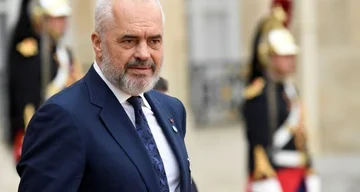
A whole Kosovo sanctioned for Lulzim Hetem? Rohde talks about EU measures and how they affect German projects
Periskopi(2 years ago)
(2 years ago)The European Union's punitive measures imposed in June remain as long as the Kosovo government meets the June 3rd EU call declaration, where the first warning of punitive measures from the bloc was issued by the twenty-seven states for the course of the Albanian chairmanial installation in municipal buildings; despite the call [...]
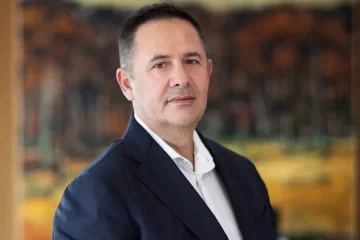
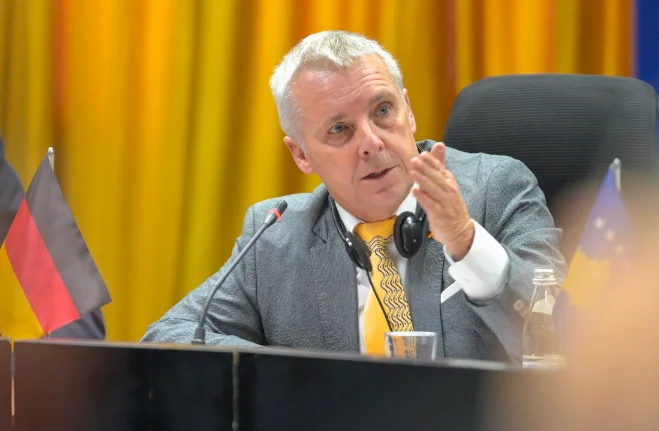
So he told us in an interview for Nacionaln, Germany's ambassador to Kosovo, Jorn Rohde. But what is the greatest concern for Germany “that is Kosovo's biggest donor”, according to Rohdes, is that “sometimes more and more affect our bilateral support (of Germany with the EU)”.
“We have the project to collect waste, the project for sewage in Prizren, Gjakova, Pristina, Mitrovica. We have projects with COSTT, because there are projects that are co-financed with bilateral assistance, and EU financial means. If the EU cannot allocate the entire project money, it is at risk. These are projects worth hundreds of millions of euros. I want the measures removed as soon as possible, but the Kosovo government must meet the conditions for this”, the German ambassador said.
But why do these measures continue to remain in force by Deputy Prime Minister Besnik Bislimi claims there has been an agreement in Bratislava to lift sanctions?
Rohde, he tells us that you still have a mayor who continues to stay in the municipal building” that represents non-fulfillment of the June 3rd declaration. This is Lulzim Hetem. As long as the government temporarily removes from municipal buildings and does not announce new elections, the measures remain as they are, the ambassador explains.
“You've seen numerous statements from the EU and bilaterally that we agree with these estimates (of government) and I said that a mayor is still working in the municipal building and that (Lulzim Hetemi) could temporarily work elsewhere, because now he's going to be removed, there's going to be a referendum. Kosovo must move forward, and as long as it doesn't happen, I don't see the measures being removed”, he said.
Jorn Rohde's complete interview:
National: I want to start this interview with the dinar issue, which Germany and the QUINT have not rejected as such, but simply the way of implementation; some could say maybe with its prime minister's ethics, talking about “Bloomberg”, said it would provide a slight transition to this dinar issue, but by the end of February. Now the Central Bank has issued an announcement saying a three-month period will be given. Are you now taking this as throwing away your requests again from the Government of Kosovo, or are you seeing it as fulfilling your counsel?
Jorn Road: The whole case has kept us and the public busy for the last three weeks. First they had no transitional period, then a month, now it seems that three months; I will not go into detail. The only thing we have said from the beginning is that it is Kosovo's legitimate right to make the euro the only legal means of payment in Kosovo. And secondly, what we've criticized, as you said correct yourself, is the way of implementation and communication. Meanwhile, to me the essence of the matter is that we will have a situation when next week, or this week, the Serb community gets their retirements and salaries from Serbia, or they get it next week? Until the period of transition is over; or will we have problems here? This is the core of the case. So even today you had protests in northern Mitrovica; if that was all right then, while it was not solved, then we still have a problem.
National: So you see this new announcement of the Central Bank of Kosovo in fulfillment of the QUINT request for a kind of postponement and additional time enough for transition?
Rohde: What I'm saying is I can't judge him. Our judgments are made by what happens on the ground. And, you know, those are the ones that make rules and those that are affected by it. And, if you have a choice, I'm the last one to criticize him. But, so far, we've seen, in the international demands, and the affected, we've seen requests; and suddenly, step by step, new reports are emerging: One month, now three months. What we need is clarity for all.
National: I know it may not be appropriate to draw parallels; but your American colleague said this way of clearly implementing will affect the quality of partnership between the United States and Kosovo. Can you say the same about Germany's relationship with Kosovo?
Rohde: The only thing I can say for sure is that it is certain that the climate in which we deal with government has not improved. You know, Germany is one of Kosovo's closest partners. Last week, my Defense Minister was here. And he said: You have the right to keep this decision, but to do it with a longer plan; and do it, that everyone may be informed, and no one may be afraid. And, we, we have to come to this step. I can't see we're here yet.
National: But when you talk to the Government of Kosovo, what do you say about the urgency of implementing this quickly-swift and its close-up once and for all?
Rohde: We understand, and we want so-called parallel systems to be completely integrated. We want sovereignty for Kosovo. Therefore, we are also so active in the Brussels and Ohrid Agreement. All of this is part of our goal of Kosovo exercising its full sovereignty. The only thing we've blamed him is one-sided action and package.
National: To stay a little longer at the dinar. The draft Association Statistics specifically states that the association will have its own registered and licensed bank account of the CEC so that financing of association will be under observation by Kosovo state authorities. If that is so, and Serbia is what requires the foundation of the ESM, and also the QUINT, isn't that a step in that direction?
Rohde: Of course, but it has to be done within dialogue. That's what we said. For what they're affected, Serbia often gives the fanic means to Kosovo Serbs. Here you need to talk. And, with association, it's been a matter of the resolution of all these cases. And, again, you have one unilateral step that was announced very quickly and briefly. And take a bank license as an example. To license a bank, that's two days. Or three. There's a process. The processes take time. And I'd say when you're planning, you first set the plan and then set the deadlines. Not the opposite, first the deadlines and then the plans.
National: Because, some of the supporters of this government's decisions say that, okay, the prime minister is clearing up a little of some lawlessness like this and that, so that pills wasted like Association can find better ground to implement.
Rohde: Again, I can just repeat it. If anything is illegal, it would not be painful for this transitional period to solve the problem of 20 years in 3 months or 4 months. That's the only argument we're making. Do it properly, do it according to good government standards, not on ad-hoc basis; which produces uncertainty, uncertainty on the other side. So you even had protests.
National: Kosovo hopes to join the Council of Europe. They even express themselves fully willing. The criteria for membership, as it is known, are the Constitutional Court's decision on the Decani Monastery as well as the foundation of the Association. What is Germany's position, can Kosovo count on strong support to Germany?
National: You can count on Germany's support for membership in the Council of Europe; therefore, last year we removed every ban to have that vote; that Kosovo's application in the KiE be voted and carried to the Parliamentary Assembly. So since then, we've seen some KiE delegations coming here and very soon waiting for the Report and going to repeat what I've said publicly. You mention this JC decision. And, if you want to be part of a club, you have to respect the decisions of your courts. And I don't know, I haven't seen the Rapporteur report on the Kosovo membership application that was here last year. And this report will soon be released and we will see what the preconditions Kosovo must meet before the Parliamentary Assembly can vote on and what will happen. But I am confident that the Decani property issue will be a high-weight issue that will have to be resolved before membership. Because, so far, we've seen six governments that haven't. I've seen six governments that haven't implemented Association. Which is also an old Kosovo obligation since 2015. I think he's got time to move on.
National: But, as we saw, we had a report by two experts from the KiE; and they say recommendations and now officials say “this is recommendation, not criteria”. So, the report, they say, not necessarily says you have to fulfill, follow the JPC's decision on the Decani Monastery or Association. They take it as if it were a recommendation just like that, and nothing more.
Rohde: I, 25 years ago, was an official in the Council of Europe, and when the Parliamentary Assembly decides about membership applications, they call it “recommation”; but now, one of the recommendations may mean that Kosovo or any other country that wants to enter the KiE must do so in advance. So, in fact, what they call recommendation is a condition. But in the end, it is not the Parliamentary Assembly that decides for the membership of that country or not, but governments are. And, since I have been here in Kosovo since 2020, together with my colleagues from QUINT and other EU diplomats, we have issued every year clear statements about implementation, for example, of this court's decision on Decanin. Just do it.
National: For Germany, the Basic Agreement, as it is, although not signed, yet legally and internationally binding; while Kosovo seeks additional guarantees such as the final signing with Serbia and then that text is deposited in the UN. One of the prime minister's councillors even taunts that with such guarantees you can't even get 10 euros in loans to the bank. Do you think they're right?
Rohde: I don't think the efforts of Germany, France, Italy and the EU are to be ridiculed. Again, I mentioned agreements ratified by Kosovo, your rulings of courts that have not been implemented. The EU thinks this is legally binding, I think Lajcak has made some proposals, I don't know if they have found answers. For us, the deal is legally binding. We made the proposal, we've reached far. The prime minister even says he is willing to accept the proposal for ESM. The only thing that needs to happen is that both sides head in the right direction and start applying. For Kosovo, it is mostly Acscociation. There were many proposals before, there was a proposal by the German NGO ( The FES) has been Albania's prime minister's proposal, and now the European proposal, which has been recognised by the prime minister, and after being recognised by the prime minister, the next step is to move forward.
National: There's a bloody confusion about association. The prime minister who on one side repeatedly repeats that he must be signed; I accept it if it is signed. While Bislimi says that after Serbia meets parts of recognition, which are passports, seals, etc. While the prime minister excludes draft status as totally harmful and scandalous. While the president says this is the draft but come to work on what's troubling us. Aren't you also confused, Mr. Ambassador, what the government's position on this draft of Association is?
Rohde: What I hope for is that this issue is moving forward. Because you don't need to fully observe association and certainly not. Because the entire Brussels agreement is built in the way Serbia takes several steps, while Kosovo has largely the Association. While the first step, because it is this Narrativa that the public in terms of association, some of the provisions may be contrary to the Kosovo Constitution. All right. If you want to make sure you don't, take him to the Constitutional Court. But this requires an action by the Government. So, the government can recognise it formally, and say we have some questions and the Constitutional Court has to elaborate. But it takes formal action. And that doesn't mean implementation, it just takes a first step.
National: Why do you think the Kosovo government does not approve of this draft status?
Rohde: Because they say we want to sign. We say, you can go on without giving something because that doesn't mean implementation, it means putting it on track, so to speak.
National: The EU has imposed punitive measures on Kosovo in June last year. And those measures continue to be in effect, not removed. Why do you think they've been removed, actually do you expect them to be removed soon?
Rohde: If you look at the text on June 3, it says two things: for the heads to work from other buildings; which has yet to happen. There's one still working in the municipal building. And we have new election work. What I'm worried about is that these EU measures every time and more affect our bilateral assistance (Gead with the EU); Germany is one of Kosovo's biggest donors: We have the waste collection project, the sewage project in Prizren, Gjakova, Pristina, Mitrovica. We have projects with COSTT, because there are projects that are co-financed with bilateral assistance, and EU financial means. If the EU cannot allocate the entire project money, it is at risk. These are projects worth hundreds of millions of euros. I want measures removed as soon as possible, but the Government of Kosovo must meet the conditions for this.
National: But, Mr. Bislim says he made a deal with Bratislav with Lajcak while saying they've fulfilled everything about him?
Rohde: You've seen numerous statements from the EU and bilaterally that we agree with these assessments and I said that a mayor is still working in the municipal building and that he (Lulzim Hetemi) would be able to work temporarily elsewhere, because now he'll be transferred, there will be a referendum. Kosovo must move forward, and as long as this does not happen, I do not see the measures removed.
National: Germany's Chancellor Olaf Scholz had made strong comments on his first visit to the region, to Pristina and Belgrade, when he said that “is unthinkable” that the two countries ever join the EU without mutual recognition. But not long later Germany participated in this deal, the Franco-German proposal. And there was no mutual recognition. Has Germany reduced ambitions and expectations in helping to resolve the Kosovo-Serbia issue. And, do you think what Mr. Scholz said still stands for mutual recognition?
Rohde: Yes. It stays completely. While the opposite is true, because we want full normalisation that eventually means mutual recognition. Because of course, again, it is unthinkable to accept (the EU) countries that do not know each other. In origin, what is the Franco-German proposal, it's a step towards full normalisation, being recognition and fact, but not a jury. This comes from our story. You have to be patient. When you can have something 100%, you get 80%, so to be honest. This agreement has been reached, and it is said in Article 4 that Serbia will not oppose Kosovo's membership in any international organisation. So for me, this is an example of our unhindered commitment to Kosovo's sovereignty and eventually to make Kosovo a full member of European and Atlantic structures.
National: But if Serbia is not required to recognise Kosovo's de-jure, and this tesk is over at Chapter 35 of EU membership negotiations and says “in order, I have applied all of this” engrassed to Chapter 35 and there I am required to recognise Kosovo, and that I have to move further into EU integration.
Rohde: Like I said, our position remains unchanged and take the opposite side. If this agreement is fully implemented, you will have normal relations; you have a Persian representative in countries. I remember growing up in Germany, we never met East Germany, but it ended up. One thing is clear that Kosovo with this agreement will take huge steps towards full normalisation and full recognition, and that is the most important. And this will bring great benefits to citizens. When we took more and more steps between East-Western Germany I could see my cousins easier, waited for no more than eight weeks for visas, even though they lived just 45 miles away. Out 21:28
National: Germany's Federal Republic celebrates its 75th anniversary, while Kosovo's independence is simply 16 years old. What do you say Kosovo can and should learn from Germany?
Rohde: Most importantly, I'm talking about foreign policy now, it's about having good inter-side relations. You know Germany had invaded all its neighbours except Switzerland in World War II. It was very difficult. The reconciliation was not easy, it took a long time. But it has to be done; and it's a process from above. Political leaders need to invest capital rather than dealing with narativa of the type “these are the good ones, these are the bad”. Never is. It's important to deal with the past, but it's a lesson. Especially when you are in a situation where the Western Balkans want to become part of Europe. And of course, we see this region and we say “, these guys don't even listen to each other, should we really include them “. Good interpartial relations are the best recipe for accelerating property. And, of course, from the inside, Kosovo, like all countries in the Western Balkans, experiences a lot of migration. Last year we had 80 grand for our workers and family reunions, and that's a lot. And I think it's good for Germany, but not so good for the region. People have to stay here, and to stay this, they have to have dignified revenues, good retirements, and high-level security.
National: Before they finish this interview I want to ask you about EURO24, which takes place in Germany, will certainly overflow with Kosovars to watch the news. Getting to know you on the social networks you play and you're a football fan. What are your expectations?
Rohde: My expectations are very selfish, I hope Germany will play well in the games after a long time; because the past three championships were a bit disappointing. Three years ago at the European Championship we lost against France, so I think this time, although German-French friendship is good, but I see France as a competition. I hope there's a lot of Kosovar visitors in many German countries. If you cheer for Germany's team, but this is my hope, we see it in the Tribute.