 6 minutes ago
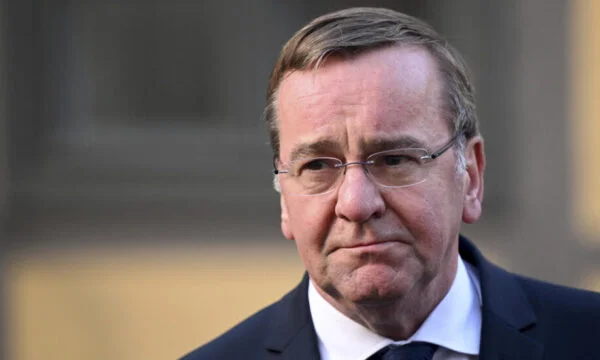
German Defence Minister: I came to Balkans because I'm worried about the situation in Kosovo, Bosnia
Periskopi(2 years ago)
(2 years ago)Germany's defence minister, Boris Pistorius, has said his visit to the Western Balkan states has been made for many reasons, but one of the main ones is tensions of the past months. In an interview for “Blic” in Serbia, he said he is concerned about the situation in the Western Balkans. “This important region in [...]
Germany's defence minister, Boris Pistorius, has said his visit to the Western Balkan states has been made for many reasons, but one of the main ones is tensions of the past months.
In an interview for “Blic” In Serbia, he said he is concerned about the situation in the Western Balkans.
This important region in the heart of Europe, not far from Germany, requires our attention. To be clear: we want to contribute to stabilisation in the region. We want to support the region and, in the future, follow its path closely towards the European Union. In principle, the situation in Bosnia and Herzegovina and Kosovo is currently calm. However, right in Kosovo (it) is still sensitive to short-term escalation, as indicated last year. But even in Bosnia and Herzegovina, the situation could escalate due to provocative rhetoric and the provocative actions of some politicians”.
Therefore, together with our partners, we monitor the situation closely and are able to react quickly, which we witnessed at the end of last year”, Pistorius said.
Speaking of relations between Kosovo and Serbia, the German minister said that “situata in the region remains complex and sometimes tense due to various conflicts, deeply and partially rooted historical”.
Relations between the two countries are slowly developing. The dialogue on normalisation under EU auspices continues to give new impulses, but, unfortunately, does not achieve sustainable progress. Progress is often blocked by deep distrust. On the one hand, this is understandable because not all the wounds of the past have yet been healed. On the other hand, progress cannot be achieved without mutual approach and trust. In my opinion, normalising relations is the first step towards a positive future. As in any conflict, there is never just one party to blame. Both sides must reconsider their previously cemented positions. I make it clear to everyone I talk to during my trip that provocations are never helpful. It is up to all parties to step forward and send visible signs of readiness for compromise”, Germany's Defence Party said.
On the issue of banning the dinar as currency for transactions in Kosovo, Pistorius said that at this point we are dealing with confrontations of two perspectives.
On the one hand, the regulation represents the implementation of the Kosovo Constitution, and on the other, Serbia's Constitution envisions the dinar as the sole means of payment. For me it is clear that the Serbian part of the population, especially in northern Kosovo, still depends on the use of the Serbian dinar. Change takes time. And that time must be given to itself, to reach a solution through dialogue. I think even this conflict should be resolved at the negotiating table within the EU-led peace dialogue. Until then, escalation should be avoided due to hasty actions”, the German minister said in this interview.
In terms of increasing the number of German soldiers in KFOR, he said his country from April this year would send additional forces to the company's size and necessary support forces to Kosovo.
This significantly increases our contingent from about 70 soldiers currently to about 250. At the same time, it is important to note that the army can contribute to the solution, but it cannot be reached alone. We must succeed in stabilising the situation in the long term through an integrated approach to security. I also make this clear in my conversations during this” trip, he said.












