3 minutes ago
EU government: KPM bill not negatively impact media freedom
Periskopi(2 years ago)
(2 years ago)The European Union's office in Kosovo said changes to the Bill for Independent Media Commission (KMP) should be made in a way that will not have negative “ ” impact on media freedom. In a response sent to Radio Free Europe, EU Office spokeswoman in Pristina Ioanna Lachana said the bloc [...]
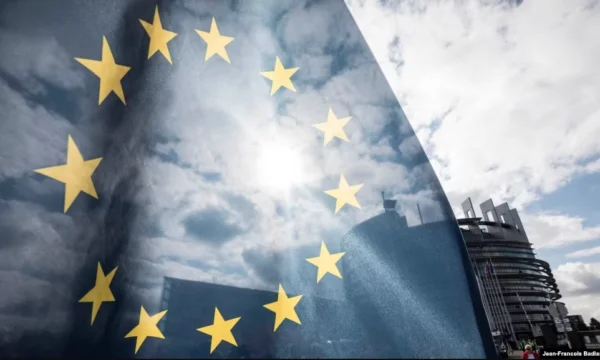
The European Union's office in Kosovo said changes to the Bill for Independent Media Commission (KMP) should be made in a way that will not have negative “ ” impact on media freedom.
In a response sent to Radio Free Europe, EU Office spokeswoman in Pristina Ioanna Lachana said the European bloc has repeatedly approved that Kosovo review the law for the KPM, so that it can be in line with the EU directive for audo-visual media.
“It is essential that Kosovo adopt the law quickly, through an open and transparent process, with proper consultations, including civil society and media organisations”, the EU Office spokeswoman said.
Lacana said the EU is currently analyzing changes in the KPM Bill and would then give comments on it “to competent authorities”.
The Association of Kosovo Journalists, the Council of Kosovo Written Media, but also a group of international organisations have called on the Government of Kosovo to give up changes to the bill, which is aimed at overhauling online media. They have seen this legislation as “attack” on the media, voicing fears that the executive may use this law to censor the media.
The so-called Bill for the Independent Media Commission has been adopted by the government on December 27th last year, and has been sent for approval to the Kosovo Assembly.
The legislation envisions that online media, producing videos, should be recorded as business. With the changes, the KPM will have a mandate to monitor even online media work that produces audio-visual content.
Changes in legislation envision fines of up to 40,000 euros for media that commit various legal violations.
Currently, texts published in online media are monitored by the Kosovo Media Council. He does not fine the media for their mistakes, but makes decisions on complaints made to the media and then Council decisions can be used to file civil indictments against the media in Kosovo courts.
Meanwhile, the audio-visual content published in online media is not monitored by anyone. The Council of Written Media has said that in most cases published videos are accompanied by a text on the same subject and thus become their monitoring.
The European Commission's latest Progress Report said that “anment, currently under way, would have to further harmonise the Law with the Audio-Visual Media Services Guide to extend its competencies even to online audio-visual media”. / REL