4 minutes ago
EU Council submits proposal conditioning Serbia's membership with implementation of agreements with Kosovo
Periskopi(2 years ago)
(2 years ago)The European Commission and the European Union's Foreign Action Service (EEAS) have handed a proposal to the EU Council on Friday to change and complete the framework of talks with Serbia for its membership in the bloc. Changes in chapter 35 concern involvement as binding condition for Serbia and implementation of [...]
The European Commission and the European Union's Foreign Action Service (EEAS) have handed a proposal to the EU Council on Friday to change and complete the framework of talks with Serbia for its membership in the bloc.
The changes in chapter 35 have to do with involvement as a binding condition for Serbia and the implementation of agreements it has reached so far with Kosovo in the dialogue mediated by the European bloc have confirmed to Radio Free Europe resources within the EU.
This proposal was submitted two days later than the deadline member states had given at last December 12th of last year, when they had demanded that the Commission and EEAS submit the proposal before the end of January of this year.
The demand for formal change of conditions in chapter 35 for Serbia comes after Serbia's prime minister, Anna Brnabiq, said in December that her country would not implement all the agreements it agreed to with Kosovo.
After reaching the agreement in Brussels in February of last year and the annex for its implementation in Ohrid in March, the European Union had insisted that these agreements are legally binding on the parties, despite their not being signed.
In Serbia's case, according to EU officials, implementation will also formally become binding by engaging as specific conditions in the framework of its talks on membership in the bloc.
But for more than ten months, the EU had not changed this framework. Therefore, in the conclusions they drew from the meeting of the Council of General Affairs, the ministers of member states had demanded that this happen as soon as possible and the Commission and EEAS make their proposal.
The Council requests from the Commission and from the urgent high representative, before the end of January 2024, propose and meet conditions from chapter 35 of the membership negotiations for Serbia” said in these conclusions. They were later supported by the heads of member states at the EU summit in Brussels.
The 35th chapter of the membership negotiations, which is called “other questions” in Serbia's case, includes the normalisation of reports with Kosovo. This chapter had opened among the first since December 2015 to forward through it progress towards normalising relations between the two countries.
The European Union has always sent orders to Belgrade and Pristina that their path towards membership in the bloc runs through progress in normalising relations between themselves.
The EU Council must now vote on the Commission and the EEAS proposal for change and fulfillment of chapter 35 for Serbia.
Some diplomatic sources within the EU have said delays in handing over the proposal occurred due to some objections Oliver Verhely had made, EU Commissioner for Enlargement and Neighborship. E EAS was more interested in this happening as soon as possible.
When reconciliation for the annex for implementation of the basic agreement had been reached in Ohrid, North Macedonia on March 18th, it was said that, among other things, work on changing conditions in chapter 35 for talks with Serbia that would include the obligation of it to implement the Agreement and its annex.
The insistence of member countries on this happening as soon as it was made to accelerate the process, as some diplomats estimated that Verhely was procrastinating his work in this regard.
“against clear conclusions from two documents from the EU's highest level, Varhely stood against and until the last moment blocked this proposal”, an EU official told Radio Free Europe.
According to the same sources, pressure had been made on Verhely by EU diplomacy chief Josep Borrell and by some still members of the bloc. In some cases, EU diplomats have said Varhely is following the stance of Hungary's Prime Minister Viktor Orban, who had also proposed that he be a commissionary from this state to the European Union executive.
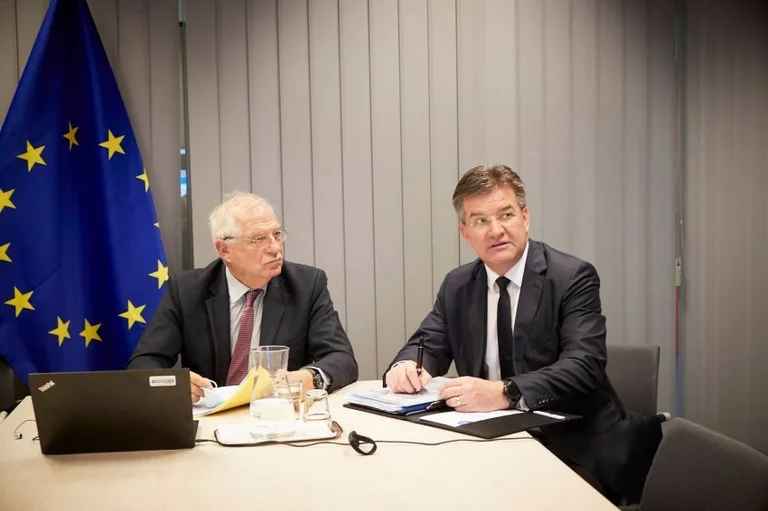
Images from the February 27th meeting in Brussels between Kosovo Prime Minister Albin Kurti, Serbian President Aleksandar Vuciq and European Union diplomats Josep Borell and Miroslav Lajcak, in which compliance for the Base Agreement has been reached.
The European Parliament had also voiced criticism of Varhely. A resolution from January 2023 also called for an impartial investigation into the way Verhely exercises his post because European parliamentarians suspected that he was violating the ethical rules of the European Commission.
The decision to change in chapter 35 for Serbia, as if each decision in the EU enlargement process is approved by the reconciliation of all member states.
Meanwhile, in Kosovo's case, obligations for implementing agreements with Serina will be included in the special group's agenda for normalisation, as Kosovo still does not have the status of candidate country for EU membership.
The EU insists that EU Foreign Policy and Security representative Josep Borrell's statement of reconciliation about the agreement has the power of a legally binding agreement, even though it has not been signed.
The EU continues to claim it is disappointed that neither side has so far made adequate progress in implementing obligations. / REL/