3 minutes ago
Brush: Vuciqi's self-perceptive as president of the Serbian world does not contribute to dialogue
Periskopi(2 years ago)
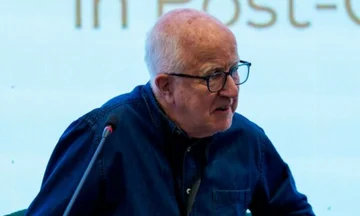
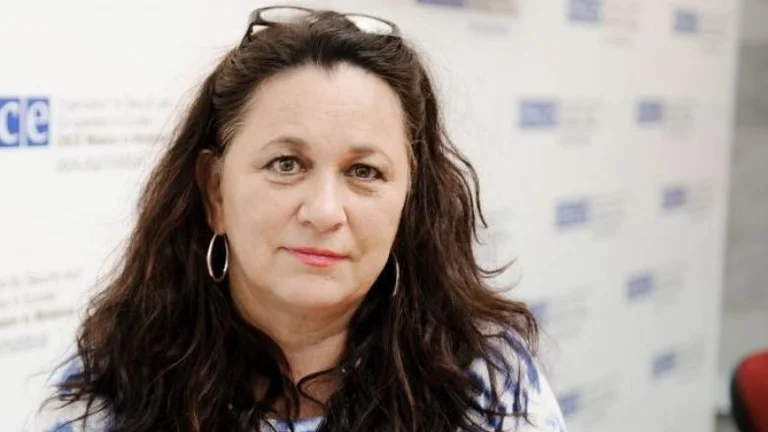
(2 years ago)Former American diplomat Jennifer Brush, who earlier served as deputy head of the United Nations Mission in Kosovo, U n NMIK, is not optimistic that Kosovo and Serbian leaders want solutions in the dialogue on normalisation of relations. In an interview given Radio Free Europe, she says that, until Serbia's president, Aleksandar [...]
Former American diplomat Jennifer Brush, who earlier served as deputy head of the United Nations Mission in Kosovo, U n NMIK, is not optimistic that Kosovo and Serbian leaders want solutions in the dialogue on normalisation of relations.
In an interview given Radio Europe Free Radio, she says that, until Serbia's president, Aleksandar Vuciq, “sees himself as president of the Serbian world, he cannot be honest negotiator on any table”.
“As far as [Kosovo Prime Minister Albin] Kurti, he was not chosen to make agreements with Serbia; He has been chosen to fight for Kosovo. He is committed to his electorate and will go to a new round of elections soon --”, Brush says.
Brush, who has also served as deputy head of mission at the US Embassy in Belgrade, says the West should increase pressure on Serbia because, according to her, Serbia can do the most to destabilise the region and not Kosovo.
You were on a mission to Kosovo about a decade ago. This week, Kosovo marks 16 years from its declaration of independence. How does Kosovo look today? Has it changed since you were there?
Yeniffer Brush: I was in Belgrade when Kosovo declared independence. The crowds set our embassy on fire and one person was killed. Our Marines have been mobilized to protect the embassy, our people. The invasion of someone else's embassy is a very serious diplomatic incident.
And, of course, the people who set it on fire haven't been caught yet, even though I've made it clear in my reporting cables from Belgrade and the interviews afterwards, that we know who did it. So this has been my first experience with Kosovo independence.
Since that time many things have changed, Kosovo society has changed, the role of women has changed, two women have become presidents, many women have taken leadership positions. You have democratic elections, functional parliament, functional high court. It could be even better. There is still corruption. We know that, and we all try to fight it. But since the NATO bombings [that have ended the war in 1999], Kosovo has grown as a democracy, and that should impress us.
In recent years we have seen the current government take different steps in Kosovo's Serb-run north. Do you think this area is now more under control by Kosovo authorities?
Jennifer Brush: That's a difficult question to answer. I wish it was, because that's how everyone would be in a better position. I wish Kosovo had more control.
But does Serbia have control over the north? And who controls Serbia? Is Russia's interest in keeping the situation unstable? I would say yes. Why? To destabilise us, the West.
Dialogue between Kosovo and Serbia has started more than a decade ago. Some agreements have been reached, but it seems the two countries are still not on the same line. How long can this behavior last?
Jennifer Brush: It is not clear to me whether the parties are interested in solutions. Let's not forget that [Serbia's president, Aleksandar] Vuciq has been Milosevic's spokesman. He wants to keep Kosovo as it is. If you follow the press in Serbian language, Kosovo is part of the Serbian world. The Serbian '%bota is based on Serbian nationalist ideology, aimed at establishing a Serbian state with the involvement of all Serbs in the Balkans.
While Vuciq thinks that he is not only president of Serbia, but of this Serbian robot, I do not see him as an honest negotiator at any table.
I know that the United States and the European Union believe that he is the person who can make the deal because he has the support of the people and anyone who is weaker than him would be unable to seal the agreement. But I disagree. Likewise, most international observers believe parliamentary elections in Serbia have not been fair.
Vuciq thinks he is a new Tito, with the idea of sitting on three chairs, both neutral and on the road towards the EU, and close relations with Russia. This may have worked in the years of APU40 or '50, but I don't think that in our current world it works as a stable policy.
As for [Kosovo Prime Minister Albin] Kurti, he was not chosen to make agreements with Serbia; He has been chosen to fight for Kosovo. He has obligations to his electorate and will go to a new round of elections soon.
The agreement on it meant establishing the Association of Serb majority municipalities. I know he's been introduced to various models. But this situation can be described this way: “cila is older either poultry or eggs”, so to form the association once and then seek recognition from Serbia, or secure recognition and then establish association. The puzzle of chicken and egg has never been solved. So, I don't know what we can expect from this dialogue with these players.
You mentioned the Association. It's one of the most controversial issues yet, even when you were in Kosovo. How do you see the functioning of this organ inside Kosovo?
Jennifer Brush: I think other people might have more vision on this matter. There should be more will than there is now that body works. But Serbs are an integral part of Kosovo and must have a kind of structure that protects their rights.
But how did you comment on the Kosovo authorities' decision banning the Serbian dinar in Kosovo?
Jennifer Brush: There's logic behind him. No country wants people to use anything else outside official currency. It's part of being a sovereign state. So I fully understand the desire to eliminate the dinar or to control its circulation. Kurti is not asking Serbs to use a currency they do not have. They [Serbia] have euros, we see how much euros they have spent on weapons from Russia and China.
So I don't think the euro is the problem. It is the unilateral nature of the decision, which has not been given a longer warning and there has been no discussion about how it will work.
Similarly, Kosovo has not consulted its friends. The last thing they want is to be surprised by something so significant. Making a unilateral decision does not help implement it, makes it more difficult.
I don't think it was a bad idea, but the way it was treated has created distrust. What the Government of Kosovo needs now is the trust of different governments.
US Ambassador to Kosovo Jeffrey Havenier has said this decision could affect the quality of relations with the US. Do you expect any US measures, given that Kurt's failure in the past has been followed by certain measures...
Jennifer Brush: I think we should pay more attention to Belgrade and Vuciqi, because Kurti can do very little within Kosovo's borders to destabilise the region, while Serbia can do much. And it seems he is, encouraging [the leader of Republika Srpska] Milorad Dodik [with sensist ideas] and maintaining friendships with the Russians.
If I were policymakers what I'm no longer, I'd spend a lot more time focusing on Vuciqi., Serbia and their actions.
Considering that the US is an election year, how do you see the US administration's future attitude towards Kosovo? What Can Change?
Jennifer Brush: You remember [American Ambassador Richard] Green, which has created a double track of negotiations [between Kosovo and Serbia], out of which came conflicting messages. He was in the administration of [former American president, Donald] Trumpit [who competes again for president]. His approach has been useless. You can't have a message from America and one from the EU.
Under the current president, Joe Beden [who ran for re-election], the EU and the US have worked very closely together to get a message. I think this is important for both Kosovo and Serbia to know that the US and the EU are together.
If Biden remains president, this will continue to be so. But, Trump... I don't think I can find the Balkans on the map. /rel/