26 minutes ago
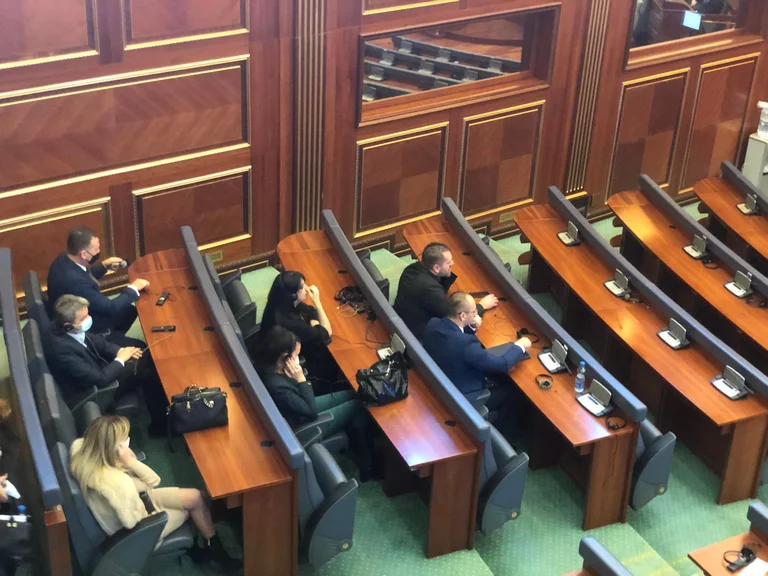
Over 100 thousand euros in salaries for 10 Serbian deputies
Periskopi(2 years ago)
(2 years ago)The ten Serb deputies, who are part of the Kosovo Assembly from the Serbian List, are participating in sessions just to continue their mandate. Only for salaries, the state budget, these deputies cost over 100,000 euros for six months. However, in a media statement, Parliament Speaker Glauk Konjufca, [...]
However, in a media statement, Parliament Speaker Glauk Konjufca, following the Serbian List's action, has said they are drafting an ethical code.
There are ten MPs from the Serb community holding seats in the Kosovo Assembly. Nine of them are Serbian List deputies, meanwhile, the tenth is from the Civic Initiative for Freedom, Justice and Survival.
Even at the last session, they went to the Assembly. They signed up and left. They do this now, and for many months, only to lose the mandate.
Without working a minute, for six months, the budget of the Republic of Kosovo, their presence has cost over 100,000 euros.
An MP's monthly salary over the past year was 1722 euros. And from January of this year, with the rise of the salary coffient from 105 to 110, an MP receives gross wages of 1804 euros a month.
For the behaviour of deputies of this legislature, Kosovo's Assembly is drafting an Ethics Code.
Glauk Konjufca chairman of the Kosovo Assembly said that this behaviour of the Serbian List is a responsibility they have consistently shown as conduct in the Republic of Kosovo's Parliament.
We are building a code of ethics to keep more in office because the regulation of the Parliament really is based on the Constitution, and the Constitution is very liberal in terms of the MP and cannot get the MP mandate. But the code of ethics that we are collecting because the Assembly of Kosovo has been one of the only parliaments in Europe that has no code of ethics. Codes of ethics lay out some of the stricter measures in terms of all MPs who are not responsible for exercising their diet from elected people”, Konjufca said, RTKlive reported.
From the Democratic Institute of Kosovo, they are considering that the absence of Serb deputies in the plenary hearings, the assembly also causes a kind of loss of proper legitimacy.
The “is very problematic because even in the sense of the legislative process, their non-responsion causes overwhelming obstacles. Suppose bills or legislative initiatives, which also require the approval of the majority on the part of communities, become impossible under the circumstances of their presence”, said Arber Thaci researcher in KDI.
In this case, the Assembly faces two questions: How the mandate of MPs should be treated means the concept of full participation that the regulation describes, and whether it is met in cases when MPs boycott and participate in that minimum number just to keep the mandate.
My assessment of this approach does not meet the full participation that the regulation requires, therefore the congregation's bodies, especially those that deal with assessment of the legality of the procedures are in the face of this question and the most adequate response they would have to offer is the practice of deputies of the Serbian List not meeting the specific requirements of both the Constitution and the regulation. Therefore, perhaps in the ongoing periods we will not be faced with boycotts, and the same interpretation of regulation and situation would foster the participation of these MPs in the future”, said Arber Thaci researcher in KDI.
MPs from the Serb community have been seen only twice in the plenary sessions during the past year.