14 minutes ago
Wessel's lawyer: We have the impression that the court is trying to blame him
Periskopi(2 years ago)
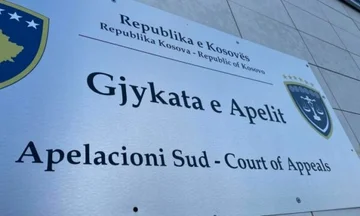
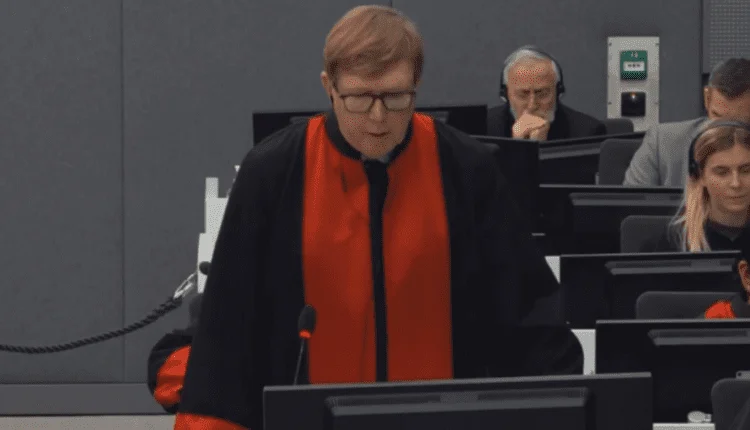
(2 years ago)Kadri Wessel's defense, via lawyer Rodney Dixon, on Wednesday rejected some of the court questions being asked to witness Halil Chadaku. Dixon said it is not up to the court to challenge or challenge the witness's credibility. It is not up to the court to challenge or challenge the credibility of this witness. We [...]
It is not up to the court to challenge or challenge the credibility of this witness. We haven't dealt with that approach. That wasn't our approach and it wasn't the prosecution's approach. There is no juro authority to ask such questions to witness”, Dixon said.
This happened after the return from the break when the hearing was in private, which questions about the witness were being posed to Judge Guénawl Mettraux.
Initially, Dixon said he was concerned that the court is trying to blame the witness.
I want to raise a concern that we all have as defence teams. As far as you're concerned with this concrete document, you know, Judge Mr. Judge from my counter-questioning questions that there is no question that this is a big fraud. The same is true of questions posed by the document P500 related to the questions of Judge Barthe. We are concerned that the court is trying to blame the witness for a case that has nothing to do with the defence case. This has not been raised by either party until now. The same applies to the prosecution, who relies on the credibility of this witness. They're using this witness for exactly the truth that it means”, Dixon said.
In this regard, the chairman of the court, Charles Smith III, said that the court has the authority to ask such questions about the witness and that they will continue with their questions.
“E actually has the juro and we will continue with our questions”, Smith said.
However, prosecutor James Pace said the lawyer is not entitled to talk about the prosecution's approach to the witness.
I think the lawyer should be limited to his statements. It is not up to the lawyer to talk about the prosecution's approach to this witness whether it is the support or credibility of this witness”, he said.
Next, Dixon said that this is the principle for the future and that the witness has been asked questions about a calligraphy expert.
This is a matter of principle for the future. The Witness was asked questions about the calligraphy expert”, he said.
While Judge Mettraux denied having asked such questions, he added that the witness had voluntarily responded to him.
I'm concerned about this and I want to say that we're now in a situation where you have an actual-expert of calligraphy with a witness”, attorney Dixon said.
However, Mettraux again denied that he used expertise, but it was just a question about it.
We didn't use this ecstasy, it was just a question. We told him, do you remember this being done? Do you remember the outcome of the calligraphy expert in the relevant document? So, the handwriting in question turned out to be actually Kimete Cransic's. We did not ask the witness for an act of expertise”, he said.
Wessel's lawyer pointed out that what he was opposing was just that, for it may be a problem in the future in other cases.
That's exactly what I'm arguing about. Through this witness, you're including judicial documents- an expert's expertise. This document is not the problem. This is a problem for the future with other documents. It's a matter of principle”, Dixon said.
E Smith said that the case will be handled as soon as concrete cases arrive. So he demanded that the witness be brought to the hall to continue with other questions.
With questions, Judge Mettraux again continued, who presented the witness with a statement by Kimete Krasniqi, who, according to data, was found in Chadrac's apartment.
According to what the judge read, it said that the condition to enter soldiers was to conduct an action on any Albanian speaker who worked in the Serbian state's security.
Kimete Krasniqi in this statement, according to what the judge said, had said he had accepted this condition willingly and that the action was committed to a person named Hamez Stateica, who had survived.
According to him, she had now said she had heard from some of the friends Hamza Statea had fled to Macedonia and was detained by members of the KLA. While, according to what the judge is reading, Kimete Krasniqi had later said Hamza Statea had been released and was wandering freely in the town of Drenas.
“I have been informed that he is free in the city of Drenica and that we are endangered by him because he knows I have prepared the action against him and therefore I cannot act in the Drenica Operati Zone”, Judge Mettraux quoted Kimete Kransic's statement.
After that, the witness's response to this was not yet heard, the session went private at the request of Judge Mettraux.
While, in the questions of Judge Christoph Barthe, the witness said he did not know whether Haxhi Shala and Fatmir Limaj were close.
“I don't know about family proximity, but I do know where they come from from from the same village, Malisheva Basa”, he said.
When asked about the murder of Commander Drinit and the accused in the case, the session later went to private for other questions.