10 minutes ago
Despite violence, women from ethnic minorities in Kosovo remain silent

Periskopi(2 years ago)
(2 years ago)My throbbing in the belly, head, legs... A table thrown towards her... the act that A.H. experienced within the walls of her home at Ferizaj, she kept it to herself for several months. The first time she was attacked by her husband on June 21, 2021, she did not even seek medical treatment. Second time, four [...]
A table thrown towards her...
The act that A.H. experienced within the walls of her home at Ferizaj, she kept it to herself for several months.
The first time she was attacked by her husband on June 21, 2021, she did not even seek medical treatment.
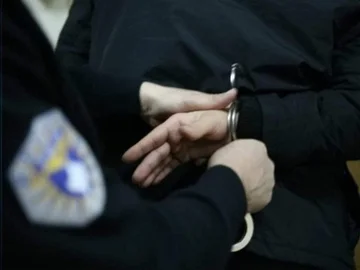
The second time, four months later, he decided to stop enduring. After a week and a day, he went to the police station in Ferizaj and reported the violence he experienced.
On December 25 of that same year, the Foundation Court in Ferizaj sentenced her husband, P. S., seven months in prison after he pleaded guilty.
The Ashkali community survivors of violence took a while to make the decision to report the attack.
Many other women from ethnic minorities in Kosovo never find that courage.
Radio Free Europe contacted two women alike from the Ashkali community with similar stories. Eventually, however, they decided to keep their story secret for fear of discovery and prejudice.
Kosovo Police data shows that the majority of cases of domestic violence are reported by women with ethnic Albanian affiliations.
Why are few reported cases of domestic violence by ethnic minorities?
In June last year, an Amnesty International report listed the problems that, according to the organisation, cause Kosovo's “authorities to put family violence victims” to the ground.
While the actual number of cases of domestic violence is generally believed to be higher than official ones, this applies especially to women from ethnic minorities.
Amnesty International highlighted some additional challenges that ethnic minority women have to report domestic violence among themselves: lack of trust in Kosovo state institutions, economic dependence on abusers, prejudice within communities...
In addition, however, Amnesty International cited problems that, according to the organisation, have had to be addressed by state institutions, such as lack of information about procedures and lack of staff speaking minority languages in shelters.
Radio Free Europe asked the Ministry of Justice if any steps have been taken to address these problems, but received no answers.
What Must Be Changed?
The change should start as early as education, Roma, Ashkali and Egyptians' Association in Kosovo (VORAE) say.
Many women from these communities do not complete basic education due to poverty, discrimination and traditional norms favouring boys for schooling”, say by V ORAE.
Without real education and the disappearance of stereotypes there can be no empowerment of women from ethnic minorities, they say, as these problems enable women to have political representation.
Women in Kosovo, despite ethnicity, are more likely to be victims of domestic violence.
A 2019 survey of the Organization for Security and Co-operation in Europe (OSBE) found that 59 percent of women in Kosovo have experienced psychological, physical, or sexual violence.
According to this survey, the most vulnerable to domestic violence were women living in rural areas, had low educational levels, and did not have financial independence.
The data released by the European Commission says that about 50 percent of members of the Roma community complete compulsory nine - year schooling.
Meanwhile, only 7.3 percent of Roma women are employed, compared to the estimated 20 percent of women employed in Kosovo.
Moreover, Kosovo's Cadastral Agency data shows that not even a fifth of the properties in Kosovo are owned by women.
“This situation is problematic that affects all communities in Kosovo, but is more pronounced in marginalised groups such as Roma, Ashkali and Egyptians”, say by V ORAE.
Report domestic violence cases: 0800 1999
Victims Protection Contact Number 0800 11 112
Contact numbers of safe houses: 0800 800 01 and 0800 21,000
Report cases of violence to the Kosovo Police: 192.