6 minutes ago
Report: Russia is undermining process of normalising relations between Kosovo, Serbia
Periskopi(2 years ago)
(2 years ago)First November six years, then Kosovo President Hashim Thaci met with Russia's President Vladimir Putin at the Paris Peace Forum. It was their first meeting ever, and, according to a post Thaci made at the time on Twitter, he focused on normalising relations between Kosovo and Serbia. Kosovo President [...]
First November six years, then Kosovo President Hashim Thaci met with Russia's President Vladimir Putin at the Paris Peace Forum.
It was their first meeting ever, and, according to a post Thaci made at the time on Twitter, he focused on normalising relations between Kosovo and Serbia.
Kosovo's president quoted the Russian counterpart as clearly saying Russia would support a peace agreement between the two countries.
Russia's ally of Serbia ʹ does not recognise Kosovo's independence, which was declared in 2008, and Putin uses it and NATO's intervention in the former Yugoslavia as <x0).
When it began its full-scale invasion on February 24th 2022, Putin said that “this special military operation” follows many more examples.
“Initially, a bloody military operation was conducted against Belgrade, without the UN Security Council's approval, but with fighter aircraft and rockets used in Europe's heart. Bombing peaceful cities and vital infrastructure continued for several weeks”, Putin said.
Such comparisons according to the blind West, Putin repeatedly made, especially from 2014 onward. When he annexed the Ukrainian Crime Peninsula ten years ago, he compared it to Kosovo's independence from Serbia.
For years Russia also engaged in hybrid warfare against Kosovo, spreading false information.
Through its media and institutions, it manipulated narratives in favour of its own interests, mainly targeting Serb-inhabited areas.
In June 2022, for example, the Russian Embassy in Albania published a list of the alleged number of foreign mercenaries joining the war on Ukraine's side of the war was 156 from Kosovo.
Kosovo authorities rejected these figures and described them as propaganda, similar to Russian dezination researchers.
But such trends, to present Kosovo as unstable, still continue today, according to a report by the Kosovo Centre for Security Studies, which was released this month.
Over 34 thousand words were analyzed for this report, produced by over 100 official statements, speeches, interviews, and other Russian Foreign Ministry texts.
The main ones present Kosovo as a failed country, say Western intervention has been made for self-interest, that the West uses Kosovo to expand its influence and isolate Serbia.
The report also stresses that Russia itself is undermining the process of normalising relations between Kosovo and Serbia, as such normalisation would give a strong blow to its influence both in Serbia and the Western Balkans.
Lulzim Peci, from the Institute for Policy Map, KIPRED, in Pristina, says Russia does not want this dialogue to end according to the Western plan and that Kosovo should not hope that its behaviour will change in any near future.
With that approach, Peci says Russia wants to undermine the integration of the Western Balkans into Euro-Atlantic structures as long as possible.
“Russia attempts to keep tensions high, supporting Serbia despite the fact that Serbia is selling weapons to Ukraine”.
“The failure to break relations between them, however, shows that Serbia needs Russia as never before. She needs this nerve point of not resolving Kosovo-Serbia bilateral relations to remain that way and prevent the integration of the region into the EU”, says Peci of the Free Radio Expo Programme.
Also, for Ivana Stradner, a researcher at the Washington-based Foundation for the Protection of Democracy, Russia is exploiting Serbia for its own purposes. But it points out that the hybrid struggle he wages in Kosovo with false information and polarising society on ethnic, social and religious lines is the highly dangerous “”.
“format is weapon. Remember what happened in Ukraine in 2014! Russia has accomplished all its goals there, without a single bullet of”.
It has used its influence operations, targeted groups, defined information circumstances, before escalating the situation. This is exactly what is happening now in the Western Balkans”, Stradner says of Exposene.
Kosovo authorities, both President Vjosa Osmani and Prime Minister Albin Kurti, repeatedly warn that Russia, “via its satellite Serbia”, aims to destabilise Kosovo.
During a visit to Pristina last month, even the president of the European Commission, Urusla von der Leenen, condemned Russia's “hybrid fight”, which said it intended to destabilise democracies in the Western Balkans, including Kosovo.
Dezinformation in the EU today poses a serious threat to the normal functioning of democracy, the political system, society and the economy.
To combat Russian propaganda, Kosovo authorities took several measures, including the ban on online media and platforms originating from Russia, which fabricate false information about Kosovo.
But, Peci says this is not enough, because Kosovo's voice in many countries of the world continues to be heard from Asia to Africa.
According to him, the country would need a unit that connects all institutions from the Foreign Ministry to the Intelligence Agency to deal with Russia and its malicious information.
This whole thing can be done, but, until now, no concrete step has been taken in this regard. It's not enough to be jet. This shows that Kosovo does not have a real policy and a strategy of countering Russia's deninforms both at the global and regional level”.
“If there is political will and clear ideas on how to move forward, Kosovo for six months until one year can build these capacities solidically”, says Peci.
Free Europe Radio asked the Government of Kosovo for measures taken against Russian dezination and or plans new ones, but received no answers.
Stradner says, too, that Kosovo has not done enough.
“We wouldn't have this conversation today if Kosovo or Kosovo allies did a fantastic job. Russian propaganda is widespread in the region and is growing. I can't keep track of the accounts in the telegram as soon as they appear”, she says.
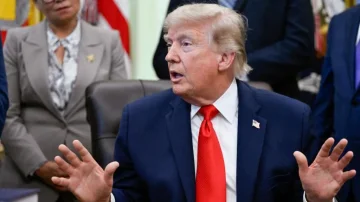
The education of this problem, according to her, becomes even more urgent at a time when the United States is preparing for a new administration led by President-elect Donald Trump.
She believes the future administration will follow an transactional policy, or buys it, in the Western Balkans.
I doubt that focusing on economic issues will solve everything. What I would recommend to the new administration, if it really wants to prevent any further escalation, is to pay more attention to the region [of the Western Balkans] and not to fall prey to the games coming from Moscow and Belgrade”, Stradner says.
This week, Serbia's president, Aleksandar Vuciq, confirmed that he will visit Moscow in May of next year, at the invitation of Russian counterpart Putin.
He said he considers it a <x0nder great” participation in celebrations for the 80th anniversary of victory in World War II.
This will be his first visit to Moscow, since Russia began its extensive invasion of Ukraine nearly three years ago.
Serbia never joined Western sanctions against Russia because of this war, and continued economic and military co-operation with Moscow.
In Kosovo, Russia has a liaison office, which the REL contacted to learn more about its activities, but without success.
According to a poll that published the International Republican Institute (IRI) this year for Kosovo citizens, Russia remains the main threat to the country, after Serbia.
Former President Thaci may have hoped Putin is interested in peace, but seems to have its own version, which focuses on fuelling tensions and benefits from them.
For experts it is encouraging that Kosovo develop a pro-active strategy against Russian influence and strengthen relations with Western allies. / REL/