8 minutes ago
Kurti in Switzerland: Serbia will always be a danger to Kosovo and neighbouring countries that obstruct the project of the Serbian “world”
Periskopi(2 years ago)
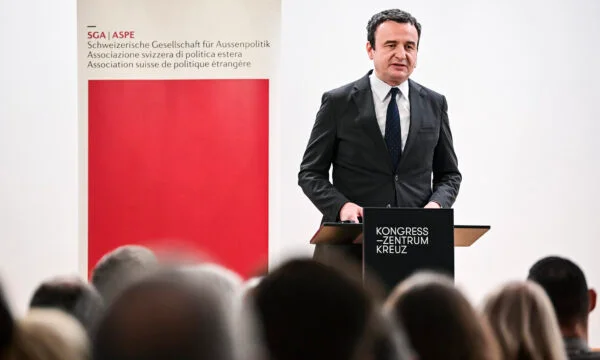
(2 years ago)Prime Minister Albin Kurti during his two-day stay in Switzerland was invited to an address and discussion by the Swiss Foreign Policy Society, accompanied by a conversation with NZZ foreign policy editor Andreas Ernst. As Prime Minister Kurti announced, he also addressed reports with Serbia and the process of facilitated dialogue [...]
Prime Minister Albin Kurti during his two-day stay in Switzerland was invited to an address and discussion by the Swiss Foreign Policy Society, accompanied by a conversation with NZZ foreign policy editor Andreas Ernst.
As Prime Minister Kurti announced, he also addressed reports with Serbia and the process of dialogue facilitated by the European Union.
He spoke of Serbia's refusal to sign the Agreement Agreeed with Basic and its Implementation Annex and underlined continuing violations on the part of Serbia, which culminated in former Serbian Prime Minister Anna Bzrnabiq's letter to the European Union, in which Serbia reportedly will not respect Kosovo's territorial integrity, which practically implies withdrawal from the Bazic Agreement and its fundamental principles.
Kurti for Serbia said that “as its authoritarian elite continues to propagan dezinforms, mobilise troops along our border and refuse to prosecute terrorists who killed our police sergeant a year ago in Zvecan Banjska,”.
Serbia will always pose a major risk to Kosovo's security not only, but also to other neighbouring countries that block the “Great Serbia “project, which they now call Serbian “ ”, Montenegro and Bosnia and Herzegovina are being harassed in addition to Kosovo”.
Kurt there said Moscow would be the first to join this “kore division and destruction”.
“Russia, but China and China have expanded their influence in the region, both economically and politically. Russia uses historical and cultural ties to exercise its power, appealing to the deep spirits of the Serbian people, who are closely linked to the Russian Orthodox Church, while China uses investments and loans to strengthen its influence. These influences destabilise the region and create a strong obstacle against democratic progress”.
He said it is essential for Kosovo and the entire Western Balkans to remain anchored in the European set of values.
This commitment is not just about economic growth. It's about preserving democracy and freedom. We anticipate that the Western Balkans will grow as a stable, sovereign and fully integrated part of Europe, not as a geopolitical chess board for foreign powers. The Western Balkans in Europe. With the involvement of the Western Balkans in the EU, it is the European Union that becomes Europe”.