17 minutes ago
Joseph: Only Kosovo can be punished in dialogue with Serbia
Periskopi(2 years ago)
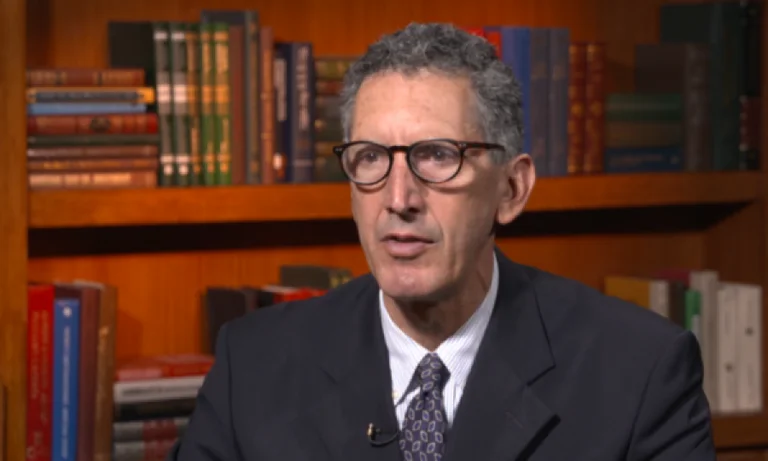
(2 years ago)The US and EU must change access to dialogue if they want to see success. So says Professor at Johns Hopkins University and Balkan Affairs expert Edward Joseph. Joseph says he can no longer go on with punishing Kosovo and caressing Serbia because it doesn't work. Stressing relationships [...]
The US and EU must change access to dialogue if they want to see success. So says Professor at Johns Hopkins University and Balkan Affairs expert Edward Joseph.
Joseph says he can no longer go on with punishing Kosovo and caressing Serbia because it doesn't work. Stressing Serbian President Aleksandar Vuciq's close relationship with Russian President Vladimir Putin, the expert says the West never put Serbian president in the face of election: ”O with us or with Russia”!
“One of the things that needs to change is that the US and the European Union cannot continue to hold Kosovo solely, not Serbia. So this can't go on. If the US and the EU really expect to have some progress, they can't decide measures for Kosovo, and do nothing to Serbia, and signal Serbia and President Vuciq that you are not responsible, or just keep in the most minimal ways”.
So this must change. But in order for the agreement to be reached, both the US and the EU must take it much more seriously. It should be taken seriously that a leader of a country refuses to sign this deal”, Hopkins said about A2. CNN.
Total interview:
Donald Trump returns to the White House. What does this mean for the Western Balkans, especially for Kosovo-Serbia relations?
Everyone wants to know the answer to that question. And my answer is different from other people. I focus on Donald Trump himself, his concept of himself. He is proud of the fact that he is unpredictable. So that's his main characteristic in international affairs, his unpredictableness. So the answer to your question is, we don't know. And I challenge those who say nothing will change with Trump or things will change. We don't know the answer. He's a very unpredictable character and I think you should see him closely. We need to look at his appointments. I think Secretary of State Marco Rubio is an appointment that suggests a level of normality in US foreign policy. However, Trump himself may be unpredictable. So it's too fast, really, to give a full answer.
We have dialogue between Kosovo and Serbia that seems to be stuck. You think we can have a new dynamism and have a new final agreement on Trump's mandate?
We don't know that either. But what we know is this. In order to have a real solution and have, for example, implementation of the normalisation agreement, for this to happen, things have to change. Some things have to change because it's obvious that what has been trying so far has not worked.
So, what are the things that need to change?
One of the things that needs to change is that the US and the European Union cannot continue to hold Kosovo solely, not Serbia. So this can't go on. If the US and the EU really expect to have some progress, they cannot decide measures for Kosovo, and do nothing to Serbia, and signal Serbia and President Vuciq that you are not responsible, or just keep in the most minimal ways. So this has to change. But in order for the agreement to be reached, both the US and the EU must take it much more seriously. It must be taken seriously that a leader of a country refuses to sign this agreement.
Serbia's prime minister sends a letter stating it is not legally binding. You can't expect some kind of progress with this approach. And third and last, very important, the atmosphere within Kosovo must improve. The atmosphere with Kosovo Serbs. And I want to repeat, this is in Kosovo's strategic interest to improve and show Kosovo Serbs and the US and the EU that the government of the Republic of Kosovo really views Serbs as the first citizens of Kosovo.
The European Union now has new leaders, including Kaya Kallas. Do you expect another kind of access to dialogue in order to succeed?
Again, I cannot predict anything in particular here. First off, what I can say is that it is encouraging that former Prime Minister Kallas comes from a country that recognises Kosovo. This is very important. Her predecessor, Borrell, was from Spain, that is, an ignorant state. So this is already very significant. Second point, former Prime Minister Kallas, who will lead EU foreign policy, comes from a country that is a first-line state with Russia. So it understands absolutely the threat from Russia, the threat from pro-Russian narativas coming to the region, from countries that want to balance their relations and continue to have a good relationship with Russia and not impose sanctions on Russia. I think former Prime Minister Kallas will not want to pet countries that refuse to impose sanctions on Russia.
Last question. Next year, perhaps President Aleksandar Vucic will pay a visit to Russia with Vladimir Putin. What does that mean? What message does it convey?
Well, I don't know if this is confirmed. This is the first one. We don't know that yet. I know there's an invitation for President Vucic to go to this anniversary of the end of World War II. But to be fair we don't know yet if he'll attend. He did not attend the Brics Summit in Kazan. But what we do know is that Alexander Voulin goes to Russia. Ivica Dacic believes he's been in Russia lately. We know the relationship remains very positive. We know there are pro-Russian narativa here in Belgrade, that media like Russia Today or Sputnik have been invited to the security conference.
And we know that these Narratives go through the Balkans, through countries, especially in the countries of the region, that understand Serbian language. So we know this part and we know, of course, that Serbia does not impose sanctions on Russia.
It seems Serbia is closer to Russia now..
Well, look, I consider this balance to be fake, as a game. The US and EU see the strategic importance of ammunition, Serbian ammunition going to Ukraine and the strategic importance of lithium going west. So Serbian ammunition in Ukraine and Serbian lithium in the West are strategic. And unfortunately, neither the US nor the European Union have approached Serbia the way they approached all countries in the region when Vladimir Putin attacked Ukraine. The US and the EU did not ask President Vucic, did they not tell him that now is the time to decide, are you on our side? Or are you on Vladimir Putin's side? Unfortunately, that question was not asked.