5 minutes ago
EU urges Western Balkans to approach its visa regime
Periskopi(2 years ago)
(2 years ago)Co-operation by Western Balkan authorities with the European Union in combating illegal immigration is one of the bloc's biggest priorities. This is repeated repeatedly at bilateral meetings EU officials hold with partners from the region. This call is included in reports, conclusions, statements or other documents that the EU has [...]
This is repeated repeatedly at bilateral meetings EU officials hold with partners from the region.
This call is included in reports, concerts, statements or other documents that the EU approves about the region.
Consequently, even in the latest enlargement package, as well as in individual progress reports, special care is given precisely to the obligations these countries have to the EU for managing illegal immigration.
EU, according to officials he talked to Radio Free Europe, is relatively satisfied with the fact that the number of migrants entering the EU through the Western Balkans is declining, compared to previous years.
EU officials also express satisfaction with the willingness of the authorities of the countries of the region to act together with EU agencies and authorities.
Most countries in the region already have agreements on co-operation with Frontex the EU Agency for Protection of Borders.
Even the number of asylum seekers from Western Balkan countries in the EU, who have no basis for asylum, is in general declining, though there is still concern.
The area where the EU, and particularly its member states, bordering the countries of the Western Balkans region, would like more progress, is to adapt the visa regime of these countries to third-nation citizens, with the EU visa regime.
This means that countries in the region, for which citizens need no visas to travel to the EU, establish visas for entry into their territory for those foreign citizens whose EU requires visas, and especially for citizens of those countries that pose potential risks for increasing the number of illegal immigrants.
Until recently, Serbia was a serious problem, because for citizens from a range of states from Africa and Asia, it removed visas for visits.
Serbia did this mainly for political purposes. And, only after remarks by the EU that it will thereby jeopardise visa liberalisation by the bloc for citizens of Serbia, Belgrade began to adapt the visa regime to that of the EU. He returned visas for several states, but not for all.
Montenegro and Bosnia and Herzegovina also have visa liberalisations for a range of states for which the EU requires visas.
Both countries were also invited to adapt their visa regime to the EU as soon as possible.
Montenegro is already in the process of establishing visas for citizens of Russia and Belarus.
The European Union welcomed this initiative, recalling that in Montenegro's EU membership process, it is expected to adapt visa policy to that of the EU in order to contribute to preventing illegal immigration.
Appropriation of the visa regime is especially required for those countries that pose danger to illegal migration towards the EU. Russia and Belarus are part of this category.
Albania, too, has some visa benefits sometimes only seasonally for some countries.
But such an opportunity for abolishing visas during the summer season, from any state in the region, is not in line with EU legislation, according to the European Commission.
Adapting to the EU visa regime, the Western Balkan countries have the obligation and condition for financial benefits from the Growth Package for the Western Balkans.
Moreover, these countries should also establish stricter visa-suffering controls, collecting biometric data of those who enter their territory, and sharing such data with the European Union.
The EU, according to some domestic reports, has identified that there are many cases of reaching illegal immigrants to the EU through the countries of the Western Balkan region, in which they have entered as visa-free tourists.
Croatia's prime minister, Andrej Plenkovic, has said several times during the European Council meetings in Brussels that about 40 per cent of immigrants -- who enter illegally from neighbouring countries on Croatia's territory -- have reached those countries without visas most of them in Serbia and Bosnia and Herzegovina.
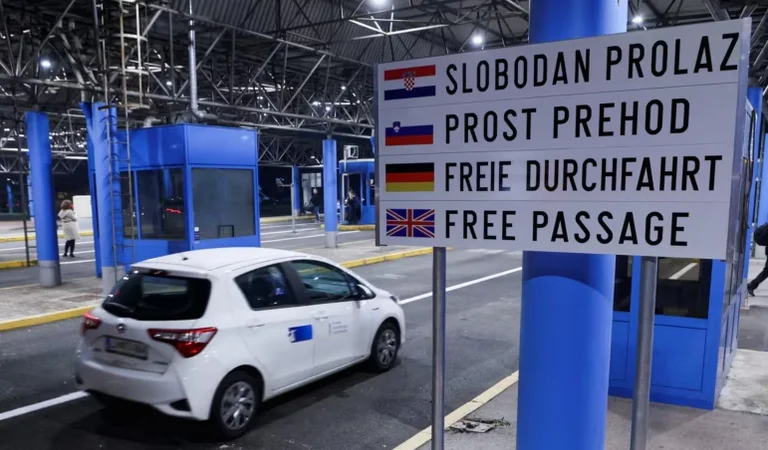
Croatia has the EU's longest external land limit from all bloc member states. Just because of the large number of illegal immigrants entering Croatia from neighbouring Western Balkan countries, Slovenia has suspended the Schengen regime and has returned controls to border points with Croatia.
Italy and Austria have also returned controls in borders with Slovenia.
This, according to EU sources, testifies to how important the problem of illegal immigration is considered among the bloc's member states.
EU sources also say there are a considerable number of Russia's citizens arriving in Serbia and Bosnia and Herzegovina without visas, and then moving to EU territory.
The high number is especially from regions like Chechnya and Dagustan, which are part of the Russian Federation and whose citizens have Russian passports.
The European Union acknowledges that there is progress towards adopting countries in the region with the EU visa regime, but wants it to become at a faster pace. / REL