4 minutes ago
DnV: Government tendency to intervene in election process
Periskopi(2 years ago)
(2 years ago)Political parties have begun to develop pre-frozen activities, and the government tends to intervene in the election process, has praised the coalition “Democracy in Action”. Eugen Cakoli from “Democracy in Action” stressed that in the absence of legal regulation, political parties have begun to develop prefuscious activities intensified, [...]
Eugen Calcolly from “Democracy in Action” stressed that, in the absence of legal regulation, political parties have begun to develop pre-future activities intensifiedly, using digital platforms simultaneously. He has added that the Vetevendosje Movement, as the ruling party, has chosen to lead its activities abroad, though opposition parties have also organised several meetings with citizens abroad, but they have focused more on activities within Kosovo.
Moreover, there has been an increase in postial sponsorships on digital platforms from the Democratic Party of Kosovo (PDK), the Democratic League of Kosovo (LDK) and the Alliance for the Future of Kosovo (AAK), with thousands of euros spent so far”, he has said at the media conference.
As one of the biggest pre-future problems yet, Cakoli has stressed that it is the use of public resources for electoral purposes and government interventions in the election process.
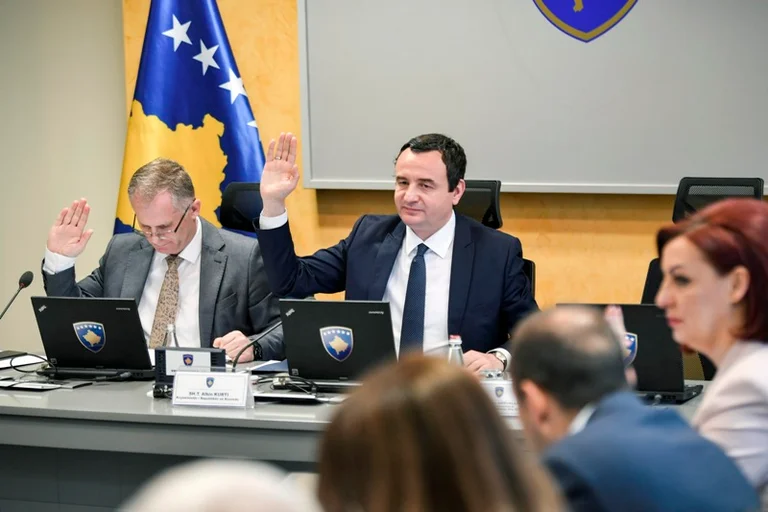
“This includes actions that undermine the equality of the election race and may influence the definition of voters, creating an uneven race. Among them, financial measures (the increase of pensions, minimum wage and public sector wages) approved by the Government, which are expected to take effect shortly before elections, broadcast a dangerous model of efforts to influence voters through public funds”, it has indicated.
Another concern raised by the DneV was also with the voting process abroad. According to the coalition, the Ministry of Foreign Affairs has attempted to intervene in this process by seeking the opening of polling stations in other countries, “which is illegal, since the CEC is the only institution that has the authority to organise and manage elections”.
“On the other hand, DnV notes that many of the lists published by candidates of political subjects include younger candidates and the inclusion of women have increased markedly. However, it was suggested that the ruling party is the only one that remains closed to the public in terms of finalising or publishing the candidate list”.