28 minutes ago
Von der Leeyen from Pristina sentences “the hybrid fight” of Russia against Balkan democracies
Periskopi(2 years ago)
(2 years ago)European Commission President Ursula von der Leyen denounced Russia's hybrid attacks against democracies on Saturday, saying the European Union is fighting every day to fight disinformations. Von der Leyen was in Kosovo as part of this week's tour of the EU's aspiring countries in the Western Balkans to assure them that [...]
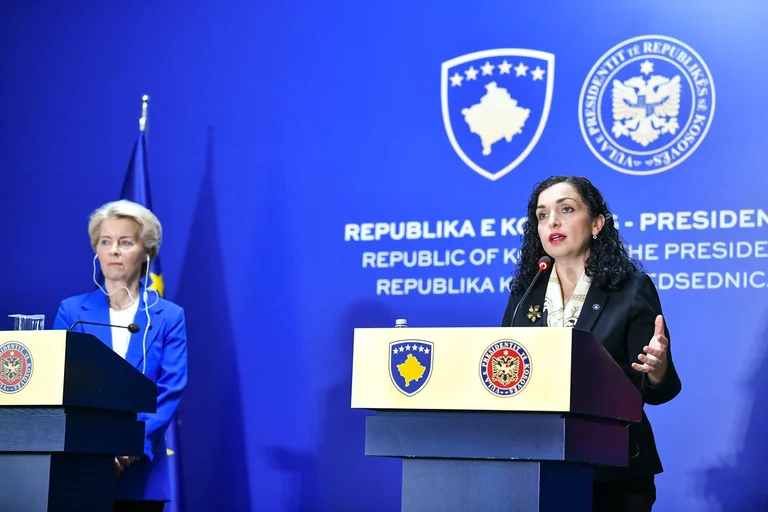
European Commission President Ursula von der Leyen denounced Russia's hybrid attacks against democracies on Saturday, saying the European Union is fighting every day to fight disinformations.
Von der Leyen was in Kosovo as part of this week's tour of EU aspiring countries in the Western Balkans to assure them that EU enlargement remains a priority for the 27-nation bloc.
It denounced Russia's “efforts to destabilise these democracies”, adding that Brussels works to uncover the “benefit of an entire region”.
It is possible that we rise to the truth and transparency and with very clear messages. So, here we are really fighting a hybrid attack that Russia is leading against democracies”, she said at a press conference in Pristina.
Von der Leyen came to Kosovo from neighbouring Serbia, which has close ties with Russia and has refused to join international sanctions on Moscow for its invasion in Ukraine, the AP reports, Klankosova.tv broadcasts.
She did not mention the 13-year-old EU-led dialogue to normalise reports between Kosovo and Serbia. Rather, it focused on the bloc's efforts to promote the region's economy.
Last year, EU officials offered a 6 billion-euro growth plan for Western Balkan countries in an effort to double the region's economy over the next decade and accelerate their efforts to join the bloc. This assistance depends on reforms that would bring their economies into line with EU regulations.
Western Balkan countries Albania, Bosnia, Kosovo, Montenegro, Northern Macedonia and Serbia are at different stages in their EU membership applications. Countries have been disappointed by the slow pace of the process, but Ukraine's Russian invasion in February 2022 has prompted European leaders to push the sixth to join the bloc.
The commission approved on Wednesday the reform agendas of Albania, Kosovo, Montenegro, Northern Macedonia and Serbia following green light from EU member states. It was a key step to allow payments under the growth plan after the adoption of approved reform steps was completed.