a minute ago
Ruge: I don't think we're in a position to talk about Kosovo's NATO membership
Periskopi(2 years ago)
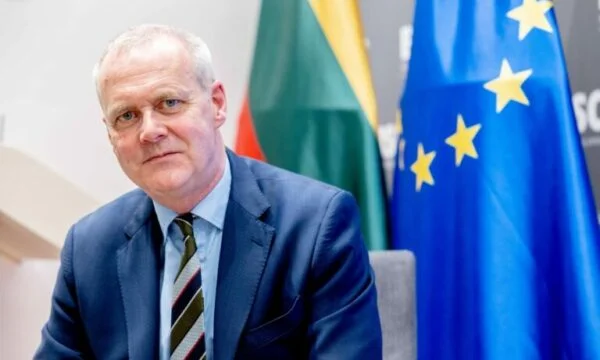
(2 years ago)Boris Ruge, assistant NATO Secretary General, has said he thinks that now is not the situation that can be talked about Kosovo's membership in the Atlantic Alliance, NATO. He has indicated that Kosovo so far is not moving towards membership in the Partnership for Peace. Among other things, Ruge stressed that NATO has not removed [...]
He has indicated that Kosovo so far is not moving towards membership in the Partnership for Peace.
Among other things, Ruge stressed that NATO has not given up on support in the Kosovo-Serbia dialogue, and that they are hopeful that this process will continue.
Rutte has also been declared on the issue of opening the Ibër Bridge for which, he said: “We understand that this bridge has been the subject of discussion in the dialogue mediated by the European Union, there is an agreement for principles that it needs to be fully opened, so not just for pedestrians but also for vehicles, but we don't want any unilateral action on this”.
For the possibility of increasing the number of soldiers in KFOR, number two NATO argued that the number they have on the ground is enough so far.
Total interview:
I Clancosova.tv: Viewing Russian influence in the Balkans, do you believe it is in NATO's best interest to offer Kosovo membership? And do you think Kosovo is ready to join NATO?
Ruge: What I would say is this: I served in Kosovo twice. The first time in 1999, when KFOR's first headquarters was established, and when KFOR's first troops came to Kosovo and then during 2001 and 2002. I was in Kosovo recently in August and I know, given the many visits and time spent in Kosovo that there is a very positive attitude from Kosovars in relation to NATO, and that is a very good thing. People appreciate what NATO and KFOR have done it in 1998 and 1999, and over the next 25 years, this is excellent.
I don't think we're actually in a situation when we can talk about membership. But I know that President Osmani and others have talked about Partnership for Peace, and that would certainly be the first step. As you know, this is something that requires consensus, we need the 32 NATO member states to vote for it, and we are not yet you. We're not moving towards Partnership for Peace right now. But I think the fact that the impression of Kosovo people has NATO is so positive, something we have to keep in mind, appreciate, and it is a major step towards the future.
I Clancosova.tv: Kosovo and Serbia so far are for several years in a process of dialogue. How do you see this process, how is it going?
Ruge: I believe we have arranged a new round of talks for next week between special EU representatives for dialogue Miroslav Lajcak and Kosovo and Serbia's top negotiators. The process has been going on for a long time now and I realize it has been cooled in this respect, but our NATO policies make us support EU-extensive dialogue and have not given up hope that the process can continue. I would point to the fact that on Monday of this week we had the Berlin Process, which was held in Berlin. One of the events was advancing the Free Trade Agreement, now at the CEFTA table, Kosovo sits behind UNMIK. This gives way to an economic zone in the Western Balkans that is extremely important because none of the Western Balkan countries are large enough to exist alone. You need access to markets from different roads. This is an example of how progress can be achieved. This is how I think this process will continue, I believe Mr. Lajcak has already announced his departure early next year, we have new leaders in the European Union and the process will continue with a new set of characters, but we urge Kosovo and Serbia to engage in constructive form in the interests of the citizens of the region and Kosovo, in particular.
I Clancosova.tv: Do you see any danger of having another Banjska 2 in Kosovo?
Ruge: What he did NATO since the events of May 2023 and the incident in Banjska in September 2023 is that we have added 1,000 troops under KFOR. KFOR is more powerful, has more capacity and increased presence in northern Kosovo, and I think we are in a good situation now. We have good reports with the Kosovo Police, good working relations with EULEX, so we are in good shape. And we do not communicate only with Kosovo institutions, but also with the Government of Serbia.
I Clancosova.tv: Prime Minister Albin Kurti has statements about the Ibër Bridge. He said that there should be automobiles, not just humans, around it. Should Kosovo communicate with allies like NATO and the EU, and should Kosovo do so on its own?
Ruge: I have known Prime Minister Kurt since 2002 when I have served in Kosovo and have great respect for it. When we talk about the Ibër Bridge, I need to repeat what I said in August and what Admiral (Sturt) Munsch, command commander in Naples, that we do not want a unilateral step in this bridge. We understand that this bridge has been a topic of discussion in the dialogue mediated by the European Union, there is an agreement on principles that it should be fully opened, so not only for pedestrians but also vehicles, but we don't want any unilateral action to help, and what we expect is that all parties will be involved in communicating with local residents, and one reason why we don't want it is that we have our soldiers on the bridge that we don't want to see put before a danger wave, so we expect the parties to respect it.
I Clancosova.tv: Is NATO planning to increase the number of its soldiers within KFOR that is in Kosovo?
Ruge: No, we don't plan. I think we have good consolidation actually. We've brought troops of backup operational force, we're looking closely at the situation, but in general, as far as the level of force is concerned, we feel we have what we need to keep the environment calm and secure.