14 minutes ago
Reuters quoted the NATO Admiral: Ethnic tensions in the north can cause more violence
Periskopi(2 years ago)
(2 years ago)Continued ethnic tensions in northern Kosovo could cause a repeat of the first year's violence in this area, when four people died in a gun battle and when NATO peacekeepers were injured in clashes, a senior military alliance official warned Reuters on Saturday, broadcasting the newspaper [...]
Continued ethnic tensions in northern Kosovo could cause a repeat of the first year's violence in this area, when four people died in a gun battle and when NATO peacekeepers were injured in clashes, a senior official from the military alliance warned Reuters on Saturday, the newspaper Express broadcast.
Kosovo is mainly with ethnic Albanians, but about 50,000 Serbs in the north reject the Pristina government and see Belgrade as their capital. The news agency recalls that Kosovo declared independence in 2008 a decade after a guerrilla uprising.
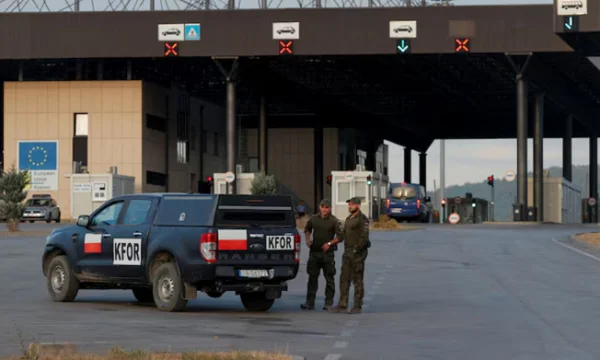
Admiral of the US Navy Stuart B. Munsch, commander of NATO's Kosovo Joint Force Command Allied Naples, which oversees the peacekeeping force in Kosovo, said the alliance remains concerned about the danger of repeated violence in the unstable north.
The hot political rhetoric can inspire some nongovernmental forces to commit violence as it did last year”, Munsch told reporters in Pristina.
“I would not say that the conflict is finally coming, I think there is a continuing risk”, he said, referring to the lack of progress in EU-mediated talks between the Government of Kosovo and Serbia.
A police officer and three armed men were killed in September 2023 when a group of heavily armed attackers entered Serbia and attacked police in the village of Banjska.
Four months ago, more than 90 soldiers were injured when Serb protesters attacked NATO peacekeepers.
Kosovo has accused Serbia of staying behind the attack in Banjska, but Belgrade has denied the accusations.
The US and the European Union, Kosovo's leading global allies, have criticised the Pristina government for undertaking unilateral actions in the north that could spur ethnic violence and endanger the lives of some 4,000 NATO troops in office there.
Kosovo rejects such criticism, and the issue has strained Pristina's ties with its Western supporters.
As part of the EU-brokered dialogue, Kosovo and Serbia have held talks for more than a decade to normalise their relations, but there has been little progress.
Like Serbs living in northern Kosovo, Belgrade considers Kosovo part of Serbia and refuses to recognise it as a state, Reuters concludes.