an hour ago
Progress Report: Kosovo's criticism of tensions in the north, Serbia that sė brought Banjska attackers to justice
Periskopi(2 years ago)
(2 years ago)The draft Progress Report for both Kosovo and Serbia recalls that implementation of the agreement has already become formally part of the EU integration process. Kosovo is criticised for uncoordinated steps that fuel tensions in the north and is required to initiate the establishment procedure for majority municipalities' Association. [...]
The draft Progress Report for both Kosovo and Serbia recalls that implementation of the agreement has already become formally part of the EU integration process. Kosovo is criticised for uncoordinated steps that fuel tensions in the north and is required to initiate the process of establishing the Serbian majority municipalities' Association under the European proposal. Serbia is criticised for failing to take steps to bring Bajska strikers to justice. Serbia urged to start with recognition of Kosovo documents, symbols
In most areas covering Kosovo's annual Progress Report, it is found that Kosovo is still in an early phase of preparation and that more efforts must be made in the reform process, especially in public administration, to achieve progress. This Progress Report for Kosovo, as well as nine other countries from the enlargement process, will be approved on Wednesday (October 30th by the Association College of Commissioners in Brussels, under the annual enlargement package. KOHA is aware of the contents of the Report on Kosovo, and in this time the important focus has been given to the process of normalising reports between Kosovo and Serbia and implementing obligations from the intended agreements in the dialogue, both in the advance and in the European integration process and in financial assistance.
The draft Progress Report for both Kosovo and Serbia recalls that implementation of the agreement has already become formally part of the EU integration process. Kosovo is criticised for uncoordinated steps that fuel tensions in the north and is required to initiate the process of establishing the Serbian majority municipalities' Association under the European proposal. Serbia is criticised for failing to take steps to bring Bajska strikers to justice. Serbia is urged to start with recognition of Kosovo documents and symbols.
Kosovo and Serbia have generally participated in dialogue, but they must demonstrate more serious and constructive commitment to advance the normalisation process. Moving forward, Kosovo and Serbia also need to make significant efforts to avoid actions that endanger stability and rhetoric, which is not in line with dialogue and reconciliation”, the draft Progress Report said this year.
“The normalisation process continues to be influenced by Serbia's insufficient steps to ensure the accountability for the violent attacks by Kosovo Serbs armed against Kosovo police on 24 September 2023 in Banjska, which represents the worst escalation in the last years“, the report said.
The report for Serbia says the EU expects Serbia to co-operate fully and take necessary measures to capture and bring to justice the perpetrators of 2023 attacks in northern Kosovo“.
The Progress Report, both for Kosovo and for Serbia, reiterates that the agreement on the road to normalisation of the reports “legally remains binding and currency “and that no formalisation around it should become an obstacle to progress in implementation. Repeatedly, the parties have the obligation to implement all agreements from the past and that failure in this direction, if they are not constructive, will have consequences for their journey to the EU. The report says that “infrastructure will be assessed on the basis of individual performance of the “parties.
The report, even this year, specifically talks about tensions in northern Kosovo, which are estimated as <x0 high>”.
“Tensions in northern Kosovo remain high. Kosovo has repeatedly undertaken activities that are contrary to its obligations from dialogue, including through police operations on Serbia-backed offices in the north”, the report says, where the CEC regulation for the use of the euro alone as currency in circulation and the closure of Serbia's offices and Post in Kosovo.
The report also expresses regret why efforts in dialogue have not succeeded in reaching an acceptable solution for both sides to overcome problems for people in northern Kosovo.
Even in this report, the European Commission says that the withdrawal of Serbs from Kosovo's institutions in the north in 2022, and boycotting local elections has been a serious “recovery back to implementing obligations from dialogue agreements.
It is required that Kosovo and Serbia respect the agreement on participation in regional initiatives and that their functioning not be hindered due to bilateral differences.
Also required by Serbia to prevent illegal crossings and direct crossings with Kosovo only official ones, reports Time.
The report underlines that the agreement on cadastres and recognition of diplomas is not being implemented due to Serbia's disrespect.
The EU already welcomes implementation of the agreement on car plates and the gradual removal of those issued by Serbia for cities in Kosovo, as well as mutual recognition of car license plates.
It was required by both sides to respect the agreement on official visits more consistently. They also respect agreements on telecom and energy.
Even with this report, the call is repeated for Kosovo to start the procedure for establishing the Serbian Majority Commission Association on the basis of the European proposal.
Kosovo's obligation to launch the procedure to establish the Association of Serb-run municipalities in Kosovo is also cited.
There has been no progress in implementing the agreement, which sets the principles for establishing the Association/Unibility of Serb majority municipalities. While the EU welcomes the presentation of the first draft of the A/B statute of Serb majority municipalities at the summit in dialogue on the part of the management team, it was not in line with relevant agreements from the dialogue. Therefore, the European proposal for the establishment of the Association/Unibility of Serb majority municipalities in Kosovo presented to the parties on October 21st of 1923 is the right proposal. This proposal is based on the best European standards and practices and is fully in line with Kosovo's constitutional framework. From Kosovo and Serbia, it is required that now constructively engage in its establishment”, the draft Progress Report says.
While Kosovo is required to launch the process of establishing association, Serbia requires that “fulfil its obligations by parallel agreement, starting to recognise Kosovo documents, symbols and institutions”.
From Kosovo and Serbia, it is required that constructively engage in the opening of the bridge over the Iber River in Mitrovica for circulation as well as vehicles, but reiterated the EU's stance that this should be done in co-operation and co-ordination, even with the international security presence.
There has been no progress in implementing the claim for the missing, which was adopted in May 2023. The sides are encouraged to avoid politicising this humanitarian issue and to launch immediate implementation by hiring, as a first step, on reference terms for the joint commission that should be formed under the statement“, further said in this volume document.
As for EU measures towards Kosovo, the draft Progress Report mentions the reason they were set up and that already EU high representative Borrell has recommended that they be removed. But on the basis of the description that the report has made to the situation in the north, it is difficult to expect them to be removed quickly.
As for Kosovo's implementation of recommendations from the latest Progress Report, Kosovo is required to do more in the area of public administration reform, especially in human resource management, job classification and systematisation, internal organisation of public institutions and acceleration of the process of rationalisation of independent agencies.
Kosovo's active engagement in the European agenda for the Growth Plan for the Western Balkans is welcomed.
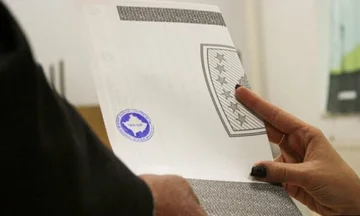
The legal framework for elections in Kosovo is considered to be in line with democratic election standards, reportedly in a draft of the Progress Report. Criticism also expresses the Kosovo Assembly.
“The Assembly faces a number of challenges in exercising its powers. The government continues to have solid majority in the Assembly, but disagreements and lack of co-operation between the majority and opposition limit the Assembly's ability to adopt laws, appoint members of public institutions and exercise effective oversight“.
Also mentioned is the fact that “members of the Srpska List have boycotted the work of the“Assembly.
With this document, the EU requires the Kosovo Assembly to improve consensus growth, increase transparency and improve internal management. He also decides electronic voting and the registration system for meetings.
Progress reports for this year had to have been adopted on October 16th, but have been delayed on the 30th, because they have expected to pass elections in Moldova and Georgia, countries which with Ukraine now have candidate status and are involved in the enlargement process. Thus the enlargement package now has ten reports. Besides six Western Balkan countries, the reports are also approved for Ukraine, Moldova and Georgia, as well as for Turkey, which continues to be part of the enlargement process.