a minute ago
The once-inquired bar, now over-term in the QKUK drug store
Periskopi(2 years ago)
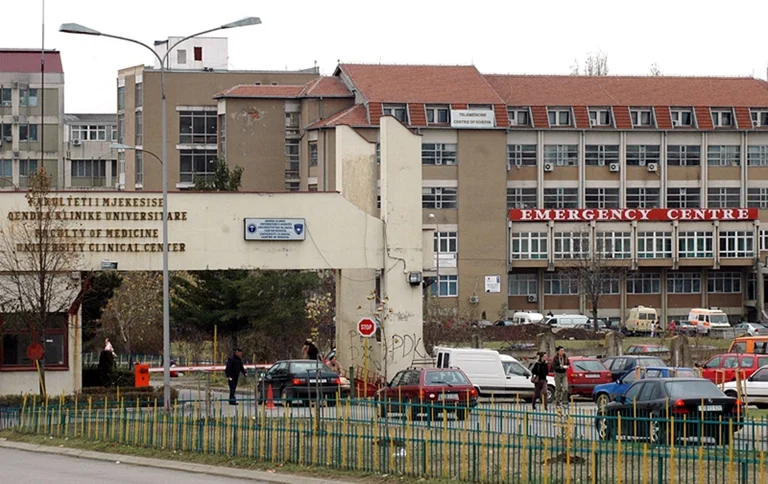
(2 years ago)At the peak of the COVID-19 pandemic, in 2020 and 2021, the Remdesivir drug could hardly be found in Kosovo, or it had to be paid hundreds of euros. Today, thousands of its packages, with the expired deadline, are located in the Central Barnator of the University Clinical Centre of Kosovo (QKUK). “I haven't been here at the time, but it's a room with [...]
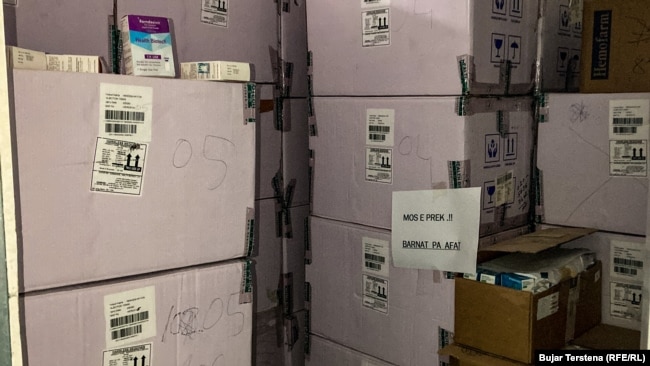
Today, thousands of its packages, with the expired deadline, are located in the Central Barnator of the University Clinical Centre of Kosovo (QKUK).
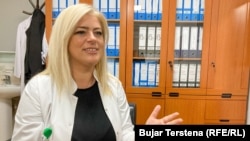
I wasn't here at the time, but there's a room with the Remdesiviri product, with about 7 thousand units”, says the Free Europe Radio Director of this drug, Dardane Mehaj.
The QKUK Central Barander supplies all of its clinics, while on the subject of drugs it is also co-ordinated with regional hospitals.
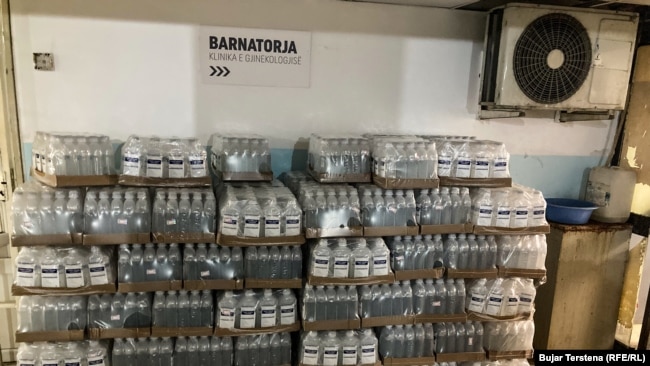
The REL team visited him at the end of September, where it saw several rooms with expired drugs, located very close to usable drugs with only one curtain in the middle.
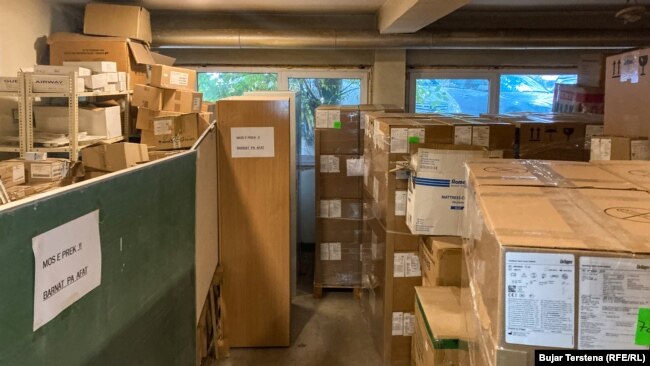
Despite this situation, Mehaji ensures that the drugs used are safe. And for medicines and other medical materials over the longer term, she says they have been collected there for almost 15 years.
Among them are drugs that release particles or gases that can endanger the environment.
According to Mehej, the amount has also contributed to donations made during the COVID-19 pandemic.
We've had some kind of stock in our clinics, we've deposited it here. It's a certain number, I can't say by code. I don't even know exactly what the drugs are, but it's worth pointing out that a product, which has been hard to obtain at the time of the pandemic, is found here in the expired”, says Mehey, referring to the ARV.
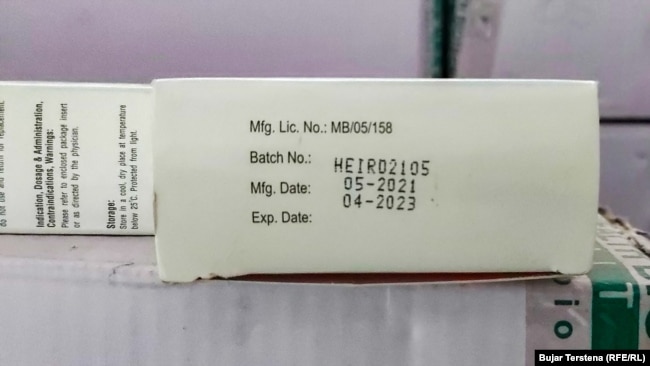
It cannot say why this once heavily prescribed drug has ended up indefinitely in the drug store, along with other types of drugs.
What is known is that Remdesivivirin, during the pandemic, Kosovo citizens bought it for themselves at a price between 150 and 200 euros.
Health institutions constantly blame one another for mismanagement.
How should over-term medicines be eliminated?
The World Health Organization recommends several steps, including going back to the manufacturer, burying, chemical deletion, and burning, for certain annihilation of the over-term drugs.
According to her, these drugs must be eliminated safely, without harming people and environment”.
Mejaj says that the long-term drugs have not been withdrawn from the QKUK Central Barnatore for extermination since 2010.
“There are standard operating procedures on how an institution should attract or eliminate drugs. An institution like QKUK can't do that on its own. It goes through the Ministry of Health, which needs to open a tender for the matter”, Mehe says.
In an administrative guide, issued by the Government of Kosovo since 2008, it also says that the Ministry of Health is the one who controls and supervises management of medical waste generated in public and private health institutions.
The ministry also directs the way medical waste is destroyed, the document says.
Contacted by Radio Free Europe, this minister said he has already formed a working group for the annihilation of medical waste.
The group's “task is to draft criteria for the annihilation of these medical wastes, and after the end of this issue, will start with procurement activity”, the written response said.
The ministry did not answer the REL's additional questions about when this working group was formed, why the expired drugs have not been eliminated for years and years, and whether it poses a threat to the health of people collecting them.
Farmer Sabrije Fazliu-Aslani says that the preservation of long-term medicines in a country where there are even usable drugs carries risks for the latter.
Overdue bares contain the environment or place to which we leave”, she says.
Fazliu-Asllani, who runs a private drug store in Pristina, shows that the removal and annihilation of expired drugs in private institutions make companies suppliers.
Kosovo does not have a particular public place to eliminate these products.
But, the Ministry of Environment, Environment and Spatial Planning for years has licensed at least two private companies, which, in addition, are called for the annihilation of medical wastes and over-term drugs.
They conduct this process in high - temperature ovens within their workers.
Radio Free Europe came into contact with the owner of one company, which said that, currently, it is not working on such jobs because there has been no offer or tender for drug annihilation.
We did the annihilation of several medical wastes in a municipality of” a few years ago, he said briefly, without providing more details.
The KKUK Central bar, which leads Mehe, is also packed with staff desks because of a lack of space.
We're very tight and that's what's causing us problems. We, even when we have regular supplies, need to coordinate to free” space, Mehe says.
The situation, however, highlights a disturbing paradox in Kosovo's health care system, where patients are often forced to buy medicines with their own money, while expired drugs are collected in drugs.
Education of the issue appears to be critical for maintaining public health. /Radio Europe Free