2 days ago
Will there be electricity for all cars?
Periskopi(2 years ago)
(2 years ago)Until recently considered a <x0lodra” exclusive to rich environmentalists, electric vehicles have begun to be accessable for an ever wider customer base, writes Focus. But is the electrical network ready to recharge the increasingly multiple e-machels that will come to the market [...]
But is the power grid ready to recharge the ever - increasing e - car batteries that will come to market in the next few years?
Yes, because electrical mobility does not look like a passing fashion: leading car producers are giving more and more space to electrical models on their price lists, and, for example, in the United States, General Motors plans to stop trading cars and traditional vans starting in 2035.
Let's start with the good news: according to analysts there will be no problem with lack of electricity.
But moving towards full electrical transport will have to be gradual, in order to ensure the functioning of all infrastructure and the fulfilment of increased demand.
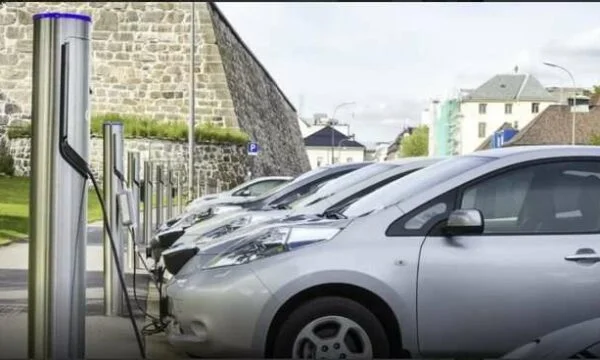
The first point to emphasize is the charge points: Today most electric motorists have a private parking space where they can install a charge station.
But those who live in a palace and do not have their parking space will inevitably have to rely on public tax points.
In the US, President Biden has declared that he wants to build 500,000 gas stations by 2030.
Europe is preparing to start building thousands of charge stations funded by European funds.
But how much more electricity will be needed to allow tomorrow's fleet of cars to flow?
According to experts at the”Rick Mountains” Institute, energy demand may increase by 25%, results that can be achieved in the medium term provided we invest in building new production plants and in the updateing of the distribution network.
If 30 families in a neighborhood where 300 families live decide to convert into electric cars, some substation capacity may arise, which at the moment may not be large enough to support simultaneously charge, usually at night, all of these cars.
”Migration” towards electrical mobility more and more will inevitably lead to adoption of new bidding models, even from operators.