8 minutes ago
Ahmeti: Historic achievements of Albanians in Northern Macedonia at Risk
Periskopi(2 years ago)
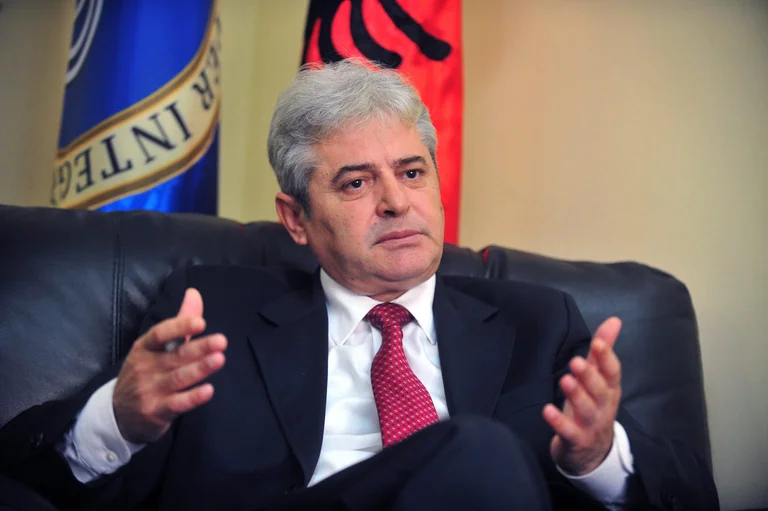
(2 years ago)The chairman of the opposition Democratic Union for Integration (BDI), Ali Ahmeti, has sent letters to senior Albanian and international leaders, voicing his concerns over recent political and constitutional developments in northern Macedonia. According to DUI, the letters sent by Ahmeti address three recent decisions: abolishing the Law for Use [...]
The chairman of the opposition Democratic Union for Integration (BDI), Ali Ahmeti, has sent letters to senior Albanian and international leaders, voicing his concerns over recent political and constitutional developments in northern Macedonia.
According to DUI, the letters sent by Ahmeti address three recent decisions: abolishing the Law on Use of Languages, preventing ethnic identification in state institutions and forming a government without just ethnic representation.
Ahmeti, according to DUI, has raised concerns that these developments, “jeopardise the achievements of the Ohrid Agreement and principles of equality and stability in a multiethnic state”.
“Ahmeti stresses that the last three decisions pose serious threats to the peace and stability of the country and the region as a whole. It calls on international leaders for joint action to protect the achievements of the Ohrid Agreement and the rights of Albanians in Northern Macedonia”, the DUI report released on October 27th said.
Among the leaders Ahmeti has sent to them are Albania's president and prime minister, Bajram Begaj and Edi Rama, Kosovo President and Prime Minister Vjosa Osmani and Albin Kurti, European Commission President Ursula von der Lejen, German Chancellor Olaf Scholz, French President Emmanuel Macron and American Secretary of State Antony Blinken.
The Constitutional Court of Northern Macedonia is expected to decide in December regarding the fate of the Law on the Use of Languages, which was adopted seven years ago. Northern Macedonia Prime Minister Hristija Mickoski on Saturday said that not the whole law is rejected, but only part of the judiciary.