6 minutes ago
WP: Using the term <x0masacre” by Walker for Recak opened the way for the 78-day NATO bombing campaign to end the war
Periskopi(2 years ago)
(2 years ago)The prestigious American newspaper Washington Post has written down how Recak's massacre was remembered in Kosovo. The WP writes that hundreds of Kosovars gathered in a southern village Monday to commemorate the 25th anniversary of the mass murder of 45 ethnic Albanians by Serb forces, an event that helped spur international intervention to [...]
The prestigious American newspaper, Washington Post has written how Recak's massacre was remembered in Kosovo.
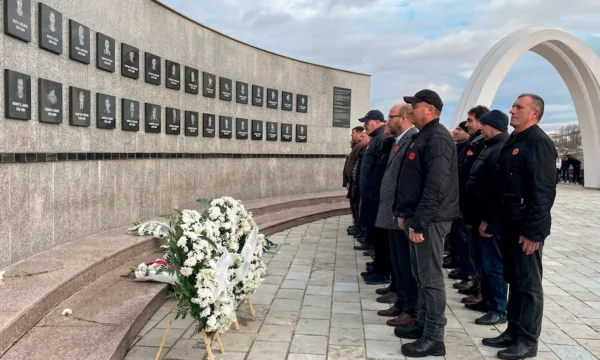
The WP writes that hundreds of Kosovars gathered in a southern village Monday to commemorate the 25th anniversary of the mass murder of 45 ethnic Albanians by Serbian forces -- an event that helped spur international intervention to end a 1998-99 war in Kosovo.
Kosovo President Vjosa Osmani, Prime Minister Albin Kurti and Parliament Speaker Glauk Konjufca joined citizens in a cemetery in Recak, 32km (20 km) south of the capital, Pristina, for the memorial ceremony.
Former American diplomat William Walker, 88, who headed a mission of the Organisation for Security and Co-operation in Europe, in charge of overseeing a ceasefire agreement, was also present. The use of the term “masacre” by Walker to describe the killings in Recak paved the way for a 78-day NATO bombing campaign of Serbian forces that eventually ended the war. He is honoured as a hero in Kosovo, writes the WP, presented the Express newspaper.
The government of then Serbian President Slobodan Milosevic claimed that the dead were members of the Kosovo Liberation Army, who were killed in combat with state security forces.
“This was one of the most terrible massacres committed by the Milosevic regime at the time, showing once again that their aim was to commit crimes against humanity and genocide against the people of Kosovo”, Osmani said.
Wartime Kosovo was Serbia's province. A Serbian government crackdown on Kosovo's separatist ethnic Albanians killed about 13,000 people, most of them ethnic Albanians. The United Nations governed the province until 2008, when Kosovo declared independence, an act the government in Belgrade has not yet recognised, writes the WP.
Kurti denounced Serbian President Aleksandar Vuciq for not recognising and not seeking forgiveness for the Recak massacre, either as Milosevic's minister of information or as Serbia's current leader.
Massive killings in Recak were the first confirmed through evidence gathered by international observers and made known in the world through international news coverage, Kurti said.
Recak's “Masacre has been proven a crime against humanity before the world and history”, the prime minister said.
Relations between the two neighbouring countries remain tense and flare up from time to time. In September, a gunfight between about 30 armed Serbs and police in northern Kosovo left an officer and three armed men dead.