10 minutes ago
Stoltenberg: Situation in fragile Balkans with potential for tension in Kosovo, Bosnia
Periskopi(2 years ago)
(2 years ago)NATO believes the security situation in the Western Balkans is still very fragile, and has potential for tensions in Kosovo and Bosnia and Herzegovina. So said Friday from Brussels, Secretary General NATO, Jens Stoltenberg, speaking after meeting with Montenegrin Prime Minister Milloko Spajiq. He said [...]
NATO believes the security situation in the Western Balkans is still very fragile, and has potential for tensions in Kosovo and Bosnia and Herzegovina.
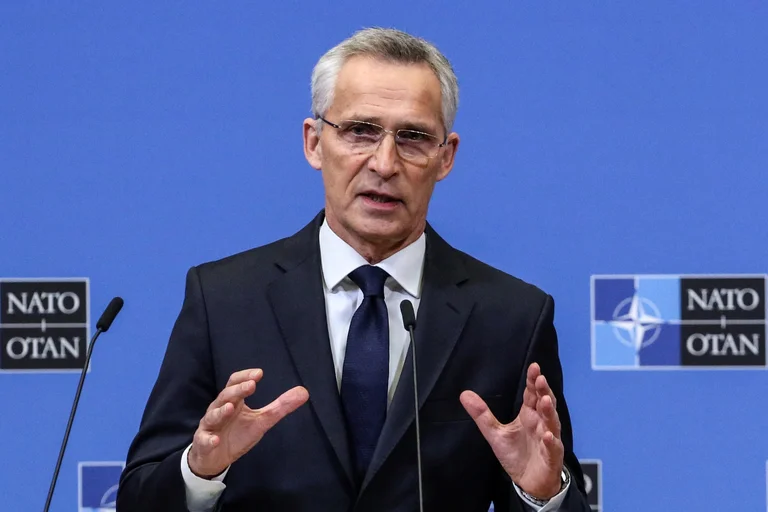
So said Friday from Brussels, Secretary General NATO, Jens Stoltenberg, speaking after meeting with Montenegrin Prime Minister Milloko Spajiq.
He has said NATO is willing to carry out its mandate in Kosovo to ensure stability, as in Bosnia and Herzegovina.
Western Balkans, Strengthening NATO, and preparations for the Washington summit, have been the main topics of this meeting.
“Situate in the Western Balkans region remains fragile. Violence that has erupted in Kosovo was unacceptable. This has led NATO immediately to engage additional forces in Kosovo“, Stolemberg has said.
He has warned that next week, the North Atlantic Council, the alliance's top political body, will visit Bosnia and Herzegovina to testify in this way to the irresistent support for Bosnia and Herzegovina's territorial integrity and sovereignty.
Stoltenberg has thanked Montenegro for contributing to the NATO mission in Kosovo, KFOR, but also the constructive role for peace and stability in the Balkan region.
Montenegro's prime minister, Spajic, has said that for his country, stability in Kosovo is of particular importance and, in case of need, Montenegro is willing to increase its soldiers' presence in the KFOR mission.
Spajic has said Montenegro remains a loyal member of the NATO alliance, and committed to advancing the EU integration process.
He has said that for 2024, Montenegro has shared more than 2 per cent of the Local Protection Production for Protection, which is in line with NATO's demands on all member states.
The coalition chief has said that NATO has close co-operation with the EU, when the countries of the Western Balkans are in question,
He has particularly underlined the importance of supporting dialogue between Kosovo and Serbia on normalising reports, which are conducted under the European Union's mediation.
In the wake of armed attacks against the Kosovo Police at Zvecan Banisk, in September last year, where Sergeant Africa Bulnjaku NATO has reinforced its KFOR mission in Kosovo, and now numbers 4,500.
Kosovo has blamed Serbia's state for the attack, though it has denied everything.
The responsibility for the attack has been taken over by Milan Radoic, former deputy chairman of the Serbian List, the largest party of Serbs in Kosovo.
The International Police Agency (INTERPOL) has already issued a warrant for his arrest. / REL/