2 minutes ago
Stano: Agreement is binding in its entirety, both for Kosovo and Serbia
Periskopi(2 years ago)
(2 years ago)The European Union has confirmed the acceptance of a final version of the letter by Serbian Prime Minister Anna Brnabiq, through which it had pledged that Serbia does not implement the clause the parties must not prevent each other from obstructing each other in the international arena. Although they have not whitened the final contents of the document, the EU has said the Base Agreement and [...]
The Brussels and annexing agreement for its implementation will be an integral part of Kosovo and Serbia's road towards integration into the European Union, European Union officials have said.
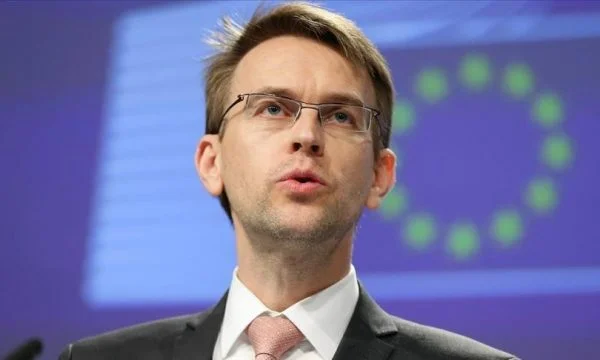
EU spokesman Peter Stano has said the agreement is mandatory in its entirety.
It was Serbia that through a letter from Prime Minister Anna Brnabyq, announced to the EU that it does not take over implementation of all agreements.
Serbia has rejected provisions urging it not to prevent Kosovo from membership in international organisations.
“generally, we do not comment on the contents of correspondence with the EU. However, we can confirm that the EU has received a final version of the letter from Serbian Prime Minister Brnabiq. The European Union reiterates that the agreement is binding on its entirety on both sides. Its implementation will be an integral part of their respective European path”.
The agreement with its implementation annex has become legally binding through the EU High Representative's written statement of foreign policy and security on 18 March 2023. This has been the EU's consistent stance, which has also been publicly communicated on several occasions”, has declared Stano for Time.
The EU expects the parties to demonstrate serious commitment and efforts to reach compromise that leads to normalising relations.
“They (paths) must support their dialogue commitments and engage in full implementation of all agreements from the previous dialogue, in particular the Road to Normalisation and its Implementation Annex”.
“Normising relations is an essential condition on the European path of both sides, and both risk losing significant opportunities in lack of progress”, Stano stressed.
Kosovo, which has declared independence in 2008, and Serbia has continued to oppose it, has been engaged in talks on normalising relations since 2011.
With EU mediation and US support, talks have initially started on technical issues, to then move to the political level.
The sides have reached dozens of agreements from free movement to the issue of missing from the 1998/99 war, but many have not been implemented.
The European Union constantly asks them to comply.
The normalisation of relations, at the same time, is a condition for both countries to progress in the process of integration into the European Union.
Kosovo has applied for EU membership last year, while Serbia is a candidate country from 2012.