a minute ago
Serbian analyst: West was not too harsh in criticism of Vuciqi
Periskopi(2 years ago)
(2 years ago)Analysts in Serbia think the West was not too severe in criticism of Serbian President Aleksandar Vuciq for the numerous manipulations of the December 17th election process in Serbia. They think criticism of the Serbian president is expected after the end of the holiday season, but stress that Western partners are playing pragmatically, [...]
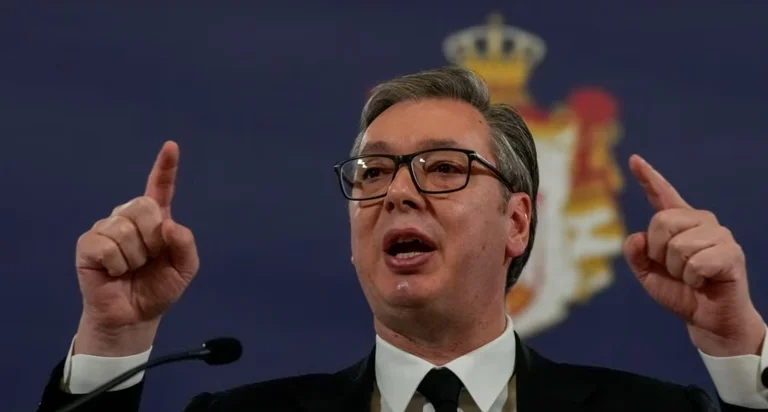
Analysts in Serbia think the West was not too severe in criticism of Serbian President Aleksandar Vuciq for the numerous manipulations of the December 17th election process in Serbia.
They think criticism of the Serbian president is expected after the end of the holiday season, but stress that Western partners are playing pragmatically, given that Vuciq is still the only player who can end the issue with Kosovo.
“Can be concluded that the West is still very tolerant of Serbia's president [Aleksandar Vuciq], that it expects it to fulfil its promises regarding the European plan about Kosovo following the government's formation and that they do not want to close until then. Since, after all, they do not bother him for years as he was building an autocracy in Serbia”, says foreign policy commentator Bosko Jaksic in an interview for the Voice of America [edition in Serbian language] and recalls that following the departure of former cancerare Angela Merkel, Vuciq was left without a strong partner in Berlin and that today it is much harder with the coalition of left and greens leading Germany's politics.
It is clear that at this stage Serbia's relations with the West are the worst with Germany, and this could be assumed immediately after the formation of the new German government, because the Green, who have the Ministry of Foreign Affairs, were major opponents of the Vuciqi regime, even at the time when Angela Merkel” was in power, Jaksic adds.
According to him, Annalena Baerbock has remained loyal to the policy she has made while in opposition, and now, after coming to the helm of the German Foreign Ministry, has continued with that policy and is logical, says Jaksic, that more relations on the Berlin-Belgrade line will be irritated.
Deutsche Welle journalist Dragoslav Devovic is not surprised there has been little criticism from the West of all that was seen during the elections in Serbia on December 17th.
As he said, there's been a lot of vision around Aleksandar Vuciqiqi's control over the past decade, and now it's hard to change it overnight.
“in countries of so-called spin-democrats, twists occur with the will of one man and his media campaigns within 24 hours. This does not happen overnight in countries with serious institutions, or confederations like the EU. But that will happen if theft and election management are proven by the ruling party in Serbia. I think there will be consequences, it will take those consequences, and EU foreign policy will not only register it, but will register it as a serious return to relations with a country that claims to be on the path to EU entry”, Dedovic believes.
He believes that even after Angela Merkel's time in Germany, politics continued that only autocratic can end the issue with Kosovo, but in Berlin and in general in the West do not count on Vuciqiqi as a serious partner, and that they raise a serious question especially after the events in Banjska ♫ or do Serbia's president still seriously control the situation in the country.
I think Aleksandar Vuciq, with this kind of electoral management that is so self-ident, has overstepped his hand in the sense that with all the logistics and millions of euros he invested, he has not been able to hide it well”, Devovic adds, broadcast Telegraphy.
Serbian analysts disagree with estimates that Western criticism of what happened in Serbia's elections should be expected only after Christmas and New Year's holidays, when political machinery is again heated up.
According to them, Western partners are playing pragmatically, given that Vuciq is still the only player who can end the issue with Kosovo.
In Bosko Jaksic's opinion, when the European emissary for Kosovo, Miroslav Lajcak, said that in late January some progress can be expected in dialogue between Belgrade and Pristina, he said this given some information the opinion still does not know.
According to him, this is why there were no serious comments from the West about everything that happened in Serbia and Belgrade elections.
“I think it's about pragmatism as we can testify so far, so this content is not random and it can't be justified with Christmas parties, but it's a accepted position and approach to saving Vucinate what, I repeat, he has to do something for Kosovo soon. And this is the admission of the so-called Soltz-Macron” plan, Bosko Jaksic believes.
In Dragoslav Dedovqi's opinion, the major credit Vuciq received in connection with earlier dialogue with Pristina and during the refugee crisis in 2015 is rapidly melting.
He did everything he wanted in Germany. So he didn't create any problems in any case and that loan he took over there he spent on the internal political plan to strengthen autocratic tendencies. I don't think it was smart for him, there's gonna be a receipt for that, but that's just a fact. That he, by consolidating his power, crossed the invisible border between personal autocratic tendencies and a nonresponsive point, where a society has the problem of authoritarianism”, Dedovic believes.