19 minutes ago
RKS license plates moving through Serbia
Periskopi(2 years ago)
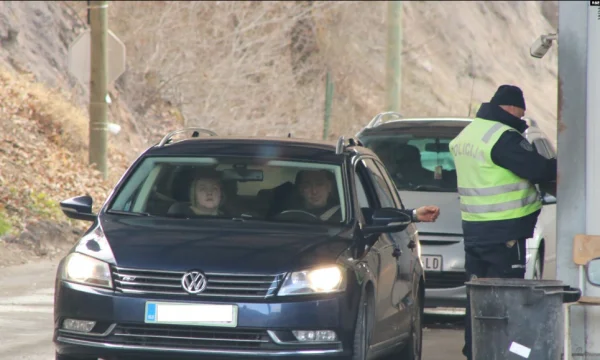
(2 years ago)Since Monday, January 1st, cars with RKS license plates have been moving freely on Serbia's territory. Their movement was enabled after the December 25th decision of 2023 of the Serbian government. As the chief of the Office for Kosovo had said in the Serbian government, Petar Petkov, Government and [...]
Since Monday, January 1st, cars with RKS license plates have been moving freely on Serbia's territory.
Their movement was enabled after the December 25th decision of 2023 of the Serbian government.
As chief of the Office for Kosovo in the Serbian Government Petar Petkoviq had said in advance, Serbia's Government made this decision “to help Serbs from Kosovo”.
Before the media, he has declared that the decision is an additional impetus for the <x0-> Open Balkans initiative”, which according to Petkov facilitates the lives of Serbs in Kosovo, as they mainly use administrative crossings.
The Serbian Government's decision to recognise vehicles with RKS license plates was taken after Serbs living in municipalities in northern Kosovo widely replaced with RKS KS plates issued by UNMIK, but also plates issued by Serbia's authorities that were with Serb acronyms for Kosovo cities.
Petkov said it is no secret that 99 per cent of Serbs in Kosovo have RKS license plates, because this is the only way to move through Kosovo.
“They are also used by the clerics of the Racchet-Prizren Diocese to reach the shrines and believers”, Petkovic said, adding that with this decision, the Serbian government did not give up on the decision not to recognise Kosovo's independence.
Serbia's president, Aleksandar Vuciq, said the day before that the decision to free movement of cars with RKS license plates across Serbia “has avoided major pitfalls and risks” for his state.
Vuciq also stated that this decision will benefit the Serbian people and Serbia as a whole.
According to Kosovo Government data from 1 November to 14 December 2023, 3,405 citizens have converted Serbian plates to those RKS, mainly in North Mitrovica and Leposaviq.
On the issue of free movement, Kosovo and Serbia had reached agreement in 2011, under the dialogue for normalising reports mediated by the European bloc.
Cars were allowed to pass, and plates were covered with sticky paper.
Prior to the practice of stickers, vehicles with RKS license plates were forced to receive test plates on the border with Serbia, worth 60 days and cost 5 euros. But on September 20, 2021, the Government of Kosovo imposed reciprocity, which forced drivers from Serbia to go through the same procedure to enter Kosovo.
But that move sparked discontent among the Serb population in Kosovo, which blocked roads leading to border crossings with Serbia, in Jarinje and Brnjak.
To reduce tensions, with the bloc's mediation on September 30th, 2021, the interim agreement on license plates was reached. This agreement, meant to be in effect for six months until Kosovo and Serbia's working groups found a long-term solution, prompted Kosovo license drivers and Serbia's license plates to place sticky letters on state symbols on license plates whenever they crossed the border of these two states. / REL