30 minutes ago
Maliqi: Kurt's hybrid policies, especially harmful to economics and foreign policy
Periskopi(2 years ago)
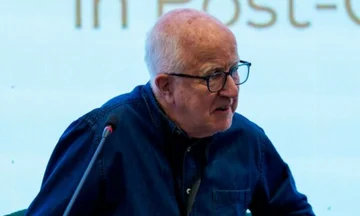
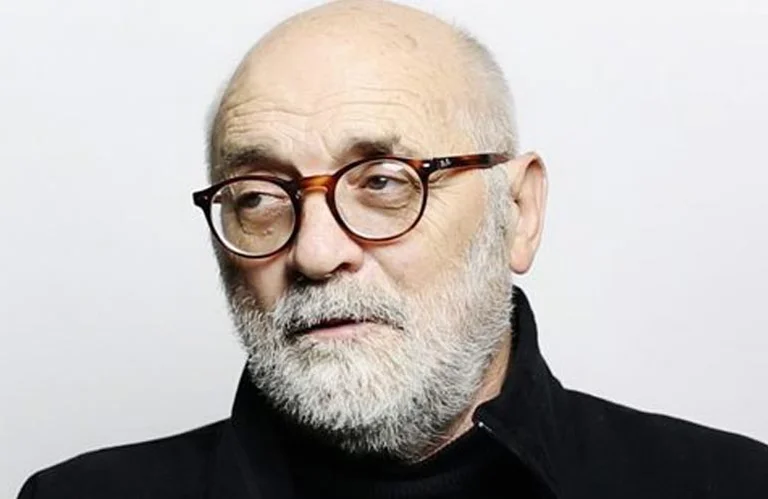
(2 years ago)Kosovo philosopher and intellectualist Shkelzen Maliqi estimates that the government of Kosovo in charge of the prime minister, Albin Kurti, for nearly 3 years at the executives had no structure, but not enough cadrovic capacity to organise effective governance in many vital sectors for Kosovo's welfare and development. Kosovo Prime Minister Albin Kurti, according to Maliqi, followed [...]
Kosovo philosopher and intellectualist Shkelzen Maliqi estimates that the government of Kosovo in charge of the prime minister, Albin Kurti, for nearly 3 years at the executives had no structure, but not enough cadrovic capacity to organise effective governance in many vital sectors for Kosovo's welfare and development.
Kosovo Prime Minister Albin Kurti, according to Maliqi, followed hybrid, improvised, very harmful to the economy, foreign policy, in dialogue with Serbia, without results in the public service sector as in education, health.
In addition to failure in government, publicist Maliqi considers that the Government of Kosovo, with the largest popular vote ever since the war, detonated unprecedented countries, confronting allied powers, politics that resulted in punishment measures against the country.
According to Maliqi, though with delay and consequences, Kurti on the way became convinced that Kosovo cannot move forward without co-ordination with the EU and the US.
“Finally, he was convinced that he could not move forward without co-ordination with the EU and the US, agreed with the Franko-German plan, became guaranteed for the Association of Serb Major municipalities that strongly opposed him, accepted the Ohrid Agreement, and he was fortunate that the terrorist attack took place in Bany, where the alliance's value with NATO and that we are currently sovereign as a state, if we act at top”, Malqi says in an interview with Alban Post.
The moment the draft resolution of the Serbian Major Commission Association is approved and then starts without additional delays the implementation of the Brussels/Ohri Agreement, the derivative of the Franco-German proposal -- the northern Kosovo problem -- believes political analyst Maliqi -- will pass to another more promising and clarified phase.
However, the situation is not so black and white, since, according to him, for blocking the road to progress, the obstructural forces will work with the aim of undermining the plan.
Total interview:
Kosovo's north is continuing to be a source of problems, uncertainty and detection not only of political agendas, but also of daily social dictatorships. When and how does this issue end as a problem, and why is it so difficult to find a solution for the north of Kosovo?
Maliqi: As the project of the Serbian Major Commission Association statute is approved and then starts without delay even implementation of the compromise formula that has been worked on for so long, the Kosovo North problem will be passed on to another, clearer and more promising phase. The situation we have today is not of a big deal with mutual recognition, but of a de facto normalisation of relations between the two states. This is the essence of the Franco-German project, Serbia is not being forced to recognise Kosovo's de jure independence, but it is recognising de facto. European and American diplomats claim that the normalisation agreement has already been reached (with the accords of Brussels and Ohrid), and that there is no need for signing because the EU has proposed as an international deal. And there is no need for further measures and procedures that would complicate implementation, such as referenda, constitutional changes. The issue now lies only in the ranking and dynamic of implementing agreements, where there could be, as before, deliberate hesitations and impasses. This is the positive or optimistic scenario. Of course there is scepticism. How can the long - term work be accomplished so easily and easily? Of course, there are, and there will be resentment on both sides, and there are also known to be suspicious and obstructive forces, even militant and warmongering, that there will be efforts to block and break the plan. But what diplomats now estimate is the urgent need to rebuild the security and stability system in the north, which is almost existent or very fragile, and with the holding of elections and the return of Serbs to the institutions, it could be re-created under KFOR supervision and guarantees/ NATO. As a positive sign of the start of the process is that Serbs in the north have en masse registered Kosovo's license plates for vehicles and will likely rub off attitudes and all other obligations they have as citizens of Kosovo, just as they have previously happened with Serbs in the enclaves in the central part of Kosovo.
Nationalisation continues to be the electoral card in Kosovo and Serbia. With pompous sentences, chest beatings, and an enemy attack on these sides, votes are still taken and elections won. Does this mean that resolving Kosovo's problem with Serbia goes in direct proportion to the interests of politicians. If it's a problem, will there be a less topic to manipulate and hide from work?
Maliqi: This problem with nationalism is more pronounced in Serbia, there are many militant formations as well as warmongering, which oppose any compromise around Kosovo and try to keep it as a frozen conflict, and also try to boost the conflict right now. After the failed adventure in Banja, at least official Serbia will probably be more cautious with such dangerous provocations. In the current elections in Serbia, Kosovo as the topic has faded, neither power nor opposition have the luxury of building a new conflict in Kosovo.
The main international actor dealing with the issue of dialogue is the European Union. But, despite a name, it has so many attitudes on everything, even on the Kosovo issue, Serbia. How does the EU find it to reach agreement that leads to reconciliation, when it itself is not in a precise and concrete position on how the final solution should be found?
Maliqi: The West Force is the strategic alliance of the US binomial EU that unites the interests of the more economically developed states and that are also military superpowers, guaranteeing a more stable international order. The current world order, however, is not ideal, even without war in Ukraine, has been in a major structural crisis with numerous cracks, with dangerous challenges and friction between superpowers, including between the United States and China, etc. that threaten the outbreak of apocalypseic conflict, devastating to mankind's existence. Under these circumstances still not seen alternatives that could replace the key role of the Euro-Atlantic alliance on major issues, but also our big issue, but not so much when viewed by Brussels or Washington. However, we should not be surprised why Brussels co-operates closely with Washington about dialogue on Kosovo, because yes, the EU has its problems, and it has divisions around Kosovo, but at least in this Franco-German plan that needs to be implemented, the EU, and thanks to the United States, has achieved unity, and that supports the five EU states, among them four NATO members, who do not recognise Kosovo's independence.
Albin Kurti's government, the first government to lead by over 50 percent of the popular vote, is completing the mandate. How would you assess Kurt's Government? Are you surprised in any way by what has been done in three years and more?
Maliqi: Kurt's government was created as a populist government backed by a great majority, voted over 50 percent of the electorate, but this majority was the product of negative mobilization, such as the vote against old power, and not for clear angle programmes. Vetevendosje's hybrid movement, with half of the former LDK voters that Kurti brought the calculator Vjosa Osmani, did not have enough cadrovic structures and capacities to organise slightly efficient governance in many vital sectors for Kosovo's welfare and development. Albin Kurti followed hybrid, improvised policies, very harmful to the economy, foreign policy, in dialogue with Serbia, without results in the public services sector as in education, health. But as a populist, he exploits several institutions of measures, for popularity and fraudulent favors, which Kosovo faced with allied powers, and the government subsequently punished with sanctions that have not yet been lifted. Finally, late in life, he was convinced that he could not move forward without co-ordination with the EU and the United States, agreed with the Franco-German plan, became guaranteed for the Association of Serb Major Communities that strongly opposed him, accepted the Ohrid Agreement, and was fortunate that the terrorist attack took place in Bana, where the alliance was devoid of value with NATO and that we are currently sovereign as a state, if we act ahead on its own.
With corruption still continuing, Kosovo's massive youth departure, results such as test results P ISA, do not conclude the problem with Serbia, do not membership in any important international body, with inflation rising and salaries moving, with miners, firefighters, policemen and other social groups in protest, does the future in Kosovo seem very bleak, or do you still have hope?
Maliqi: I don't think it's that grim, but when you count one thing after another as almost inconsistent in the short term, it really looks like a scary chain threatening the future of the country. But our association has been difficult to learn, and we have even worse times. And, of course, today's situation is also generated by the hard past. The problems you have counted are of a containment of Kosovo's prolonged crises and mismanagement. An ongoing crisis is due to the 1980s when Yugoslavia and Serbia established the state of emergency in Kosovo, which then lasted for years, 90s were installed the apartheid system, the economy was robbed, normal continuation of the work of public institutions, education worked on illegals and improvises where several quasi-professors of plagiarities became authority, and will remain at Pristina University and the private post-war educational system, as a factor that was free of ignorance and falsehood and reform and education. P ISA didn't fall from the sky... There is hope, however, not all mourning and mourning.
Finally, what will mark the year 2024, and what will be the dominant topic in public discourse?
Maliqi: It has been a year of great challenges in international developments, which can bring serious consequences to us. The international allies' advice and prayers have not been random to co-ordinate with them in efforts to eventually reach the normalisation of reports with Serbia, as one of the preconditions for the region to stabilise and prevent Russia's destabilising intrigues... But, we still face an internal debate, hopefully more realistic and constructive about Kosovo's future. 2024 will likely, even the election year in Kosovo, if not premature, have the preliminary campaign for regular elections to be held early in 2025. (Albanian mail)