11 minutes ago
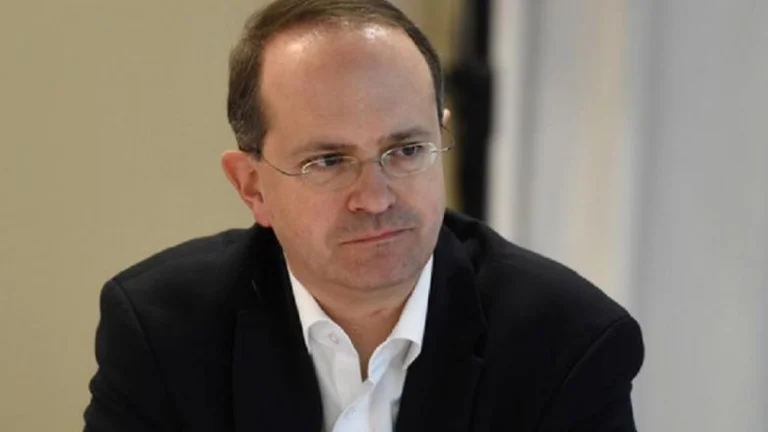
Bodo Weber: West knows Serbia's high levels are involved in Banjska attack
Periskopi(2 years ago)
(2 years ago)Despite the success of negotiations between Kosovo and Serbia, the Franco-German initiative has failed, says Balkan expert Bodo Weber. European Union officials, in my opinion, know that, but they won't accept it”, he believes. Weber in an interview for television N1 said he doesn't see any particular developments since the arrival of the special representative of the Union [...]
Despite the success of negotiations between Kosovo and Serbia, the Franco-German initiative has failed, says Balkan expert Bodo Weber. European Union officials, in my opinion, know that, but they won't accept it”, he believes.
Weber in an interview for television N1He said he doesn't see any particular developments from the arrival of European Union special representative Miroslav Lajcak to Belgrade and later to Pristina.
We remember that Serbia's president, Aleksandar Vuciq, at the meeting with Lajcak, has stressed that Serbia is always ready for dialogue and that it will respect everything that has been signed and agreed on.
“This is the continuation of the simulation of negotiations for implementation of the Brussels and Ohrid Agreement”, Weber said.
According to him, under normal conditions this would mean the continuation of éstatu kuoʹ, but it is troubled that a year and a half, either after abandoning institutions by Kosovo Serbs, events in Banjska, which, according to him, caused instability.
According to him, there have been a few months until summer and the departure of the current commission and the possible departure of key negotiators Lajcak and Joseph Borrell. Then a dangerous vacuum will be created”, he stressed.
Speaking to Banjska, Weber stresses that the West somehow insists on a Serbia investigation into what the broader background was, but that, as he estimates, seems to be more a simulation and that the West “is looking to expect results”.
“The Westerners know that Serbia's high levels are involved in the attack on Banjska”, Webster believes.
According to him, the failure to respond to Banjska, “emulation of shock” is a kind of green light for post-election events in Serbia.
He said for more than a decade we have seen the failed Western politics, so, as he says, “looking at with a pipe at” of what (Serbian President Aleksandar) Vuciq) is doing in terms of democracy and rule of law, for the sake of a constructive relationship in dialogue with Kosovo.
The West is blocked in a symbiosis with the power of the Vuciqi regime, but this has brought none of the expected results, he stressed, and added that there is no strength in the international community for a decisive overthrow of the regime in Serbia./Telegraphy/