5 minutes ago
Voting for the departure of mayors or a referendum?
Periskopi(3 years ago)
(3 years ago)With the Administrative Guide that has brought Kosovo's Ministry of Management of Local Power to clear the mayors of municipalities from office, new elections will not be organised, some connoisseurs of judicial-unconstitutional issues say. According to them, voting on the basis of this instruction is a form of referendum, for which Kosovo does not [...]
With the Administrative Guide that has brought Kosovo's Ministry of Management of Local Power to clear the mayors of municipalities from office, new elections will not be organised, some connoisseurs of judicial-unconstitutional issues say.
According to them, voting under this instruction is a form of referendum, for which Kosovo has no legal basis.
The Administrative Guide, which has been made public this week, first envisions the initiative of a petition for the dismissal of the respective mayor and its signing by 20 per cent of the municipality's voters.
Later, the signing petition would be sent to the mayor of the municipal assembly and he would send it for verification to the Central Election Commission.
If the CEC estimates that appropriate steps have been followed, it organises voting to remove the chairman from office.
Its departure will take 50 percent plus one vote for citizens.
The need for this administrative directive has come after the international community's demands that Kosovo organise new elections in Serb-run municipalities in the north, with the aim of extending the situation in that area.
Invalid “initiative”
Kadri Kryeziu, former vice president of the Constitutional Court of Kosovo, says the vote that could follow the petition for the removal of the mayor, would be “some mini-referendum”, which “is not the first by law”.
This action, it seems to me, is in vain and there will be no effects on achieving” goals, Kryeziu tells Radio Free Europe. Valdete Daka, former head of the Central Election Commission, says the evental vote, which envisions Administrative Guide, cannot be named as the “election process”.
And it can't be used to refer to the elections, because, in this case, citizens would vote for thepopoo or gojo mean, whether they want to take the mayor away or not. This cannot be called a choice. This is only referendum”, says Dhaka for Radio Free Europe.
She recalls that the CEC is obliged to organise elections and referenda, but, as it says, the Law for Elections exists, and it is not for a referendum.
To have the CEC's competence to organise such a vote, the Law must exist for referendum. We don't have that law, and it all ends here, according to me,”, says Daka.
Free Europe Radio contacted Central Election Commission Chairman Kreshnik Radoniqi over the phone to ask whether the CEC can organise eventual voting processes for the dismissal of mayors. But, Radoniqi said it's “out of the country” and that “has no time to respond to”.
REL attempted to contact even with the CEC secretariat, as well as the spokesman for this institution, but they were not available.
He also addressed the Government of Kosovo with the question of whether the Law for Referendum is necessary for the eventual organisation of voting for the dismissal of mayors, but received no response.
In that question, the REL did not even answer the Legal Department of the Ministry of Management of Local Power.
In an interview given on September 6th, former head of the Constitutional Court of Kosovo Enver Hasani told REL that Administrative Guidance for the departure of the mayors is unconstitutional and anti-legal.
How is the referendum defined?
Ehat Miftaraj, executive director of the Kosovo Institute for Justice, says the question posed on the ballot, determines whether the vote concerns civic initiative or referendum.
He explains that if the vote were civic initiative, the question would have to be put forth as: “Do you agree to the mayor's dismissal of”? In the meantime, if the vote were a referendum, the agreement and question -- such as “citizens through petition require the dismissal of the mayor. Are you for or against”?
Kosovo has no law for referendum. The Kosovo Assembly has in principle adopted the draft law on this issue in 2018, but procedures have not gone further.
Miftaraj, from the Kosovo Institute for Justice, says the law for referendum or any legal basis on which Administrative Guide would be based cannot be initiated with lawmakers.
The administrative directive cannot precede under any circumstances the law, because administrative instruction usually serves to implement the law in practice, and cannot produce consequences for administrative instruction to force the Assembly to pass a certain” law, Miftaraj says.
How has the need for Administrative Guidance developed?
Under an agreement with the European Union, Kosovo has shown readiness to organise new elections in the four Serb-run municipalities in the north: Northern Mitrovica, Zvecan, Zubin Potok and Leposaviq.
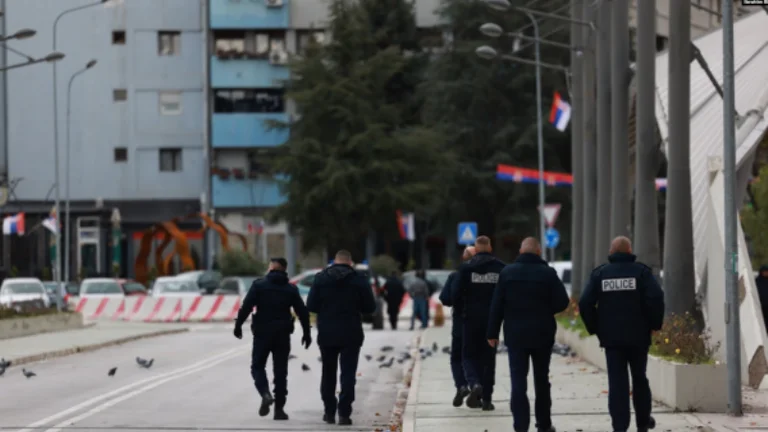
Tensions in this area have increased since the end of May, when Albanian mayors have entered their offices despite opposition from the local Serb population.
These mayors have emerged from April's extraordinary elections, which the Serb community has boycotted.
As an option to calm the situation, The EU has called for new elections, and official Pristina has said it has agreed.
Under the Law on Local Self-government in Kosovo, early elections for mayors are held on three occasions: if the mayor resigns, if citizens ask for his dismissal through petition, and if the mayor does not appear at work for more than a month, without reason. / REL