40 minutes ago
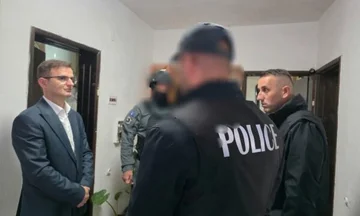
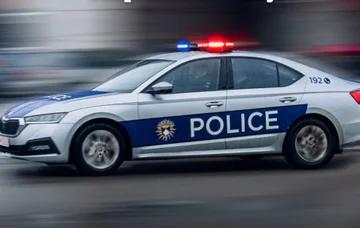
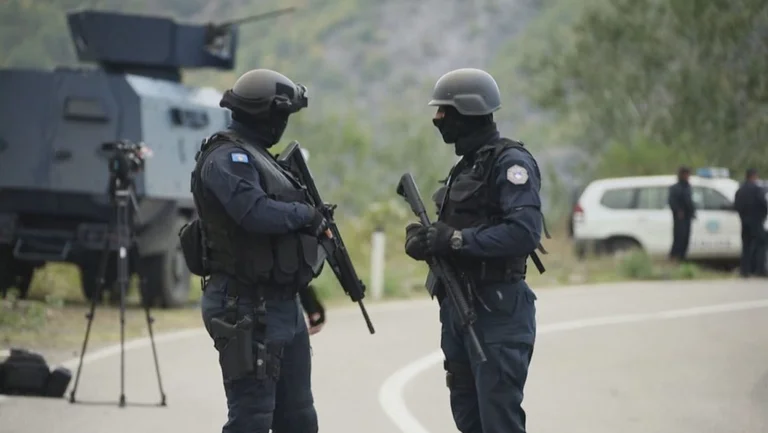
Special police increase presence in the north following terrorist attack on Banjska
Periskopi(3 years ago)
(3 years ago)The armed attack on Zvecan Banjska brought even more special Kosovo police forces to the northern part of the country. Just two and a half months ago, the Kosovo government had agreed to reduce the presence of this unit in the Serb-run majority area. This was part of an agreement with [...]
Just two and a half months ago, the Kosovo government had agreed to reduce the presence of this unit in the Serb-run majority area.
It was part of an agreement with the European Union on reducing tensions.
The situation there was irritated by the end of May, when Albanian mayors, under special police escorts, settled in municipal facilities.
The move prompted the occasional and violent response of the local population, which opposes both the Albanian mayors and the presence of special Kosovo police forces.
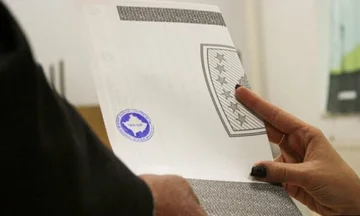
After several weeks of EU pressure, the Kosovo government agreed to cut the special unit's presence around municipal objects in the north, as well as to organise new elections there.
But, the attack on Banjska, where armed groups fired Kosovo police by killing one of its members on 24 September, led to other developments.
Kosovo Police General Director Gazmend Hoxha told Radio Free Europe that police have already increased its presence in the north.
We have increased presence and vigilance around the border belt. We have also increased the presence of Kosovo's special police unit in northern Kosovo. We have slightly reduced the patrols of ordinary policemen, because they do not have such a level of protection to deal with any possible” attack, Hoxha said.
He did not offer details about how much the special unit's capacities have been strengthened, but said the institution it heads is constantly in co-ordination with NATO's peacekeeping mission, KFOR, and with that of the European Union for the rule of law in Kosovo, EULEX.
REL asked the Kosovo Ministry of Internal Affairs about the presence of special forces in the north, but, until the publication of this article, there was no response.
Contacted by REL, the chairman of the Parliamentary Commission for Security and Defence Affairs, Beke Berisha, declined to address the issue. He said briefly he would invite Interior Minister Jhelal Svechla to report to the commission, as well as Police Director Gazmend Hoxha.
Speaking on the day of the attack on Banjska, Kosovo Prime Minister Albin Kurti said that “has no agreement or regulation preventing Kosovo's special police from operating even in the four municipalities in the north [North Mitrovica, Zvecan, Zubin Potok and Leposaviq], as elsewhere in the territory of the Republic<18>.
“What we have inherited is a letter from the former prime minister [Hashim] Thaci concerning the presence of the Kosovo Security Force [in the north], which must be made in agreement with KFOR. We have respected and continue to respect Thaci's unilateral pledge to former NATO Secretary General [Anders Fogh] Rasmussen”, Kurti said.
Srdjan Simonovic, from the Humane Centre in Northern Mitrovica, . . This organisation that monitors the security situation in the north, tells Radio Free Europe that <x0->narness” of the local population towards Kosovo police, in general, has continued since the post-war, in 1999.
The legal successor of the Kosovo Liberation Army, in the first wave, was Kosovo Police, and later the Kosovo Protection Corps. Traditionally, Kosovo Police are the continuation of the KLA and, in this context, Serbs always see it as enemy”, Simonovic says.
According to him, objections to special police have increased in the past two years, when this policeman, “under the directives of current politicians”, has begun a terribly tough campaign against Serbs”, which has culminated <x4 with the deserting of Serbian police officers” by the Kosovo police force.
Simonovic refers to a Kosovo Government decision to redirect Serbian illegal license plates, which has raised tensions in the north and led to the removal of Serbs from Kosovo institutions.
Some 50,000 Serbs live in northern Kosovo.
Since the post-war, most of them do not abide by the decisions of Kosovo institutions, but by parallel structures operating there under Serbia's correction.
There have often been tensions in the area that have culminated in violence, and Kosovo police have been exiled to restore order.
Former Kosovo Police Director Rashit Qalaj tells Radio Free Europe that there should be greater police patrols in this region in order to avoid incidents like those of September 24th.
Whatever doesn't have to happen and doesn't dare to happen is for Kosovo police to be restricted to operating in the north”, says Qalaj.
Kosovo border security with Serbia mission is responsible NATO, KFOR, while for the rest of the border border police from Kosovo.
However, with a decision by KFOR commander in 2014, Kosovo police can patrol up to a mile near the border line with Serbia.
After the May riots, KFOR has increased its presence in Kosovo for several hundred soldiers.
This mission has condemned the attack on Banjska and said he is willing to intervene if necessary.
In his reactions, the European Union has also condemned the attack on Banjska and said that “all facts about it must prove to be”. Kosovo special police forces in the north have not been declared.
Kosovo, meanwhile, has blamed Serbia for the attack on Banjska, while Serbia has pointed its finger at Kosovo Serbs.
The international community has called on both sides to return to the diplomatic path.