26 minutes ago
Spanish journalist: Russia is Serbia's main sponsor
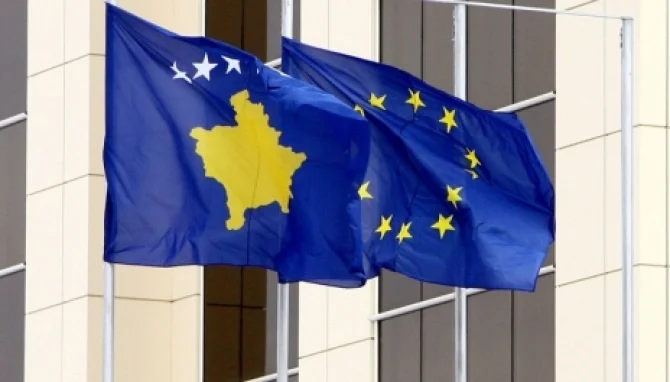
Periskopi(3 years ago)
(3 years ago)Juan García-Nieto journalist and Spanish columnist has persistently sought out five European states to recognise Kosovo. He has even presented credible facts and reasons that, according to him, these states should be seen and made a decision on recognising Kosovo as a state. This, according to Spanish journalist, Kosovo's status remains [...]
Juan García-Nieto journalist and Spanish columnist has persistently sought out five European states to recognise Kosovo.
He has even presented credible facts and reasons that, according to him, these states should be seen and made a decision on recognising Kosovo as a state.
This, according to Spanish journalist, Kosovo's status remains controversial in several districts, including in the European Union, as five member states still refuse to recognise its independence: Cyprus, Greece, Romania, Slovakia and Spain. Despite that and perhaps paradoxically, Kosovo was granted EU candidate status in December 2022.
These five governments argue their position by arguing that Kosovo's 2008 declaration of independence was not in line with international law”, he said.
According to Nieto, the stubborn stance against Kosovo of these five countries reveals their desire to deny the geopolitical reality of the Balkan region in 2023.
“
But according to the journalist, despite nationalist rhetoric and the beating of tits coming from Belgrade, Serbian actions signal that her government acknowledges that Kosovo's sovereignty is a fact done.
This is the reporter's complete analysis. Juan García-Nieto:
More than 15 years after the declaration of independence, five EU nations stubbornly refuse to recognise Kosovo. This harms both EU foreign policy in the Balkans and Kosovo's prospects for citizenship.
Kosovo was the last country to emerge from the former Yugoslavia's behaviour. An overwhelming majority of the country's Assembly (109 out of 120 members) declared Kosovo's sovereignty from Serbia in February 2008.
Kosovo's independence was the culmination of a difficult, sometimes terrible process, which hit its most tragic point in the 1998-1999 Kosovo War, when Yugoslavia was brutally fired on the Kosovo uprising led by the Kosovo Liberation Army (which was substantially supported by NATO forces. during the first months of 1999).
The war ended with the Kumanovo Agreement signed in France in 1999. The United Nations agreed to form a (UNMIK) peacekeeping mission to oversee and facilitate the path towards a self-sufficient and autonomous Kosovo that continues to this day.
Kosovo has an overwhelming majority of ethnic Albanians who mainly oppose integration with Serbia. In addition, as a predominantly Muslim country, the memory of widespread violence and target of Muslims and Muslim holy sites by Serbian nationalists during the 1990s continues in Kosovo's collective memory. All of this contributes to strong support for Kosovo's full citizenship.
However, 15 years after declaring independence, Kosovo is far from fully sovereign. Its status remains controversial in certain circles, including the European Union, as five member states still refuse to recognise its independence: Cyprus, Greece, Romania, Slovakia and Spain. Despite that and perhaps paradoxically, Kosovo was granted EU candidate status in December 2022.
However, the fact that five EU members have an explosive policy of non-recognition of Kosovo's independence is an obstacle towards a common EU position. These five governments reason their position by arguing that Kosovo's 2008 declaration of independence was not in line with international law.
However, a 2010 ruling by the International Court of Justice did not view Kosovo's independence as illegal, questioning the positions of the five countries.
A State for All Purposes
But the law is not the only thing played here. Political realities, not legal ones, are usually the engine of international politics. And the fact is that Kosovo is a state for all purposes, for the great grief of the Serbian government. Kosovo has its own state assembly and institutions, and the euro has adopted it as currency since 2002.
The Balkan state is also recognised by the majority of world governments (117 out of 193 UN states) and enjoys full membership in several international organisations, such as the World Bank, the International Monetary Fund and the World Customs Organisation. Yes, Kosovo is already a de facto state.
All this means that recognising Kosovo as a sovereign state is a sound policy not only from the perspective of international law but also as a realpolitical issue.
It seems evident that having a mutually endorsed position by all 27 members, the EU would be better able to defend its interests in a reliable manner and adopt a consistent, constructive policy in the sensitive Balkan region. The five EU members who refuse to recognise Kosovo are not doing themselves any favors by going against a global wave that shows a gradual integration of Kosovo into global politics as a sovereign actor.
Even Serbia is reluctant to treat Kosovo as a de facto state (coming into negotiations, signing treaties and pledging not to interfere with Kosovo's EU membership process) and agreed to normalise relations with its southern neighbour in March 2023.
Russia, traditionally Serbia's most important sponsor in the region, also silently recognises Kosovo's citizenship. Just as political realities outweigh legal considerations, actions usually matter more than words in international politics. And, despite nationalist rhetoric and the breast attack coming from Belgrade, Serbian actions signal that its government acknowledges that Kosovo's sovereignty is a fact carried out.
Postponing the Inevitation
In short, it is in the EU's interest to move towards a full consensus on the issue of Kosovo's independence. Cyprus, Greece, Romania, Slovakia and Spain are pushing what seems inevitable and, in fact, is already happening: normalising Kosovo's independence (even though only de facto) by the majority of regional and global actors, even its rivals.
While they publicly cite legal reasons to support their policy, it is known that the five countries have internal reasons not to recognise Kosovo's independence. However, the truth is that Kosovo's recognition as a sovereign state is very unlikely to differ greatly from the inner landscape in either of the five countries. After all, the circumstances of Kosovo's independence and the causes leading up to it are dramatically different from, for example, pro-independence views of a portion of the Catalan population in Spain.
The stubborn stance against Kosovo of these five countries reveals their own desire to deny the geopolitical reality of the Balkan region in 2023. Despite the pro-European attitudes stemming from governments and societies in Athens, Madrid, Nicosia and others, their insistence on apprehending an anti-realistic, self-destructive policy is undermining the European Union and hindering the development of a European foreign policy at a time when it is more important than ever.