29 minutes ago
Serbia acknowledges presence of secret services in Kosovo
Periskopi(3 years ago)
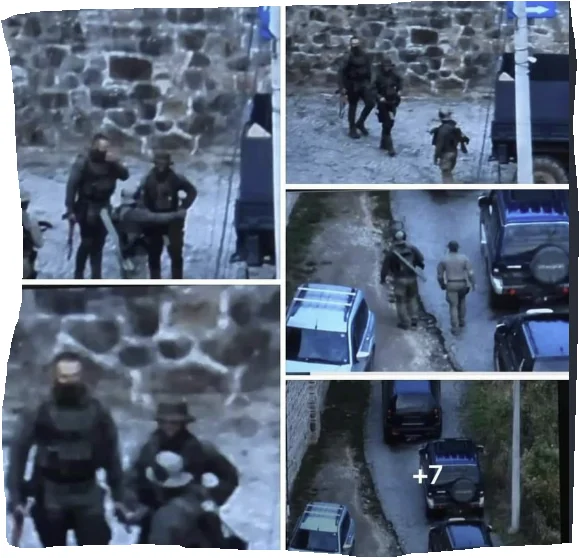
(3 years ago)The armed conflict in Banjska, where four Serbs were killed and a Kosovo Police member was killed, continues to raise numerous questions that remain unresolved. Among other things, it is not clear whether Serbian security and intelligence structures have known whether there would be conflict and question [...]
The armed conflict in Banjska, where four Serbs were killed and a Kosovo Police member was killed, continues to raise numerous questions that remain unresolved.
Among other things, it is not clear whether Serbian security and intelligence structures have known whether there will be conflict and the question of where so many Serbian weapons have been taken. Nova's conversationaries clarify that Serbian security services have a poor presence in Kosovo, minimal operatives and add that everything has gone wrong.
Even after President Aleksandar Vuciq's long-awaited media conference, citizens have not received answers to what happened in Banjska.
Vuciq himself said he couldn't address citizens earlier because “has been unable to obtain information earlier because of distractions” and has claimed to have held the National Security Council meeting throughout the day and that decisions will be presented to citizens in the coming days.
Even Vucin has had no answer to all the questions that citizens are expecting and patiently waiting for throughout the week. Some of them are still pending Monday, and one of the fundamental questions is dilemma if intelligence circles have been able to know what is happening in Kosovo.
Did they know that an attack was being prepared, how many heavy weapons had reached Kosovo's “ ” and how young people from the north were trained for such attacks.
A number of questions remained to “spread”, while early Monday morning Rada Trajkoviq from the European Movement of Serbs from Kosovo said 30 people entered the Banjsca monastery.
Where were the services, and was the schedule of the State?
Former director of the Military Security Agency (VBA), Momir Stojanovic, explains that Serbian services have a poor presence in Kosovo and ask whether the state is likely to be unwilling to control armed groups. Stojanovic notes that with such work it is possible to have more surprises.
The “in what situation we are in shows Vuciki's statement, which said that the translator has fallen unconscious and therefore is not coming from Albanian translation. That tells you what kind of collapse the entire system has achieved in the country. If Serbia does not monitor Kosovo's territory electronically, in terms of detection, I think it should. All countries follow him. We have to have a team of people who know Albanian, so conversations are bugged and analyzed. The “People's teams must work on data and such information, they are sent to management every day, but we have everything planned”, Stojanovic explains for Nova.
According to Stojanovic, there are two scenarios. The first, where Belgrade organised it, which according to him is extremely unclear. On the other hand, when it comes to the second scenario, that “mangups” rebelled, then it is very unclear how services do not have such data.