a minute ago
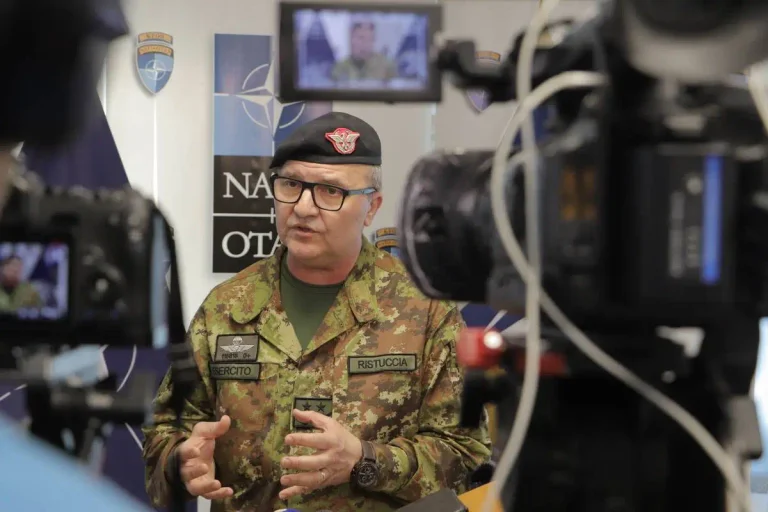
Riztuccia: Everything related to security in Kosovo should be co-ordinated with KFOR
Periskopi(3 years ago)
(3 years ago)NATO mission commander in Kosovo, KFOR, Angelo Ristuccia, has said Tuesday that everything related to security in Kosovo should be done in co-ordination with this mission. At a media conference in Belgrade, he has answered journalists' questions about whether to ask KFOR's permission when it comes to sending [...]
At a media conference in Belgrade, he has answered journalists' questions about whether to ask KFOR's permission when it comes to sending Kosovo special police units to the north.
Secretary - General NATO, Jens Stoltenberg, has said on September 7th, after a meeting with Kosovo President Vjosa Osmani that ten years ago, Kosovo has pledged not to engage the Kosovo Security Force in the north without preliminary consultation and approval of the KFOR commander.
“in line with Pristina's obligations in 2013, any commitment to the Kosovo Security Force in the north requires negotiations with KFOR. We expect consultations on any action of the Kosovo Police Special Forces that could affect security”, Stoltenberg said that day.
Riztuccia has estimated that the security situation in Kosovo is “very unstable” and that the situation can escalate quickly.
He has estimated that events that have threatened security damage have been followed with great military and diplomatic efforts to create a more peaceful and balanced situation.
They only confirm that political solutions can result in long-term peace and stability in that area. Many events, especially those on May 29th, confirm that political solutions are necessary. That is why NATO and KFOR fully support the dialogue mediated by the United States and the European Union”.
He has said that constructive approach by both sides is key to creating the necessary conditions for permanent security in Kosovo and the region, for the benefit of all and new generations.
The situation in northern Kosovo, the Serb-run populated area, is tense in late May, as several local Serb groups have protested the entry of new Albanian mayors into municipal buildings.
April's extraordinary elections in the north have been boycotted by local Serbs.
The situation in the north, on occasion, has escalated into violence.
The most critical situation is recorded on May 29th, when dozens of KFOR soldiers have remained injured.
Kosovo authorities are conducting investigations to prove who is responsible for the violence.
The escalation of the situation has been condemned by officials in the European Union, which mediates dialogue between Kosovo and Serbia, with the aim of normalising relations.
Violence has also been condemned by the United States, until KFOR has made a decision to increase its presence in Kosovo. / REL